
Blooming
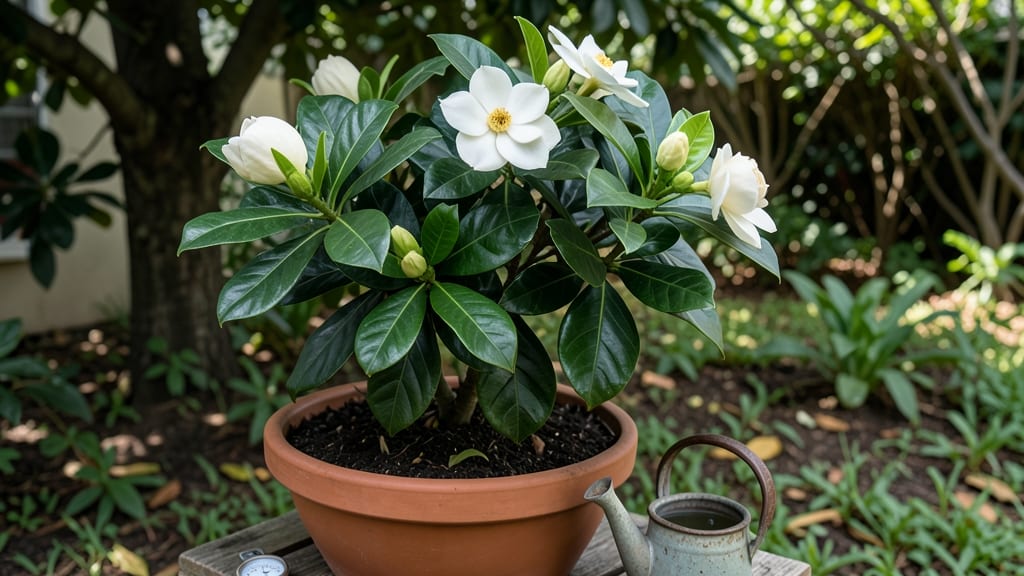
Gardenias don't bloom all year naturally—they follow seasonal patterns, flowering primarily in spring and summer for temperate climates, with tropical varieties sometimes extending into fall. Environmental factors like temperature shifts and daylight changes still trigger natural dormancy periods.
Gardenias are sensitive to daylight length and temperature shifts, which act as natural cues for blooming.
In temperate zones, shorter days and cooler nights after summer signal the plant to rest, while tropical gardenias may linger longer but still need occasional dry periods to reset their blooming cycle. 🌸 I've found that even in warm climates, gardenias won't flower continuously—they need these seasonal breaks to produce fresh buds.
The key difference between varieties lies in how they interpret these environmental triggers, with some tropical types showing more resilience to extended warmth.
Interestingly, gardenias from different regions also respond uniquely to humidity levels. High humidity can encourage more abundant blooms in tropical varieties, while temperate gardenias often prefer slightly drier air during their active growing season.
This explains why some gardenias in greenhouses or controlled environments might show extended flowering—they're essentially tricking the plant by maintaining consistent conditions that don't trigger natural dormancy.
💡 In This Article
- Gardenia Blooming Seasons by Climate Zone
- Encouraging Extended Gardenia Blooms with Care
Gardenia blooming seasons by climate zone
Gardenias rely on a delicate balance of environmental cues to trigger blooming, with daylight hours being the primary signal. In temperate climates, gardenias typically bloom from late spring through summer when days are long (14-16 hours) and temperatures hover between 60-80°F.
The plant's internal clock responds to increasing daylight through a process called photoperiodism, where longer days stimulate hormone production that promotes flowering. When days shorten in fall, this hormonal trigger fades, signaling dormancy—even if temperatures remain warm.
The difference between tropical and temperate gardenias comes down to their native environments. Tropical varieties, like Gardenia jasminoides, evolved in regions with minimal seasonal variation, so they may bloom more continuously but still need 2-3 weeks of cooler temperatures (50-55°F) to reset their cycle.
For example, a gardenia in Miami might flower sporadically year-round, but it'll produce its most abundant blooms after a brief cool snap in winter. Meanwhile, temperate gardenias in zones 8-10 often require chilling hours (300-600 hours below 45°F) to break dormancy and restart flowering in spring.
Humidity plays a surprising role too—gardenias need 50-70% humidity to set buds, but excessive moisture during blooming can cause buds to drop. In arid climates, gardenias may only flower when rainfall increases, while in humid tropical zones, they might bloom more prolifically but require careful water management.
The plant's native rainforest habitat explains why they thrive in well-draining, slightly acidic soil (pH 5.5-6.5), where consistent moisture without waterlogging supports steady blooming.
What most gardeners overlook is how temperature fluctuations act as a natural timer. A sudden drop to 55°F at night can shock the plant into dormancy, even if daytime temps stay warm. This is why gardenias in greenhouses often need artificial light cycles to mimic seasonal changes.
Without these cues, the plant may produce leaves but few flowers, as it's unclear when to invest energy in reproductive growth. 🌿
Consider these key climate factors for your gardenia:
- Temperate zones: Blooms peak when daytime highs reach 75-85°F and nights stay above 60°F
- Tropical zones: May flower year-round but need 2-3 weeks below 65°F annually to reset
- Humidity needs: 60-70% for bud formation, but reduce to 40-50% during blooming
- Daylight trigger: Minimum 12 hours of light required for consistent flowering
The science behind this seasonal behavior lies in the plant's phytochrome system—light-sensitive pigments that detect day length changes. When gardenias receive 14+ hours of daylight, they produce more florigen, the flowering hormone.
This explains why indoor gardenias often struggle to bloom: most homes don't provide the necessary light intensity or duration to trigger this response naturally. 💡