
Watering
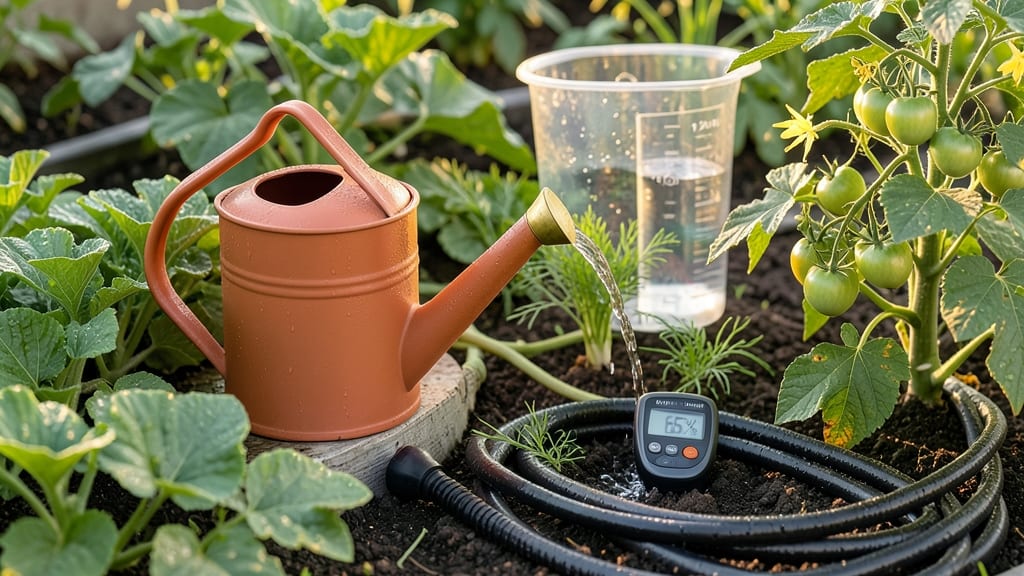
Watering your vegetable garden the right amount keeps your 🥬 thriving and your harvest bountiful—most plants need 1 to 1.5 inches of water per week, but the details matter more than you think.
Struggling to keep your vegetable garden thriving? Overwatering or underwatering can ruin your harvest—so knowing the exact water needs for each plant type is critical for success.
A tomato plant wilts dramatically when thirsty, while a lettuce leaf turns bitter if soggy, and those are just two examples of how watering mistakes show up in your garden.
Soil type, climate, and even the stage of growth change how much water your plants need. Sandy soil drains fast and may require daily checks in summer, while clay holds moisture longer and needs less frequent watering.
Then there’s the difference between leafy greens, which need consistent moisture, and root crops like carrots, which prefer deeper but less frequent watering.
Below, I break down the weekly water needs by plant type, how to adjust for your local climate, and the telltale signs your garden is either drowning or drying out—so you can water with confidence and watch your harvest grow.
Weekly water requirements for common vegetable plants by type
Watering your vegetable garden isn't one-size-fits-all. Leafy greens like lettuce and spinach need consistent moisture to stay crisp, while root vegetables such as carrots and potatoes prefer deeper, less frequent watering to develop properly. Fruiting plants like tomatoes and peppers require steady hydration during their growing season, and herbs like basil and parsley thrive with balanced moisture.
Understanding these differences prevents common mistakes like wilting or blossom-end rot.
Most vegetables need about 1-2 inches of water per week, but this varies by plant type, soil, and climate. Deep watering—soaking the soil until it's moist 6-8 inches down—encourages strong root growth. I recommend using a moisture meter or checking soil with your finger to avoid guesswork.
Overwatering can drown roots, while underwatering stresses plants and reduces yields. Let's break down the weekly needs by plant category.
Leafy greens like kale, Swiss chard, and arugula need 1-1.5 inches of water weekly. These plants have shallow roots and require frequent, light watering to prevent bolting (premature flowering). Drip irrigation works best to keep leaves dry and minimize fungal diseases. Avoid overhead watering in the evening, as damp foliage invites pests like slugs and mildew.
Root vegetables, including beets, radishes, and turnips, need 1 inch of water weekly but benefit from deeper soaking every 3-4 days. Too much water can cause these crops to split or rot. Sandy soil drains quickly, so you may need to water more often, while clay soil holds moisture longer. Always water at the base of the plant to protect tender leaves from sunburn.
| Plant Type | Weekly Water Needs | Deep Watering Frequency | Signs of Overwatering | Signs of Underwatering |
|---|---|---|---|---|
| Leafy Greens (Lettuce, Spinach, Kale) | 1-1.5 inches | Every 2-3 days | Yellowing leaves, mold | Wilted leaves, stunted growth |
| Root Vegetables (Carrots, Potatoes, Beets) | 1 inch | Every 3-4 days | Soft, mushy roots | Brittle, woody texture |
| Fruiting Plants (Tomatoes, Peppers, Cucumbers) | 1.5-2 inches | Every 2-3 days | Blossom-end rot, cracked fruit | Dropped flowers, small fruit |
| Herbs (Basil, Parsley, Cilantro) | 1 inch | Every 2-3 days | Yellowing leaves, root rot | Dry, crispy leaves |
Fruiting plants like tomatoes, peppers, and cucumbers need the most water—1.5-2 inches weekly. These plants are heavy feeders and require consistent moisture to prevent issues like blossom-end rot (a calcium deficiency caused by uneven watering). Drip irrigation or soaker hoses are ideal for delivering water directly to the roots without wetting the leaves. Mulching around the base helps retain moisture and keeps soil temperatures stable.
Herbs such as basil, parsley, and cilantro prefer 1 inch of water weekly. Overwatering can lead to root rot, while underwatering causes herbs to become bitter or wilt. I’ve found that container-grown herbs dry out faster than those in garden beds, so I water them more frequently. Always allow the top inch of soil to dry out between waterings to prevent soggy roots.
Adjust your watering schedule based on weather conditions. During hot, dry spells, you may need to water daily, especially for fruiting plants. On cooler days or after rain, reduce frequency to avoid overwatering. Morning watering is best—it allows foliage to dry quickly, reducing the risk of fungal diseases.
Avoid watering in the evening, as damp leaves overnight can invite pests and mildew.
Signs of overwatering include yellowing leaves, mold, and mushy stems. If you notice these, reduce watering and improve drainage by amending the soil with compost or sand. Underwatering causes wilting, dry soil, and stunted growth.
If your plants look thirsty, water deeply and mulch to retain moisture. Consistency is key—stick to a schedule and monitor your plants closely.
For container gardens
How to adjust watering based on soil, climate, and plant growth stages
Your vegetable garden's water needs aren't one-size-fits-all—soil type, local climate, and plant maturity all demand different approaches. For example, sandy soil drains water like a sieve, while clay soil holds moisture like a sponge.
In hot climates, you might water daily, but in cool regions, weekly watering could suffice. Even the same plant—like a tomato—needs more frequent watering as a seedling than when it's a mature plant with deep roots.
Understanding these variables helps you avoid two common mistakes: overwatering, which leads to root rot and fungal diseases, or underwatering, which causes wilting and stunted growth. The key is learning how to read your soil and adjust your watering schedule accordingly.
Below, I’ll walk you through the adjustments you need to make for each scenario, plus the tools to measure soil moisture like a pro.
- 1. Soil Type: Sandy soil needs daily checks (water drains fast), while clay soil may only need watering every 5-7 days.
- 2. Climate: In hot/dry climates, water early morning to reduce evaporation; in cool/moist climates, water less frequently (2-3x/week).
- 3. Plant Stage: Seedlings need light, frequent watering (keep soil moist), while mature plants thrive with deep, infrequent watering (1-2 inches/week).
- 4. Tools to Measure: Use a moisture meter or finger test—stick your finger 1 inch deep; if dry, water. For root crops (carrots, potatoes), water deeply every 3-4 days.
- 5. Seasonal Shift: Spring/Fall: Water deeply 2-3x/week; Summer: Water daily at dawn to prevent stress. Winter: Reduce to bi-weekly or skip if dormant.
Let’s start with soil—it’s the foundation of your watering strategy. If you’re unsure what type of soil you have, do a simple test: Grab a handful and squeeze it. If it crumbles easily, it’s sandy.
If it holds its shape, it’s clay. Loamy soil (the gold standard) will feel soft and slightly moist but not sticky. Adjust your watering based on this: sandy soil needs more frequent, lighter watering, while clay soil benefits from deeper, less frequent watering to prevent waterlogging.
Climate plays an equally critical role. In arid regions, like the Southwest U.S., vegetables often need daily watering during peak summer months, especially for heat-loving crops like peppers and tomatoes.
Meanwhile, in humid climates, such as the Southeast, you might only need to water every 2-3 days because high humidity reduces evaporation. Pay attention to local weather patterns—afternoon rains can mean you skip watering for a day or two.
Don’t forget the growth stage of your plants. A seedling is delicate and needs consistent moisture to establish roots, so water lightly every 1-2 days. Once it matures, however, deep watering every 5-7 days encourages stronger root systems.
For instance, lettuce bolts (goes to seed) if it dries out, while zucchini thrives with deep soaks. Use a soil moisture sensor or a simple wooden dowel to check moisture levels—insert it into the soil up to 2 inches; if it comes out dry, it’s time to water.
To make this easier, invest in a few watering tools that save time and improve accuracy. A drip irrigation system delivers water directly to the roots, reducing waste and evaporation. For smaller gardens, a watering can with a long spout ensures even distribution.
And always water in the morning—this gives plants time to absorb moisture before evening humidity sets in, reducing the risk of fungal diseases like powdery mildew.
Finally, keep a gardening journal to track your watering schedule, soil type, and plant responses. Note which adjustments worked best for your garden—this way, you’ll refine your approach year after year. With these tweaks, you’ll give your vegetable garden the perfect balance of moisture, no matter the conditions. 🌱