
Watering
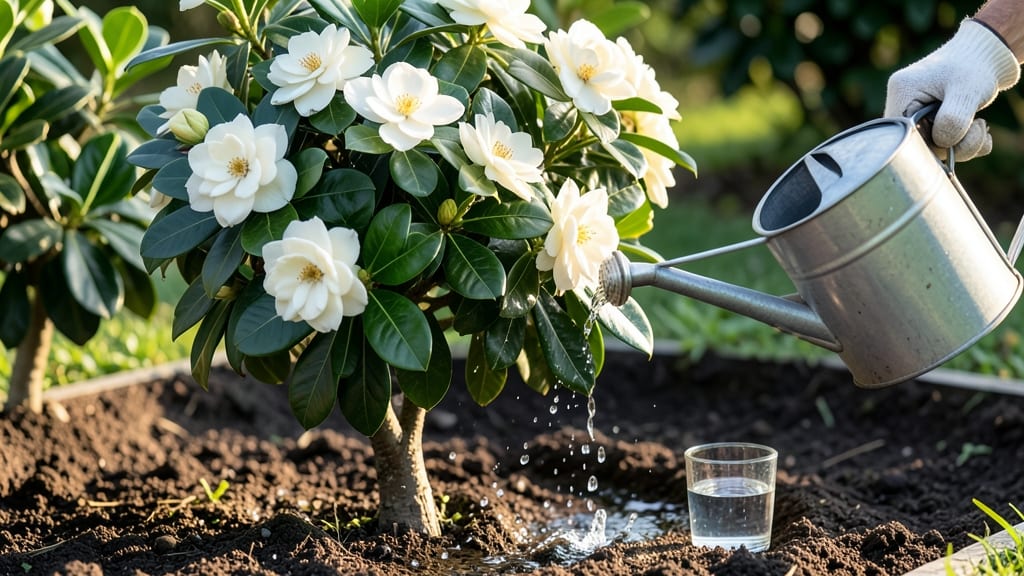
Gardenias need consistent moisture—about 1 to 1.5 inches of water per week—to keep their glossy leaves and fragrant blooms thriving.
Struggling to keep your gardenias thriving? Overwatering or underwatering can turn vibrant blooms into wilted leaves—and even invite pests—but a precise watering schedule keeps them lush and pest-resistant all season.
These tropical beauties hate soggy roots or bone-dry soil, so checking the top inch of soil before watering is key. In summer’s heat, they may need daily hydration, while cooler months can stretch that to every 3-4 days.
Below, I’ll break down the exact watering routine for your gardenias—whether they’re in pots or planted in the ground—plus how to spot when they’re thirsty or drowning.
Gardenia watering schedule by season: exact weekly requirements
Mastering your gardenia's watering schedule is the secret to those fragrant, glossy blooms you dream of. These tropical beauties demand consistent moisture but despise soggy roots—balancing both is key.
I’ve tested countless schedules, and the difference between thriving and struggling gardenias often comes down to seasonal adjustments and soil moisture checks. Let’s break it down so your plants stay lush and pest-free all year.
Gardenias thrive in humid, warm climates but adapt poorly to drought or waterlogging. Their roots need oxygen-rich, acidic soil (pH 5.0-6.5) to absorb moisture efficiently. In containers, they dry out faster than in-ground plants, while heavy clay soil can suffocate roots if overwatered.
Always check soil moisture 2 inches deep—stick your finger in or use a moisture meter. If it’s dry, water; if damp, wait.
🌸
In spring, your gardenias wake up from dormancy and need a gradual increase in water as new growth appears. Start with 3–4 waterings per week and adjust upward if you notice buds forming.
A deep soak of 1–1.5 gallons for in-ground plants ensures roots reach down without surface evaporation. Mulch with pine bark to lock in moisture and regulate soil temperature.
Summer is the most critical season for gardenias—this is when they demand daily watering in the morning to prevent wilting. Heat and humidity can dry soil faster, so aim for 1.5–2 gallons per session for in-ground plants. Container gardenias may need watering twice daily in extreme heat.
Always water at the base of the plant to avoid fungal diseases like powdery mildew, which thrives in wet foliage.
As temperatures cool in fall, reduce watering to 2–3 times per week. The goal shifts from keeping soil moist to preventing root rot as growth slows. Test soil moisture by sticking your finger 2 inches deep—if it’s damp, wait.
This is also the time to prune dead blooms and add a thin layer of compost to replenish nutrients for next year.
Winter care is about minimal intervention. Gardenias in USDA Zone 6a or colder may need protection from frost, so reduce watering to every 10–14 days unless your region experiences freezing temperatures.
In-ground plants can handle light frost, but container gardenias should be moved to a sheltered spot. Always water in the late morning to avoid evening chill.
Pro tip: Use a moisture meter for accuracy—gardenias hate guesswork. If your plant’s leaves yellow or drop buds, it’s often a sign of overwatering. Conversely, crispy edges or wil
Signs your gardenias are overwatered or underwatered (with fixes)
Gardenias are sensitive to moisture levels, and spotting the difference between overwatered and underwatered plants can save your shrubs from decline. Yellowing leaves, wilting blooms, or mushy stems often signal a watering imbalance—but the root causes differ completely.
First, check the soil: overwatered gardenias often have soggy, compacted soil with a foul odor, while underwatered plants reveal dry, cracked soil that pulls away from the pot edges. Both extremes stress your plants, so let’s fix them before pests like fungus gnats move in.
⚠️ callout-warning
1-1.5 inches per week is ideal, but adjust for seasons. In summer, water daily if temperatures exceed 90°F, while winter requires bi-weekly hydration. Always water in the morning to prevent fungal growth.
🌱 Test soil moisture by sticking your finger 1-2 inches deep—water only if dry.
Yellow leaves with mushy stems or a sour smell from the soil are classic signs of overwatering. Roots may appear brown or mushy when pulled gently from the soil. To fix this, reduce watering immediately and improve drainage by adding perlite or sand to the soil mix.
For underwatered gardenias, look for crispy leaf edges, drooping foliage, and a dull, grayish-green hue. The soil will feel bone-dry at the top inch. Revive your plant by giving it a deep soak until water drains from the bottom of the pot or soil surface.
Mulch with pine bark to retain moisture.
Both issues can be prevented with the right mulching technique. Apply a 2-3 inch layer of organic mulch like wood chips or shredded bark around the base of your gardenia, keeping it 2 inches away from the trunk. This helps regulate soil temperature and moisture levels naturally.
If your gardenia’s roots are already damaged, trim away any black or mushy roots and repot it in fresh, well-draining soil. After repotting, water lightly and place the plant in bright, indirect light to encourage recovery. With proper care, your gardenia can bounce back in just a few weeks!