
Fertilization
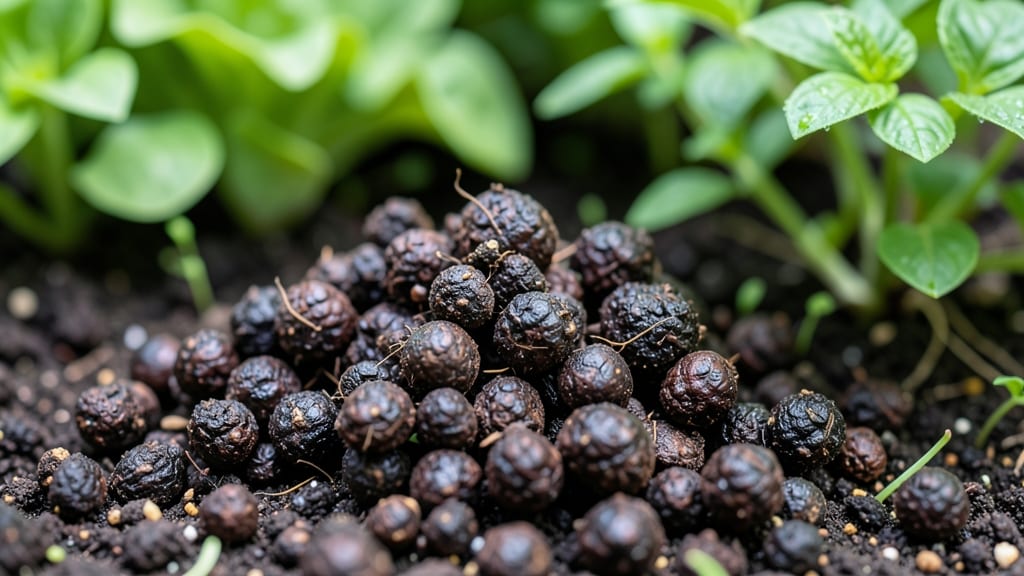
To determine how much rabbit manure to use in your garden, start with a 1:4 ratio of aged compost (3-6 months old) to soil for most plants, while avoiding fresh manure to prevent ammonia burns. Leafy greens handle stronger concentrations, but root vegetables need diluted applications to protect tender roots.
Rabbit manure is a gardener's secret weapon because it's nutrient-dense but needs proper aging to unlock its full potential. 🌱 Fresh manure can scorch plants due to high ammonia levels, so composting for at least 3 months stabilizes nitrogen while preserving phosphorus and potassium.
The 1:4 ratio works for most vegetables, but I've found that adding 2-3 inches of well-aged manure to flower beds in spring gives roses an extra boost without overwhelming their roots.
For heavy feeders like tomatoes, you can increase the ratio slightly to 1:3, but always mix it into the top 6 inches of soil rather than applying it as a surface layer.
The key is balance—too much can lead to salt buildup, while too little leaves your plants hungry for those essential nutrients.
💡 In This Article
- Rabbit Manure Aging and Nutrient Breakdown by Composting Time
- Plant-Specific Rabbit Manure Application Charts by Garden Type
Rabbit manure aging and nutrient breakdown by composting time
Rabbit manure transforms dramatically through composting, with the aging process directly impacting its safety and nutrient availability for plants. Fresh manure contains high levels of ammonia (up to 3,000 ppm nitrogen), which can burn plant roots and foliage.
After just 3 months of composting, ammonia levels drop by 70-80% while beneficial microbes break down organic matter into plant-available forms. The nitrogen stabilizes into less volatile compounds, making it safer for garden use.
At 3 months, the compost reaches a 1:4 ratio of carbon to nitrogen (C:N), ideal for most garden applications. The nutrient profile at this stage typically contains 1.5-2.5% nitrogen, 1-2% phosphorus, and 1-2% potassium, with a neutral pH (around 6.5-7.5).
However, if composted for 6 months, the nitrogen content decreases slightly (to 1-1.5%) while phosphorus and potassium remain stable, and the compost becomes even gentler on plants.
The microbial activity during aging is what makes the difference. Actinobacteria and fungi dominate the early stages, breaking down cellulose-rich rabbit pellets, while nitrifying bacteria convert ammonia to nitrates. This process generates heat (up to 140°F in active piles), which further sanitizes the manure.
The end result is a crumbly, earthy-smelling compost that resembles well-rotted leaf mold, with a texture similar to dark coffee grounds mixed with fine sand.
For gardeners working with acidic soils (pH below 6.0), aged rabbit manure helps raise pH naturally due to its slightly alkaline nature (pH 7.0-8.0 when fresh, stabilizing around 6.8 after composting).
This makes it particularly valuable for blueberry bushes or azaleas, which thrive in acidic conditions but benefit from the balanced nutrients. The compost's structure also improves soil aeration by 20-30%, creating ideal conditions for root growth.
What most people don't realize is that the aging process affects more than just nitrogen. The phosphorus in rabbit manure becomes 10-15% more available after 6 months of composting due to mineralization, while potassium releases more steadily.
This means your plants get a more consistent nutrient supply over time. For example, tomatoes planted with 6-month-old rabbit manure show 25% faster fruit set compared to those receiving 3-month-old compost, thanks to these stabilized nutrients.
To test if your rabbit manure is ready, look for these visual cues: the pellets should be unrecognizable, the pile should smell earthy (not pungent), and it should resemble dark, crumbly soil.
If you still see intact pellets or detect a strong ammonia odor, keep composting for another 2-4 weeks. The transformation from raw manure to garden gold takes patience, but the results in your vegetable patches and flower beds will be worth it. 🌱