
Tools
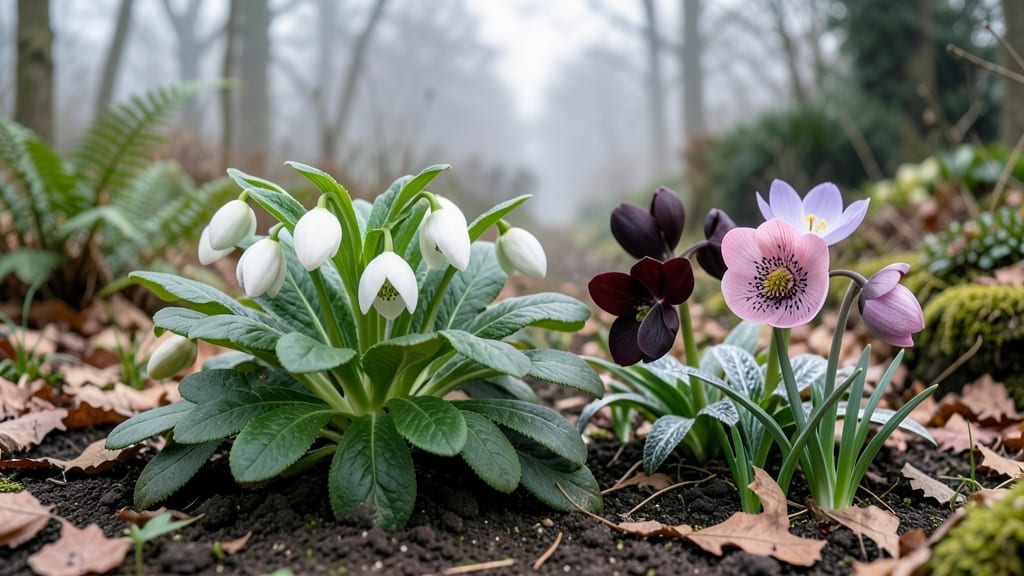
Hellebores excel in gardens as shade-tolerant perennials that deliver stunning early spring blooms and lush evergreen foliage year-round. Their adaptability to partial to full shade, combined with preferences for moist yet well-drained soil, makes them perfect for woodland settings or beneath trees.
These winter-hardy plants stand out because their unique evergreen leaves provide texture even when flowers aren't in bloom, while their delicate blooms often appear before most garden plants wake up from dormancy. 🌸 Many gardeners choose hellebores specifically for their ability to brighten shady corners where few other perennials thrive.
The key to their success lies in their deep root systems, which efficiently absorb moisture while their broad leaves capture minimal light—ideal traits for low-light environments.
Beyond their ornamental value, hellebores play an ecological role by providing early nectar for pollinators when few other flowers are available.
Their low-maintenance nature and long bloom season (often spanning several months) make them a favorite among both novice and experienced gardeners looking to create layered, textured garden spaces that require minimal upkeep.
💡 In This Article
- Why Hellebores Excel in Shady Garden Spaces
- Selecting and Planting Hellebores for Your Climate Zone
Why hellebores excel in shady garden spaces
Hellebores have mastered the art of shade survival through a clever combination of botanical adaptations. Their broad, leathery leaves contain a high concentration of chlorophyll, allowing them to perform photosynthesis even under 10-20% of full sunlight—a fraction of what sun-loving perennials like daylilies require.
This efficiency is due to their C3 photosynthetic pathway, which operates optimally in cooler temperatures and lower light conditions, unlike the C4 pathway used by many grasses that thrive in full sun. 🌿 Unlike hostas, which often struggle with slug damage in damp shade, hellebores' toxic sap deters most pests while still attracting beneficial pollinators.
The real secret lies beneath the soil: hellebores develop deep, fibrous root systems that can extend up to 12-18 inches downward, accessing moisture from deeper soil layers. This adaptation explains why they thrive in woodland gardens where surface soil often dries out during summer.
Their roots also form symbiotic relationships with mycorrhizal fungi, enhancing nutrient uptake—similar to how orchids rely on fungal partnerships in their native habitats. This moisture retention capability is why hellebores often outperform other shade plants like ferns during dry spells.
Ecologically, hellebores play a crucial role by providing early-season nectar for bees and other pollinators when few other flowers are available. Their blooms often appear between February and April, depending on your zone, offering a vital food source that can be 20-30% of a pollinator's early diet.
This timing makes them more valuable than late-blooming plants like asters, which arrive too late in the season to support early pollinator needs. The flowers' scented, nodding blooms also attract butterflies, creating a mini ecosystem that benefits your garden's biodiversity.
When comparing hellebores to other shade-tolerant perennials, their advantages become clear. While impatiens offer quick color but fade by summer, hellebores maintain their evergreen foliage year-round. Unlike lungwort or bleeding heart, which may flop in heavy shade, hellebores stand upright with minimal support.
Their 4-6 week bloom period (often extending into early summer) also outlasts many spring ephemerals like trout lilies, which disappear by June. This combination of longevity and adaptability explains why hellebores are often called the "workhorse" of shade gardens.
For gardeners concerned about soil quality, hellebores are remarkably forgiving. They tolerate slightly acidic to neutral pH (6.0-7.0), though they perform best in well-drained but moisture-retentive soil.
Unlike rhododendrons that require acidic conditions, hellebores adapt to a wider pH range, making them more versatile for urban gardens with varied soil chemistries. Their ability to thrive in partial shade (3-6 hours of morning sun) also gives gardeners more placement options than strictly full-shade plants like Japanese painted ferns.
What truly sets hellebores apart is their cold hardiness combined with shade tolerance. While many shade plants struggle in Zone 4 or colder, hellebores like Helleborus niger (Christmas rose) can survive -20°F temperatures while still blooming.
This resilience means they often emerge earlier than tulips in spring, providing that critical early color when gardens feel bare. The trade-off? Their slower growth rate—expect 6-12 inches per year—but this patience rewards gardeners with decades of reliable performance with minimal division required.