
Tools
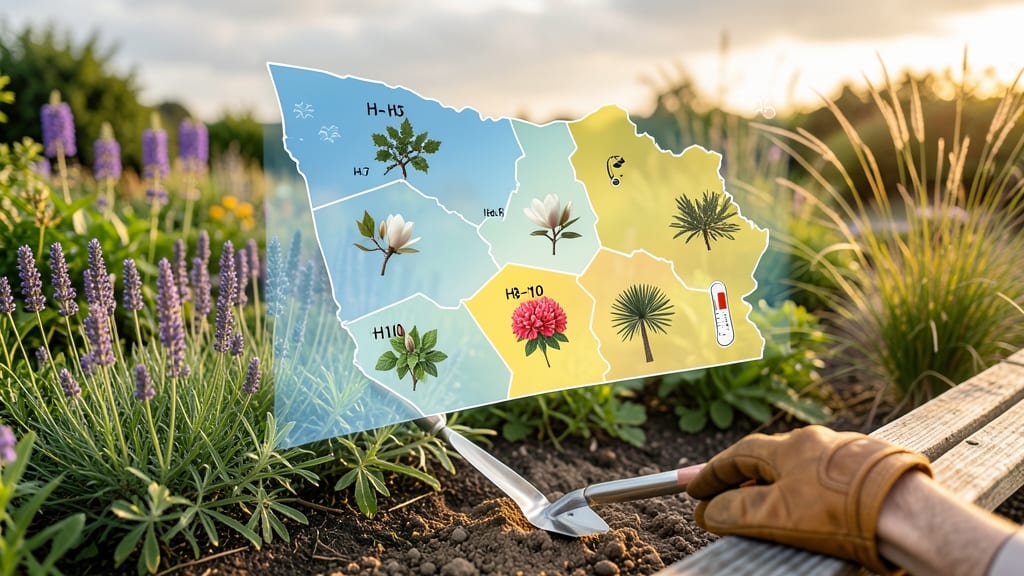
UK garden zones classify regions by frost risk and winter temperatures, helping gardeners select hardy plants suited to local conditions—Zone 1 (coldest) to Zone 10 (mildest). Microclimates like walls or slopes can shift zones by 1-2 levels, so always check your exact location for best results.
The UK's garden zone system divides the country into 10 zones based on average winter temperatures, with Zone 1 being the coldest (like Scotland's Highlands) and Zone 10 the mildest (Cornwall and coastal Wales). 🌿 This classification helps gardeners choose plants that survive local frost patterns—evergreens thrive in Zone 8, while tender perennials struggle in Zone 4.
The Royal Horticultural Society updates these zones every 10 years to reflect climate shifts, making them more accurate than older USDA zone maps for UK gardeners.
What's clever about this system is how it accounts for local variations. A sheltered south-facing wall can turn a Zone 6 garden into a Zone 8 microclimate, while a north-facing slope might drop it to Zone 5.
Urban areas often see higher zones due to heat retention from buildings, while frost pockets in valleys can drop zones unexpectedly.
💡 In This Article
- How UK Garden Zones Are Calculated: Frost and Temperature Science
- Adjusting for Microclimates: Walls, Slopes, and Urban Heat Islands
How UK garden zones are calculated: frost and temperature science
The UK's garden zone system relies on average annual minimum temperatures recorded over 30 years, with each zone representing a 5°F (2.8°C) range of cold tolerance. Zone 1 (coldest) experiences below -15°C (5°F) winters, while Zone 10 (mildest) rarely drops below 0°C (32°F).
The Royal Horticultural Society (RHS) uses data from 1,500+ weather stations across the UK to create these maps, updating them every 10 years to reflect climate change—unlike the USDA zones, which update every 10-15 years but often lag behind UK-specific trends.
Frost-free periods play a critical role too. For example, Zone 5 gardens (like parts of Yorkshire) typically enjoy 120-150 frost-free days per year, while Zone 9 (southwest England) sees 200+ frost-free days.
The RHS also factors in ground frost—the temperature at 5cm (2 inches) below soil level—since this directly affects root survival.
Coastal areas often experience milder zones due to the maritime climate, where ocean currents moderate temperatures, while inland zones can be 1-2 levels colder due to continental influences.
Altitude creates another layer of complexity. For every 300ft (90m) increase in elevation, temperatures drop by about 1°C (1.8°F). This is why a garden in Zone 7 at sea level might behave like Zone 5 at 1,000ft (300m) in the Scottish Highlands.
The RHS accounts for this by adjusting zone boundaries in mountainous regions, such as the Lake District or Snowdonia, where microclimates shift dramatically over short distances.
Here’s how UK zones compare to the USDA system: A UK Zone 6 aligns roughly with USDA Zone 5b, but UK zones are more precise for frost risk because they focus on minimum temperatures rather than average annual extremes.
For instance, a plant labeled "hardy to Zone 6" in the UK will survive -10°C (14°F), whereas the same label in the USDA might refer to -15°F (5°F)—a critical difference for UK gardeners.
What most gardeners overlook is how wind chill amplifies frost damage. The UK’s prevailing westerly winds can make exposed gardens feel 2-3 zones colder than sheltered spots.
This is why the RHS recommends checking local microclimates before relying solely on zone maps—especially in coastal or exposed upland areas, where wind chill can turn a Zone 7 garden into a Zone 5 challenge for tender plants.