
Tools
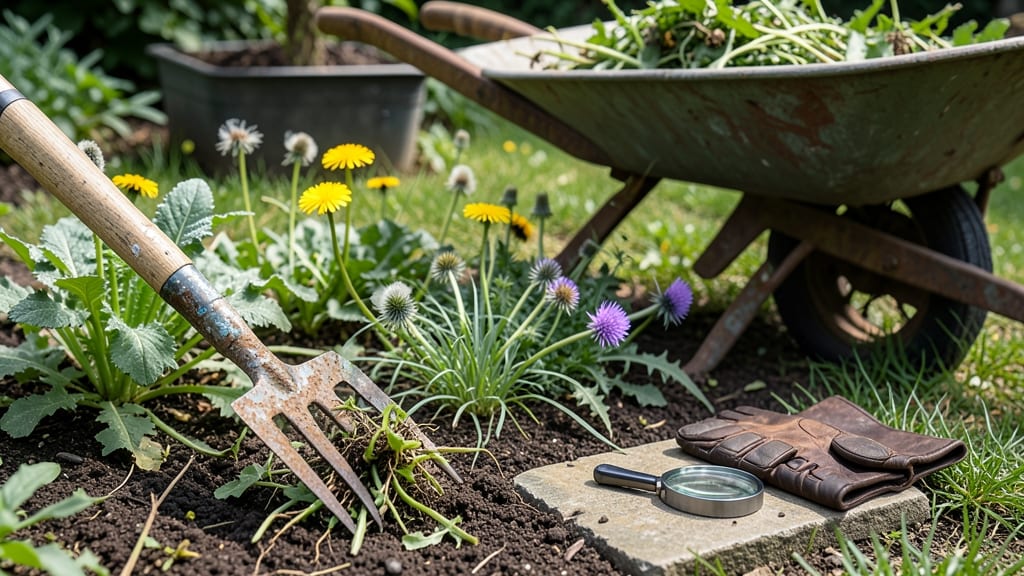
Dealing with garden weeds in the UK requires seasonal awareness, as species like bindweed and dock flourish in different conditions. The best organic solutions include manual removal, mulching, and targeted vinegar sprays to protect your soil and plants.
UK gardens face unique weed challenges due to the country's variable climate—think damp springs that fuel bindweed growth or dry summers that let dock weeds spread aggressively. 🌱 The key to organic control is understanding each weed's lifecycle: for example, hand-pulling works best when soil is moist (after rain), while mulching suppresses regrowth by blocking sunlight.
Vinegar sprays (3:1 ratio with water) are particularly effective for broadleaf weeds but should be applied on calm days to avoid drift onto desired plants.
What sets UK weed management apart is the need for patience and persistence. Unlike harsher chemical methods, organic approaches like corn gluten meal (applied in early spring) prevent seed germination without harming established plants.
I've found that combining smothering techniques—like laying down thick cardboard—with regular inspections yields the best long-term results, especially in perennial weed hotspots.
💡 In This Article
- Seasonal Weed Patterns in UK Gardens
- Effective Organic Weed Control Methods for UK Gardens
Seasonal weed patterns in UK gardens
UK gardens experience weed dominance cycles tied to rainfall patterns and temperature shifts. Spring's increased moisture (often 150-200mm monthly) triggers bindweed and chickweed germination, while summer's 18-25°C temperatures accelerate dock weed growth.
The country's maritime climate creates microclimates—southern gardens see earlier outbreaks than northern regions due to 2-4°C warmer average temperatures.
Bindweed, a perennial nightmare, thrives in disturbed soil and spreads via underground rhizomes that grow 20cm+ per year. Its lifecycle peaks in late summer when vines reach 3m+ height, making it nearly impossible to eradicate once established.
Nettles, meanwhile, prefer nitrogen-rich soil and reach peak stinging power in May-July when their leaves contain highest histamine levels. 🌱 Dock weeds, with their deep taproots, dominate dry periods by outcompeting grasses for water.
The UK's mild winters (rarely below -5°C) allow many weeds to survive dormant but ready to regrow. This explains why spring is the most critical intervention window—weeds like ground elder can produce 10,000+ seeds per plant if left unchecked.
The country's variable rainfall (from 600mm in east to 3,000mm in west) creates regional hotspots for different species.
Understanding these patterns helps predict outbreaks. For instance, after prolonged wet spells, chickweed mats appear within 10-14 days of soil exposure. In contrast, dry summers favor creeping thistle, whose spiky leaves make it particularly aggressive in southern chalk soils.
The key is observing your garden's specific conditions—shady areas breed different weeds than sunny borders.
Seasonal timing also affects control methods. Early spring is ideal for pre-emergent barriers like cardboard mulch, while summer's dry conditions make boiling water (100°C) most effective for established weeds.
The UK's short daylight hours in winter naturally suppress weed growth, creating a natural break point for gardeners to assess and plan annual strategies. 🌿
What most gardeners overlook is how weed composition changes with garden age. Newly established lawns face annual weeds like dandelions, while mature gardens battle perennials like bindweed. This lifecycle knowledge transforms weed control from reactive to proactive—allowing you to target species before they become unmanageable.