
Tools
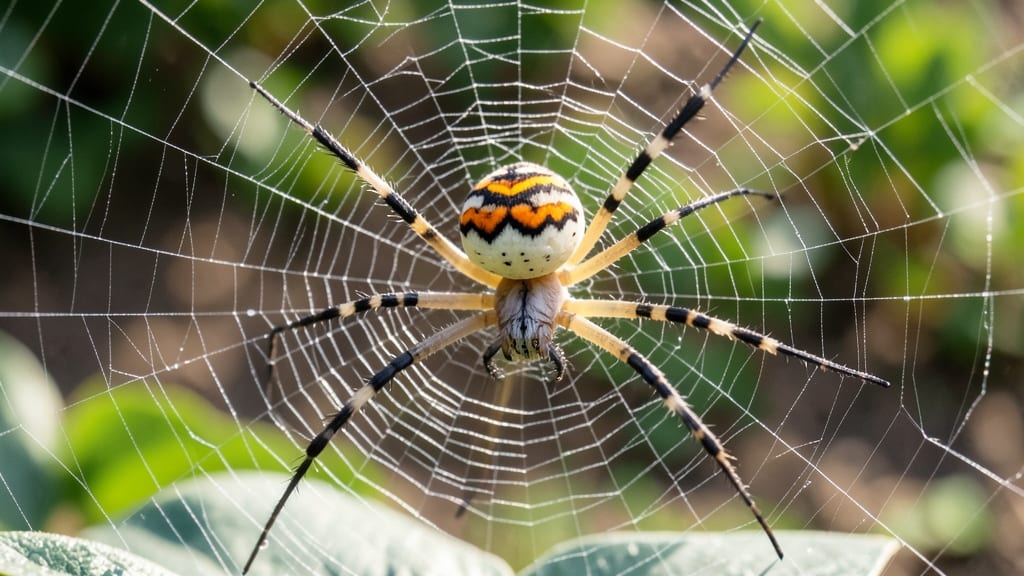
Identifying Georgia garden spiders involves spotting their striking yellow-and-black striped bodies and large orb-shaped webs in warm climates; safely relocate them using a glass-and-paper method or vacuum to avoid harming these beneficial predators.
These spiders are actually helpful garden allies, preying on pests like mosquitoes and flies while rarely biting humans unless provoked. 🔥 Their webs often appear in shrubs or fences, where they create intricate spiral patterns that distinguish them from other spider species.
The key is acting quickly—once you confirm it's a garden spider, use a glass to gently coax it into a container before releasing it outdoors, far from your home.
If you're unsure about the identification, focus on the web's structure: garden spiders build symmetrical, wheel-like webs with strong, silvery support strands. Their bodies typically measure about 1.5 inches long, with legs spanning up to 3 inches, making them one of the largest spider species in Georgia.
Unlike black widows or brown recluses, they don't hide in dark corners but instead build their webs in open, sunny areas.
💡 In This Article
- How to Identify Georgia Garden Spiders by Web and Physical Traits
- Safe and Humane Removal Techniques for Georgia Garden Spiders
How to identify Georgia garden spiders by web and physical traits
Georgia garden spiders (Argiope aurantia) create unmistakable orb-shaped webs that resemble a circular wheel with radiating lines, typically spanning 2-3 feet in diameter.
Their webs feature a distinctive zigzag pattern near the center, called a stabilimentum, which reflects sunlight and may help protect the spider or attract prey. 🌟 Unlike the tangled webs of funnel weavers, these webs are symmetrical and built in open areas where they can catch flying insects efficiently.
The spider’s body alone makes identification straightforward: females reach 1.5 inches long with legs spanning 3 inches, sporting bold yellow-and-black stripes on their abdomen. Males are smaller (0.5 inches) with similar markings but lack the striking size.
Compare this to black widows (glossy black with a red hourglass) or brown recluses (tan with a violin-shaped marking)—garden spiders are far more visible and active in daylight, often perched prominently in their webs.
Habitat plays a key role: these spiders favor shrubs, fences, and garden edges where they can anchor their webs securely. Their webs are usually found 3-6 feet above ground, unlike brown recluses, which hide in dark corners or under debris.
The silvery support strands of their webs also set them apart from other orb-weavers, which often use duller, less reflective silk.
Bite risk is minimal unless provoked, but their size can be intimidating.
The striped pattern serves as a warning to potential predators, while their hunting strategy—waiting motionless in the web’s center—shows how efficiently they’ve evolved to thrive in Georgia’s warm climate. 🔥 Their webs can even withstand heavy rain, a testament to the strength of their silk.
If you’re unsure, observe the web’s location and structure first: garden spiders build in open, sunny spots, while black widows prefer sheltered areas like woodpiles.
The absence of a retreat or hiding spot in the web is another clue—garden spiders rely on their visibility and speed to catch prey, not stealth.
For a closer look, use a magnifying glass to examine the spider’s body markings and leg structure. The long, spiny legs (covered in tiny hairs) help them detect vibrations in their webs, a critical adaptation for their hunting lifestyle.
This level of detail ensures you’re not mistaking them for more dangerous species.