
Container Gardens
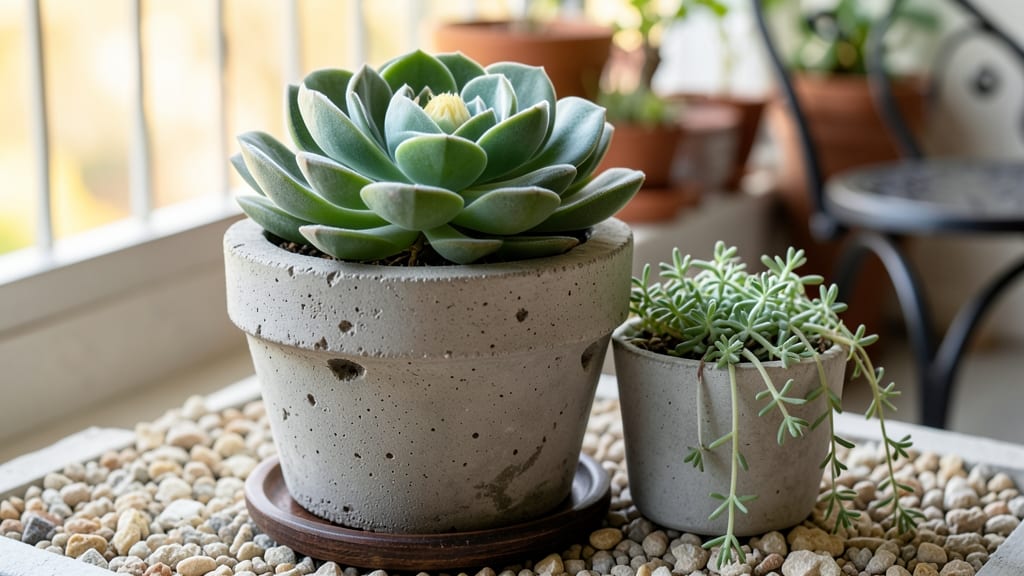
Creating garden pots with cement gives you sturdy, weather-resistant planters by combining Portland cement, sand, and water in equal parts (1:3 ratio), then letting them cure for 7-10 days. Adding wire mesh reinforces the structure, while a waterproofing sealant keeps them from cracking over time.
Cement garden pots are perfect for heavy plants like succulents or ferns because the mix's strength comes from the Portland cement's binding properties when combined with coarse sand.
The 1:3 ratio balances durability with workability—too much sand weakens the pot, while too little cement makes it brittle. 💪 I always use a damp cloth to cover newly poured pots during curing, which prevents surface cracks from forming as the mixture dries.
For extra protection, a thin layer of waterproofing sealant after curing adds years to their lifespan, especially in freeze-thaw climates.
When choosing molds, plastic or silicone forms work best because they release easily after 7-10 days of curing, while wood molds require oiling to prevent sticking. The curing process is critical: keep pots moist but not soggy, and avoid direct sunlight during the first 48 hours to prevent uneven drying.
If you're making large pots, consider adding chicken wire reinforcement at the base before pouring—this prevents splitting when heavy plants mature.
💡 In This Article
- Cement Garden Pot Mixing Ratios and Strength Factors
- Best Mold Materials and Curing Techniques for Cement Planters
Cement garden pot mixing ratios and strength factors
The 1:3 cement-to-sand ratio is the gold standard for garden pots because it creates a balance between strength and weight. Portland cement acts as the binder, while coarse sand provides bulk and prevents shrinkage cracks during curing.
The sand's granular texture also improves drainage—critical for root health—while the cement's hydration process (where water reacts with calcium silicates) forms crystalline structures that lock everything together.
For lighter pots, some DIYers use a 1:4 ratio, but this sacrifices durability, especially in freeze-thaw cycles where moisture expands and contracts in the material.
Water content is equally critical: too little makes the mix dry and crumbly, while too much weakens the structure by creating air pockets.
The ideal consistency is like damp sand—you should be able to form a ball that holds its shape without sticking to your hands. 💧 For a 5-gallon pot, mix 1 part cement (about 5 lbs) with 3 parts sand (15 lbs) and 0.5 parts water (2-2.5 cups).
The curing time extends with more water, so always err on the drier side for outdoor planters. Reinforcement like chicken wire or fiber mesh becomes essential when making pots larger than 3 gallons, as it counters the tensile stress from plant roots and temperature fluctuations.
Fiber reinforcement isn't just about strength—it's about longevity. Without it, cement pots develop hairline cracks over time, especially in the base where stress concentrates. The mesh distributes weight evenly and absorbs some of the expansion energy during curing.
For extra durability, add a waterproofing sealant after the initial 7-10 day cure, which creates a protective barrier against moisture absorption. This step is non-negotiable in climates with freeze-thaw cycles, where water seeping into cracks can cause explosive spalling when it expands into ice.
Temperature also plays a hidden role in the curing process. In hot weather (90°F+), cement sets faster but may develop surface cracks if it dries too quickly. To mitigate this, keep pots covered with a damp burlap sack for the first 48 hours.
Conversely, cold weather (50°F or below) slows hydration, extending the curing time to 14 days or more. The key is maintaining a consistent moisture level—never let the surface dry out completely during the first week, as this creates weak spots where roots can eventually push through.
For those working with decorative designs, consider adding acrylic paint or epoxy coatings after curing. These not only enhance aesthetics but also provide an additional moisture barrier.
The paint should be applied in thin, even layers to avoid trapping water against the cement surface. 🎨 Pro tip: Use a latex-modified concrete sealer for outdoor pots—it's more flexible than paint and won't peel in temperature swings.
This extra layer can extend your pots' lifespan from 3-5 years to 10+ years with proper maintenance.