
Planting
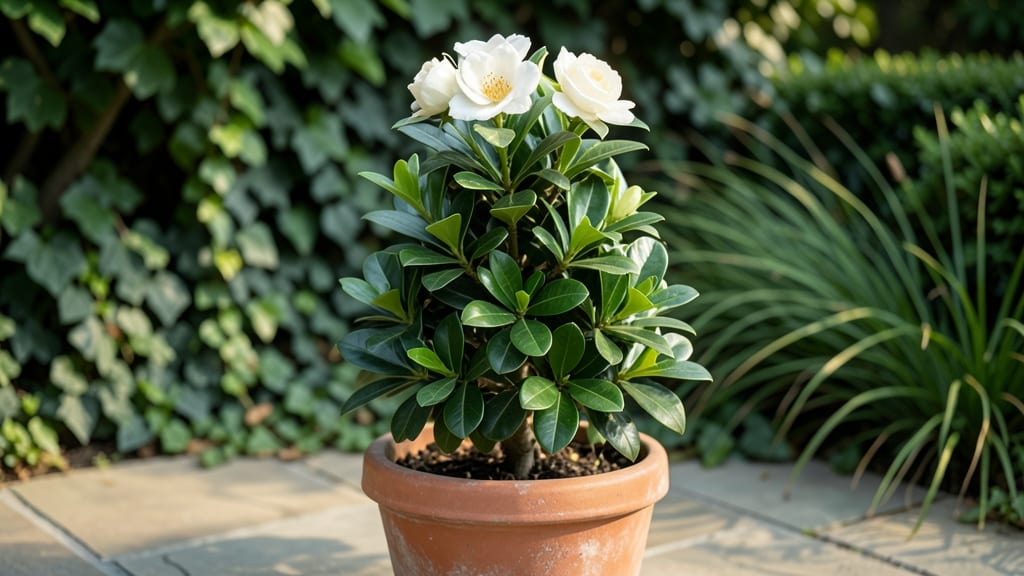
A gardenia topiary plant thrives when you start with dwarf varieties like ‘Radicans’ or ‘Kleim’s Hardy,’ prune carefully in late winter or early spring, and shape branches gradually with sharp pruners while protecting the blooms. Keeping soil consistently moist and providing partial shade will help your sculpted gardenia maintain its form and fragrance.
Gardenia topiary plants are all about patience and precision—these fragrant shrubs need the right variety to begin with. 🌸 The compact ‘Radicans’ grows just 2-3 feet tall, making it ideal for small-scale designs, while ‘Kleim’s Hardy’ handles cooler climates better.
The key is pruning during dormancy (late winter) to encourage dense growth, but never over-trimming or you’ll sacrifice those iconic white blooms. I’ve found that using wire supports while shaping helps maintain the structure until new growth fills in naturally.
Once you’ve chosen your variety and pruned correctly, maintaining the right conditions is crucial. Gardenias love partial shade—think morning sun with afternoon protection—and their soil should stay consistently moist but never soggy.
A humidity tray or pebble tray underneath the pot can work wonders if your home air gets dry. With the right care, your topiary will reward you with glossy leaves and heavy fragrance all season long.
💡 In This Article
- How to Prune Gardenia Topiary for Perfect Shapes
- Best Gardenia Varieties for Topiary Designs
How to prune gardenia topiary for perfect shapes
Pruning gardenia topiary at the right time is everything—aim for late winter or early spring, just as new growth begins to sprout. This timing aligns with the plant's natural dormancy period, reducing stress and allowing energy to focus on fresh, dense foliage.
The goal is to shape while preserving the plant's ability to produce those signature white blooms, which form on old wood. Use bypass pruners (not anvil pruners) to make clean cuts at a 45-degree angle, about ¼ inch above a leaf node to encourage branching.
The shaping process starts with thinning—remove up to 30% of the plant's oldest, thickest branches to improve airflow and sunlight penetration. This prevents fungal issues and encourages uniform growth. For classic topiary shapes like spirals or globes, use copper or plastic topiary wire wrapped around branches to guide new growth.
I’ve found that securing wire at 6-inch intervals along the stem creates the most defined curves. 🌿 Always step back and check your work—topiary is about balance, so avoid over-trimming one side that could lead to lopsided growth.
What most gardeners overlook is the importance of gradual shaping. Never try to achieve your final form in one session—this shocks the plant and risks stunted growth. Instead, make small adjustments every 4-6 weeks during the growing season.
For example, if you're aiming for a tiered design, focus on pruning the top layer first, then work your way down. This layered approach mimics how gardenia naturally grows, with stronger branches at the base supporting lighter growth above.
Tools make all the difference here. Beyond bypass pruners, keep hand pruners for smaller cuts and a sharp serrated knife for clean finishes on larger branches. Disinfect tools with rubbing alcohol between cuts to prevent disease spread.
Pro tip: Wearing gloves protects your skin from the plant’s mild irritants, especially when handling dense foliage. The right tools and technique ensure your gardenia topiary stays healthy while achieving that polished, sculpted look.
Airflow is non-negotiable for topiary health. Dense foliage traps moisture, creating ideal conditions for powdery mildew—a common issue with gardenias. When pruning, always aim to create an open center, even in globe shapes. This might feel counterintuitive when shaping, but it’s what keeps your topiary thriving.
Think of it like sculpting with negative space—what you leave out is just as important as what you trim. 🌸 For example, a spiral topiary should have visible gaps between each coil to allow air circulation.
Finally, don’t forget to feed your topiary after major pruning sessions. Gardenias are heavy feeders, especially when recovering from shaping. Use a balanced fertilizer (10-10-10) diluted to half-strength, applied every 4-6 weeks during the growing season.
This gives your plant the nutrients it needs to fill out its new shape with vibrant, fragrant blooms. The key is consistency—both in your pruning schedule and in providing the right care.