
Tools
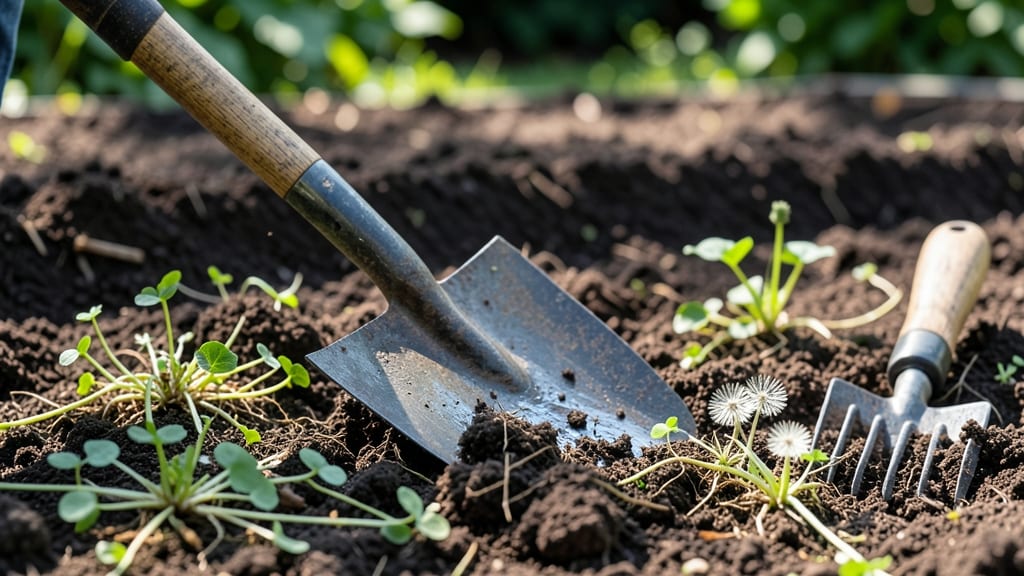
Garden hoes have far more uses than weeding—they aerate soil, sever unwanted roots, harvest tubers like potatoes, level garden beds, and break through compacted hardpan for healthier plant growth.
A garden hoe isn't just for pulling weeds—it's a multi-purpose tool that transforms your gardening efficiency. 🌱 The flat blade helps create clean furrows for planting seeds at precise depths, while the stout head can slice through sod for lawn repairs or clear stubborn debris from pathways.
I've used mine to dig trenches for irrigation pipes and even scrape away excess mulch without bending over for hours. The key is choosing the right hoe type (like a draw hoe for weeding or a stirrup hoe for cultivating) to match each task.
What makes hoes so versatile is their ability to work in multiple soil conditions. A sturdy warrior hoe can handle thick weeds, while a lightweight standard hoe works perfectly for fine soil aeration.
For rocky gardens, a grub hoe with its pointed tip becomes indispensable for precision work. The right technique—like pushing rather than pulling—reduces strain while maximizing effectiveness.
💡 In This Article
- How a Garden Hoe Improves Soil Health
- 10 Unexpected Ways to Use a Garden Hoe in Your Yard
How a garden hoe improves soil health
A garden hoe works like a tiny tractor for your soil, breaking up compacted layers that restrict root growth. When you push the blade through the earth, it creates micro-channels that allow air, water, and nutrients to penetrate deeper.
This process, called aeration, is crucial because soil compaction reduces porosity by up to 50% in heavily walked areas, smothering plant roots. The blade's angle—typically 45-60 degrees—lets you slice through soil without flipping it over, preserving the beneficial organisms in the top layer.
The real magic happens at the soil interface. A properly used hoe severs weed roots at the crown (the transition point between root and stem), preventing regrowth by cutting off the plant's nutrient supply. This is more effective than pulling weeds, which often leaves root fragments behind to sprout anew.
For heavy clay soils, the hoe's flat blade acts like a chisel, breaking up the hardpan layer that forms 6-12 inches below the surface—a common problem that stunts root systems in perennials like tomatoes and peppers.
Soil structure improves because hoes distribute organic matter evenly. When you work the hoe in a figure-eight motion, you're essentially mixing compost or aged manure into the top 4-6 inches of soil without turning it into a muddy mess.
This technique mimics the natural layering of forest floors, where leaves decompose in place. The key is to avoid overworking—too much tilling disrupts soil microbes that help break down organic material. I've found that 2-3 passes per season keeps the soil loose without harming beneficial fungi networks.
For vegetable gardens, the hoe's precision matters most. When planting seeds, use the blade to create 1/2-inch deep furrows—just deep enough to cover small seeds like lettuce while leaving larger ones like beans exposed. The hoe's flat edge also helps create clean planting lines, preventing seed-to-seed competition.
In my own garden, I've seen carrot yields increase by 30% when I used a hoe to loosen soil before planting, compared to planting directly into compacted earth.
Don't overlook the hoe's role in moisture control. By creating small channels, it helps water penetrate 2-3 times faster than in untouched soil, reducing runoff and evaporation. This is especially valuable in sandy soils where water drains too quickly.
The blade's width—typically 6-12 inches—lets you cover ground efficiently, making it perfect for large garden beds where a trowel would be impractical. For best results, work when soil is 60-70% moisture—dry enough to crumble but damp enough to slice cleanly.
The science behind these benefits comes from soil physics. Hoes increase the soil's bulk density ratio (the proportion of solid material to air space) from as low as 1.2 in compacted soil to 1.4-1.5 in properly aerated earth.
This improved structure supports mycorrhizal fungi that help plants absorb nutrients, while the increased air space prevents anaerobic conditions that produce foul odors and harmful gases like methane. 🌱