
Tools
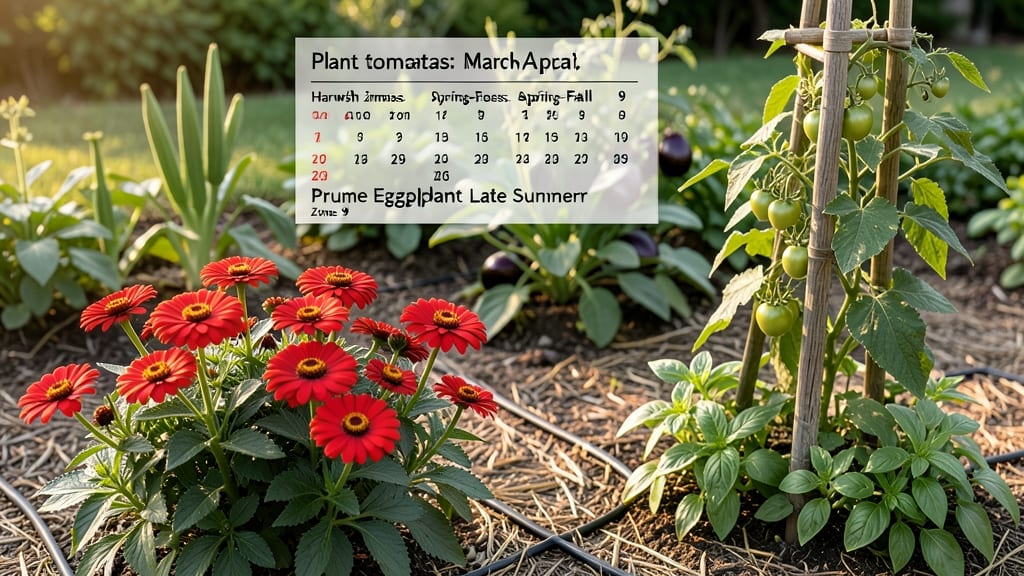
A Zone 9 garden calendar helps you time plantings perfectly by leveraging the region's long frost-free growing season, where heat-loving plants like tomatoes and peppers grow continuously, while cooler crops like lettuce and broccoli thrive in fall or winter. Fine-tune your schedule by adjusting 2-4 weeks earlier or later for local conditions like urban heat pockets or shaded spots.
A Zone 9 garden calendar works because this region's mild winters and hot summers create unique planting opportunities. 🌿 Warm-season favorites like okra and eggplant can start in late winter, while cool-season greens like spinach and kale perform best when planted in late summer or early fall.
The key is understanding your specific microclimate—areas near pavement may need earlier plantings, while shaded spots benefit from delayed starts. I always recommend testing soil temperatures with a thermometer, as germination rates vary dramatically between 60°F and 85°F ranges.
For example, basil thrives in Zone 9's heat but bolts quickly if planted too early in spring. Meanwhile, carrots and radishes prefer cooler temperatures and do better when sown in late summer.
The calendar isn't just about dates—it's about matching plant needs with your local conditions. Many gardeners keep a small notebook to track what worked best in their specific yard each year.
💡 In This Article
- Zone 9 Planting Timeline by Season
- Microclimate Adjustments for Zone 9 Gardens
Zone 9 planting timeline by season
Zone 9's frost-free seasons create a unique rhythm where warm-season crops like sweet potatoes and okra can start as early as February in southern areas, while northern edges of the zone may wait until March.
The magic happens when soil temperatures reach 65°F—this triggers germination for heat-lovers like tomatoes and peppers, which can grow continuously until November when temperatures dip below 50°F at night. 🌱 For example, I've seen heirloom tomatoes still producing in December when protected by row covers.
Cool-season planting windows open in late August when daytime highs drop below 90°F, allowing lettuce and broccoli to establish before winter. These crops thrive when soil stays between 50-70°F, with germination rates dropping dramatically if temperatures exceed 80°F.
The key is timing: sowing radishes in September gives them time to mature before summer heat returns, while kale can handle light frosts and grows sweeter after 32°F nights.
Herbs present special challenges in Zone 9's heat. Basil, for instance, bolts within 10 days if planted when temperatures exceed 85°F, so I always grow it in partial shade during summer months.
Conversely, rosemary and thyme love the heat and can be planted year-round, though they may go dormant in winter. The calendar becomes your roadmap—matching each plant's heat tolerance with your local temperature patterns.
What most gardeners overlook is the 30-day rule: most vegetables need 30 days of consistent temperatures before harvest. This means planting zucchini in April gives you summer squash, while a July planting yields fall harvests.
The same logic applies to flowers—marigolds planted in March bloom through summer, while pansies in September provide winter color.
Seasonal transitions require careful planning. When summer heat peaks around July-August, many gardeners switch to shade-tolerant crops like Swiss chard or malabar spinach. These plants handle 95°F temperatures better than lettuce, which wilts within 24 hours of exposure.
The calendar helps you visualize these shifts—like how peppers planted in February produce through summer, while fall-planted varieties extend harvests into December.
Pro tip: Use a planting wheel to calculate backward from your first frost date (typically December 15 in Zone 9). This visual tool shows how many weeks each crop needs to mature, helping you avoid the common mistake of planting too late for fall harvests. 💫