
Shrubs
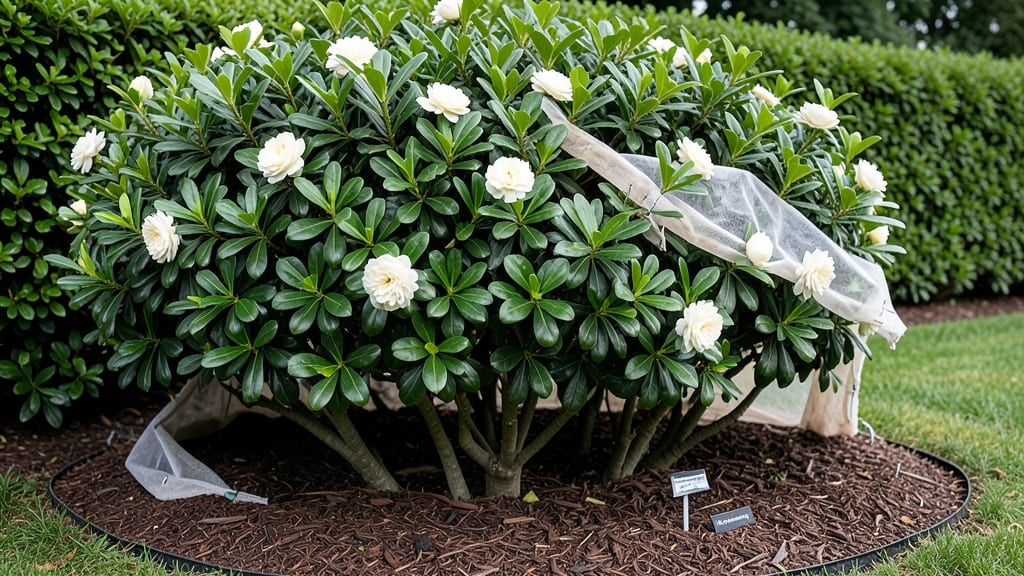
A frost-proof gardenia hedge starts with cold-resistant varieties like Radicans or Kleim’s Hardy, planted in sheltered spots with proper mulching and wind protection. Strategic late-winter pruning prevents frost damage while maintaining shape.
A frost-proof gardenia hedge isn't just about choosing the right plants—it's about creating the perfect growing conditions. 🌿 The key varieties like Radicans can handle temperatures down to 15°F, but they still need protection from harsh winds and sudden freezes.
I've found that planting near south-facing walls or using evergreen windbreaks adds an extra layer of insulation. The real secret lies in the soil: gardenias thrive in acidic, well-draining conditions, so I always mix in peat moss or pine bark fines during planting.
Mulching with 3-4 inches of organic material in fall creates a protective barrier that keeps roots stable through winter.
What many gardeners overlook is the timing of pruning. Cutting back in late winter (after the last frost) encourages new growth just as temperatures warm, but pruning too early can expose tender new shoots to frost damage.
I recommend shaping your hedge lightly in spring for final touches, as this is when gardenias really wake up from dormancy. The goal is to balance winter protection with springtime growth potential—it takes patience but pays off with lush, fragrant blooms all season.
💡 In This Article
- Cold-Resistant Gardenia Varieties for Hedges
- Protecting Gardenia Hedges from Frost: Planting and Care Tips
Cold-resistant gardenia varieties for hedges
When selecting gardenia varieties for colder climates, the key lies in their genetic resilience. Gardenia jasminoides ‘Radicans’ stands out as the most cold-tolerant option, capable of surviving brief exposures to 15°F temperatures—though prolonged freezes below 20°F may still cause leaf damage.
This variety’s compact growth habit (reaching 3-5 feet tall) makes it ideal for hedges, with glossy dark green leaves that provide year-round structure. 🌸 What sets it apart is its ability to rebloom after winter dormancy, often producing fragrant white flowers from late spring through summer.
The Gardenia augusta ‘Kleim’s Hardy’ is another excellent choice, extending cold tolerance to 10°F with proper protection. Unlike its tropical cousins, this variety develops thicker stems and more robust roots, which helps it recover from winter stress.
Both varieties thrive in USDA zones 7-10, but with strategic planting techniques, they can push into zone 6 with minimal winter damage. The trade-off? These hardy varieties typically produce slightly smaller blooms (about 2-3 inches in diameter) compared to tropical gardenias, but the fragrance remains equally intoxicating.
For gardeners in transitional zones, consider the hybrid ‘Veitchii’, which combines the cold hardiness of ‘Radicans’ with the larger flowers of tropical varieties. This crossbreed reaches 4-6 feet tall and handles 18°F temperatures when properly mulched.
The secret to their success lies in their ability to enter partial dormancy—shedding leaves but preserving root systems—rather than suffering complete winterkill. This adaptation allows them to bounce back quickly once temperatures rise in spring.
Visual differences between varieties become apparent in their growth patterns. ‘Radicans’ grows in a more upright, bushy form, ideal for formal hedges, while ‘Kleim’s Hardy’ has a slightly more sprawling habit that works well for informal screens.
Both varieties benefit from regular pruning to maintain shape, but their cold tolerance means you can delay pruning until after the last frost risk has passed. This timing prevents exposing tender new growth to late-season freezes.
What most gardeners don’t realize is that these cold-resistant varieties actually perform better in cooler climates than their tropical counterparts. The reduced humidity and fungal pressure in drier climates mean fewer issues with powdery mildew, a common problem for gardenias in hot, humid zones.
The trade-off is slightly less vigorous growth, but the increased reliability makes them worth the choice for northern gardeners. 💫
For maximum winter survival, pair these varieties with proper site selection. South-facing slopes capture winter sun while minimizing wind exposure, while evergreen windbreaks (like arborvitae) create microclimates that can raise soil temperatures by 5-10°F during cold snaps.
The combination of cold-hardy genetics and smart planting creates a hedge that thrives where tropical gardenias would perish.