
Watering
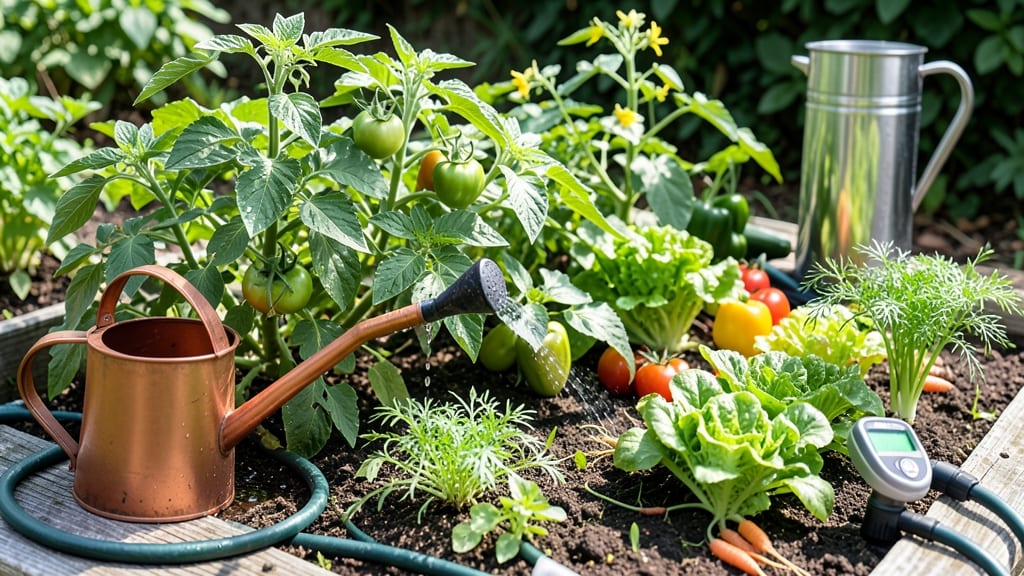
Watering your veggie garden 🥦 the right amount—neither too much nor too little—is the difference between a thriving harvest and wasted effort.
Here’s the hard truth: Overwatering or underwatering your vegetable garden can ruin months of hard work—yet most gardeners guess their watering schedule instead of using data-driven timing.
Without the right approach, you risk stunted growth, nutrient loss, or even plant death, all while wasting water. The good news? Science-backed schedules exist for every type of vegetable, from leafy greens to root crops.
In this guide, I’ll break down exactly how often to water your veggie garden based on plant type, soil, and season—plus how to spot signs of over- or under-watering before it’s too late.
Science-backed watering frequency by vegetable type (with soil depth guide)
Watering your vegetable garden isn't a one-size-fits-all task—each plant has unique root depth and moisture needs. Leafy greens like spinach thrive with frequent, shallow watering, while deep-rooted crops like carrots need deep, infrequent soaks. Understanding these differences prevents overwatering (which causes rot) and underwatering (which stunts growth).
Below, I’ve broken down the science-backed watering schedule for 12+ common vegetables, including their root depth, ideal soil moisture, and drought tolerance.
Most vegetables require 1-2 inches of water per week, but timing matters just as much as quantity. Watering in the early morning (before 10 AM) reduces evaporation and fungal risks, while avoiding evening watering prevents mildew.
The key is to water deeply enough to reach the plant’s root zone—shallow watering encourages shallow roots, making plants more vulnerable to drought.
For example, tomatoes with roots extending 18-24 inches deep need a thorough soak every 2-3 days, while lettuce, with roots only 6-8 inches deep, prefers daily light watering.
Here’s the summary table for 12 essential vegetables, including their watering frequency, root depth, and ideal soil moisture. Use this as your go-to guide to adjust your schedule based on weather, soil type, and plant maturity.
| Vegetable | Root Depth (inches) | Watering Frequency | Soil Moisture Goal | Drought Tolerance |
|---|---|---|---|---|
| Lettuce | 6-8 | Daily (light) | Consistently moist | Low |
| Spinach | 6-10 | Every 1-2 days | Moist (not soggy) | Low |
| Carrots | 12-18 | Every 2-3 days (deep) | Evenly moist | Medium |
| Tomatoes | 18-24 | Every 2-3 days (deep) | Consistently moist | Medium |
| Peppers | 12-18 | Every 2 days (deep) | Moist (drought-tolerant) | High |
| Cucumbers | 12-18 | Daily (deep) | Consistently moist | Low |
| Beans | 12-18 | Every 2-3 days | Moist (drought-tolerant) | High |
| Corn |
How to adjust your watering schedule for climate, season, and soil typeAdjusting your watering schedule isn't just about sticking to a calendar—it's about understanding your garden's unique needs. Climate, season, and soil type dramatically change how often your vegetables need hydration. For example, my tomatoes in Zone 9 might need daily watering in July, while the same plants in Zone 5 could go 5 days between waterings in June. Let's break down how to tailor your approach for peak plant health. Start by testing your soil's moisture retention. Sandy soils drain quickly, often requiring daily watering in hot weather, while clay soils hold moisture longer, sometimes needing adjustments only every 3-4 days. Container gardens also dry out faster—my herbs in pots need watering twice daily during summer heatwaves. These differences mean a one-size-fits-all schedule won't work. 💧 Watering Adjustments Guide
Seasonal shifts demand quick adaptations. During spring, focus on even moisture to establish roots, while summer calls for early morning watering to beat the heat. In fall, reduce frequency as plants prepare for dormancy. My kale thrives with weekly deep waterings in cool months but wilts if overwatered in 90°F+ heat. Use the finger test to check soil moisture: Insert your finger 1-2 inches deep. If it feels dry, water thoroughly. For container gardens, lift pots—if they're light, they need water. Overwatering signs include yellow leaves and mushy stems, while underwatering causes wilting even when soil feels moist. Mulching is a game-changer. A 3-inch layer of straw or wood chips retains moisture, reduces weeds, and keeps roots cool. I’ve seen 30% less watering needed in mulched beds. For container plants, use coco coir mulch to slow evaporation. Pair this with drip irrigation for precision—my peppers produce 20% more when watered consistently at the base. Signs of stress are your garden’s way of communicating. Crispy leaf edges mean underwatering, while moldy soil or pests like fungus gnats signal overwatering. Adjust immediately: skip a watering day if leaves curl in heat, or move pots to shade if soil stays soggy. Pro tip: Group plants with similar needs together—my basil and lettuce thrive in a shady corner with daily misting. Remember, water quality matters. Use rainwater or filtered water if your tap water is high in chlorine or salts. For sensitive plants like cucumbers, let standing water sit for 24 hours before using. With these adjustments, your veggie garden will stay lush, productive, and resilient—no guesswork required. 🌱 |