
Tools
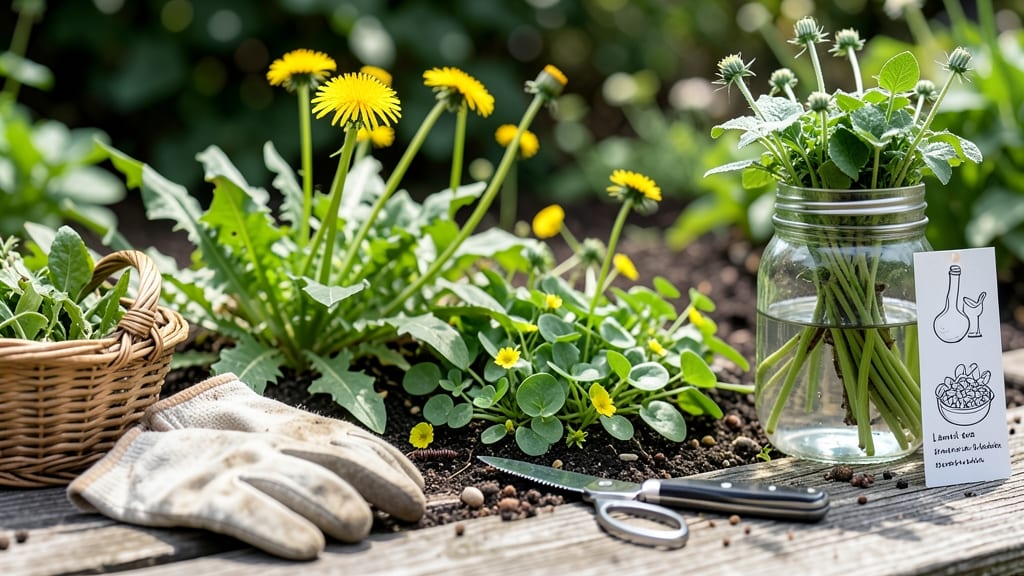
Eating weeds from the garden can be safe if you correctly identify edible varieties like dandelion greens, purslane, or chickweed, but avoid toxic plants such as poison ivy or foxglove. Always confirm identification before consuming and harvest from pesticide-free areas.
Many gardeners overlook the fact that some "weeds" are actually nutrient-packed edibles. Dandelion greens, for example, are packed with vitamins A and K, while purslane offers omega-3s and magnesium—both thrive in disturbed soil and grow prolifically. 🌱 The key is learning to distinguish these beneficial plants from their dangerous look-alikes, like poison hemlock (which resembles wild carrot) or water hemlock (often confused with wild celery).
I always recommend using a field guide or reliable app for verification, especially when dealing with young plants that may not show distinguishing features yet.
Once you've confirmed safety, harvesting is straightforward: pick leaves before flowering for maximum tenderness, and avoid areas treated with herbicides or pesticides. Chickweed and plantain are two more common edibles that grow in sunny spots—both have mild, slightly bitter flavors perfect for salads or pestos.
For best results, harvest in the morning after dew has dried but before the heat of the day sets in.
💡 In This Article
- Edible Weeds vs Toxic Look-Alikes: Key Identification Tips
- Best Garden Weeds to Harvest and How to Prepare Them
Edible weeds vs toxic look-alikes: key identification tips
Distinguishing edible weeds from toxic look-alikes often comes down to three key features: leaf arrangement, stem structure, and root shape.
For example, dandelion greens have deeply lobed leaves growing in a rosette pattern from a taproot, while poison hemlock (a deadly mimic) has smooth, finely divided leaves arranged alternately along a hollow stem.
The difference in leaf texture is striking—dandelion leaves feel slightly fuzzy, whereas poison hemlock leaves are smooth and almost waxy to the touch. 🌿
Another critical visual clue is flower structure. Edible purslane produces small yellow flowers with five petals, while its toxic cousin spurred anise has purple flowers with a distinctive spur at the base.
The root structure also provides vital clues: edible plantain has broad, oval leaves with parallel veins and a fibrous root system, whereas poison ivy features three glossy leaflets and a vine-like growth habit.
Always perform a touch test for poison ivy—if the leaves cause an itchy rash within minutes, it's definitely not edible.
Seasonal growth patterns can help too. Many edible weeds like chickweed thrive in cool weather and bolt when temperatures rise above 75°F, while toxic species often persist longer. Harvesting young leaves (before flowering) ensures maximum tenderness—dandelion greens, for instance, become bitter as they mature.
The golden rule is to cross-reference visual features with a reliable field guide or app, especially when dealing with plants in the Apiaceae family (like wild carrot vs. poison hemlock), where toxic members often mimic edible ones.
Color can be misleading—some toxic plants like foxglove have beautiful purple flowers, while edible violets share similar blooms. The key difference lies in the leaves: foxglove has large, hairy leaves with a milky sap, while violets have smooth, heart-shaped leaves with a distinct violet scent.
Always examine the entire plant, not just the leaves or flowers, as some toxic compounds concentrate in specific parts. For example, water hemlock roots contain the deadly cicutoxin, making even accidental ingestion dangerous.
When in doubt, use the three-part test: leaf shape, growth pattern, and touch sensitivity. Edible weeds typically have broad leaves arranged in a rosette, while toxic species often feature compound leaves or alternate arrangements.
The smell test works too—many edible weeds like stinging nettle (when cooked) have a pleasant aroma, whereas toxic plants often emit a foul or bitter scent. Always harvest from organic, pesticide-free gardens to minimize contamination risks.
Consider these common edible weeds and their toxic look-alikes:
- Dandelion: Deeply lobed leaves, hollow stem, milky sap when broken (edible); Poison Hemlock: Smooth leaves, ridged stem, no milky sap (toxic)
- Purslane: Succulent stems, yellow flowers (edible); Spurred Anise: Purple flowers with spurs (toxic)
- Plantain: Broad leaves with parallel veins (edible); Poison Ivy: Three leaflets, vine-like growth (toxic)
Remember, even edible weeds can cause stomach upset if consumed in excess—always introduce new plants gradually. Start with small amounts (about 1-2 tablespoons per serving) to test your tolerance. 🌱