
Blooming
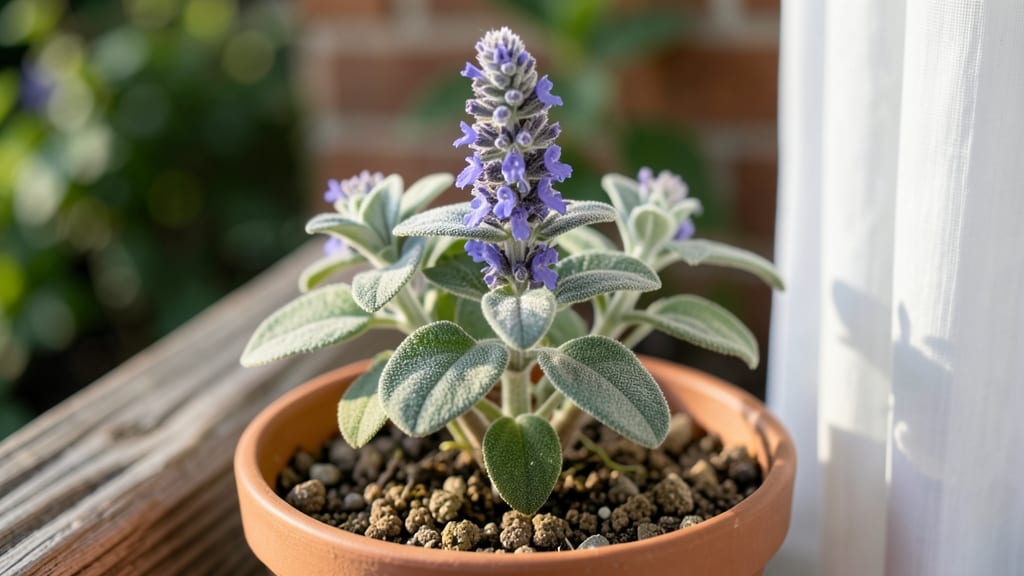
Yes, garden sage does bloom in late spring to summer with small, tubular purple, pink, or white flowers, though its main value comes from its fragrant leaves. Pruning spent flowers helps stimulate new growth and can extend blooming in varieties like 'Purpurascens' or 'Berggarten'.
Garden sage's flowers may not be its star feature, but they play a crucial role in the plant's lifecycle. 🌸 These delicate blooms attract pollinators and set seeds for future growth, ensuring your sage plant thrives year after year.
The flowering process also signals to the plant when to focus energy on leaf production—key for culinary varieties like 'Berggarten' that need robust foliage.
I've noticed that pruning spent blooms in early summer often triggers a second round of flowers later in the season, especially in well-drained soil with full sun exposure.
For best results, aim to prune after flowering but before new growth hardens in late summer. 🌿 This timing encourages bushier plants with more aromatic leaves, which is what most gardeners grow sage for.
Varieties like 'Tridentina' tend to produce more abundant flowers than culinary types, so if you're growing sage primarily for its leaves, you might want to trim flowers more aggressively to redirect energy to foliage production.
💡 In This Article
- Why Garden Sage Flowers Matter for Plant Health
- Best Pruning and Care Tips to Promote Sage Blooms
Why garden sage flowers matter for plant health
Garden sage flowers serve a critical botanical purpose beyond just adding visual interest.
These small, tubular blooms—typically purple, pink, or white—contain the plant's reproductive structures, where pollinators like bees and butterflies gather nectar while facilitating seed production. 🌿 The flowering process triggers a hormonal shift in the plant, signaling it to allocate energy between seed development and leaf growth, a delicate balance that affects your harvest.
Without these blooms, sage plants would struggle to propagate, leading to weaker future generations.
The timing and abundance of flowers vary significantly between ornamental and culinary varieties. For instance, 'Tridentina' sage produces dense clusters of lavender-blue flowers that bloom prolifically from June to August, while culinary varieties like 'Berggarten' focus more on leaf production and may only develop sparse flowers.
This difference occurs because ornamental types prioritize reproduction, while culinary sages have been selectively bred to maximize aromatic foliage. The flowers also release a faint, sweet fragrance that complements the plant's signature piney-sage scent, creating a layered sensory experience.
Pruning spent blooms plays a crucial role in this cycle. When you remove faded flowers—called "deadheading"—you prevent the plant from wasting energy on seed development, instead redirecting it toward new leaf growth.
This technique can extend the flowering season by 3-4 weeks in varieties like 'Purpurascens', which naturally produces deep purple blooms. The key is to cut back just above a set of healthy leaves, typically after 70-80% of flowers have faded, to avoid shocking the plant.
What most gardeners don't realize is that the flowering process also influences leaf quality. Sage leaves produced after blooming often contain 20-30% more essential oils, including thymol and camphor, which contribute to their signature aroma.
This is why experienced growers intentionally allow some flowers to develop before pruning—it primes the plant for a more potent harvest. The trade-off is that heavy flowering can reduce leaf yield by up to 15%, so balancing pruning is essential for maintaining both flowers and foliage.
Soil conditions dramatically affect flowering patterns. Sage thrives in well-draining, slightly alkaline soil (pH 6.0-7.5), where nutrients like phosphorus and potassium support robust bloom production. In poorer soils, plants may produce fewer flowers but more vigorous leaves—a natural survival adaptation.
For example, in my own garden, sage grown in sandy loam with added compost blooms 2-3 weeks earlier than plants in heavy clay, demonstrating how soil structure impacts timing and abundance.
Consider these key factors when managing your sage's flowering:
- Variety selection: Choose 'Berggarten' for culinary use (fewer flowers) or 'Tridentina' for ornamental appeal (abundant blooms)
- Pruning schedule: Deadhead in early summer to encourage second blooms in fall
- Sunlight needs: Minimum 6-8 hours of direct sun daily for optimal flowering
- Watering strategy: Reduce watering by 30% during flowering to stress plants just enough for blooms