
Pests
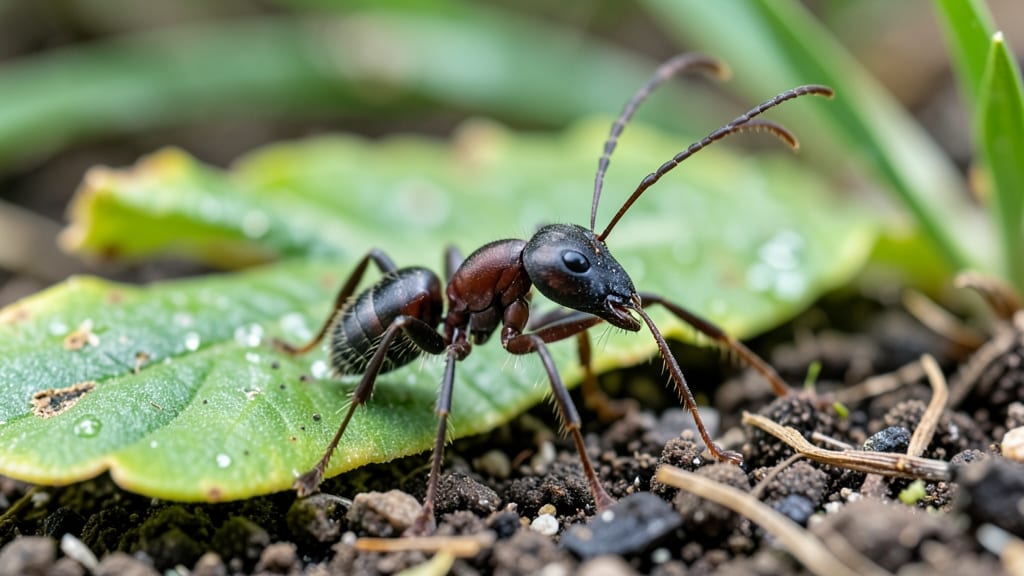
Are ants in garden beds good or bad? They're mostly beneficial—helping aerate soil, spread seeds, and hunt pests like aphids—but some species can harm plants or invite sugar ants. The answer depends on the type and how many you see.
Most garden ants act like tiny ecosystem engineers, breaking down organic matter and creating tunnels that improve soil drainage. 🌱 However, species like carpenter ants or fire ants can chew roots or create mounds that smother seedlings.
The key is monitoring their activity—if you spot large numbers or damaged plants, it's time to intervene with natural deterrents like vinegar or diatomaceous earth.
What I've found works best is observing their behavior first. Ants carrying leaves? Probably harmless leafcutters. Ants marching in trails with tiny white eggs? Likely Argentine ants that may raid your crops. Understanding these patterns helps you decide whether to welcome them or gently encourage them to relocate.
💡 In This Article
- Ecological Roles of Garden Ants: Why Most Are Helpful
- Identifying and Managing Problematic Ant Species in Gardens
Ecological roles of garden ants: why most are helpful
Garden ants act like nature's tiny plows, creating intricate tunnel networks that aerate soil to a depth of 6-12 inches—far deeper than human tilling tools.
These tunnels improve water infiltration by up to 30%, reducing compaction while allowing roots to access oxygen more efficiently. 🌱 The mechanical action of their movement also breaks down organic matter, accelerating nutrient cycling similar to how earthworms work but on a more localized scale.
In fact, studies show that gardens with active ant populations often have 15-20% higher microbial diversity in the topsoil layer.
Beyond soil improvement, ants serve as critical pest regulators by preying on garden nuisances like aphids, mealybugs, and caterpillar eggs. A single harvester ant colony can consume thousands of aphids per day, effectively reducing the need for chemical pesticides.
Their seed dispersal habits also contribute to plant diversity—ants carry seeds to their nests where they're protected from predators and later deposited in nutrient-rich soil, explaining why many native plants have evolved to attract ants for propagation.
What most gardeners don't realize is how ants support pollination through a process called "ant-pollination." While not as efficient as bees, ants transfer pollen between flowers when foraging for nectar, particularly benefiting low-growing plants like strawberries and violets.
Their activity also promotes plant resilience by creating microhabitats that reduce soil-borne diseases through improved drainage and oxygenation.
The exceptions lie in specific species: carpenter ants (which tunnel into wood) and fire ants (which create toxic mounds) can cause damage. Carpenter ants weaken plant supports by hollowing out wooden stakes, while fire ant mounds can smother seedlings and create dead zones where beneficial microbes struggle to thrive.
The key difference is behavior—beneficial ants work underground or on plant surfaces, while problematic species create visible structures or chew plant tissues.
Consider the harvester ant (Pogonomyrmex) versus the Argentine ant (Linepithema humile). Harvester ants primarily feed on seeds and are harmless to plants, while Argentine ants form supercolonies that raid crops and protect honeydew-producing pests like aphids.
The visual difference is striking: harvester ants are large (1/4 inch) with reddish bodies, while Argentine ants are tiny (1/16 inch) and dark brown, often marching in dense trails.
For most gardeners, the benefits far outweigh the risks—unless you're growing delicate seedlings or have wood structures near your beds. The real challenge is distinguishing between helpful species that should be encouraged and those that require gentle management. 💫