
Pests
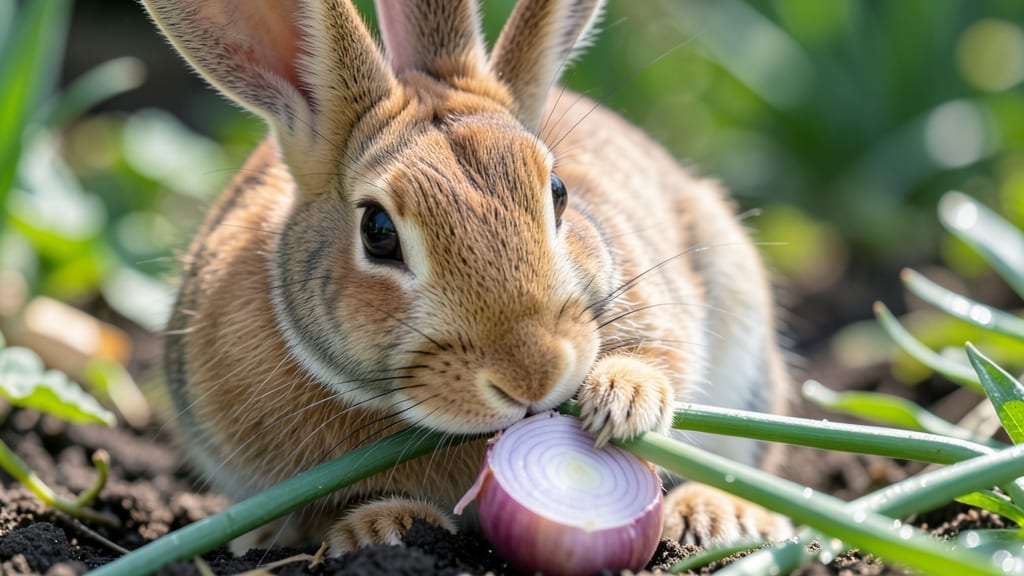
Do rabbits eat onions in gardens? Yes, but they should never consume them—onions contain thiosulfates that cause anemia, digestive upset, and even organ damage in rabbits. Always remove onions and related plants like garlic, leeks, and chives from garden areas where rabbits graze.
Onions and their relatives belong to the allium family, which rabbits instinctively nibble in gardens but can't safely digest. 🌱 The thiosulfate compounds in these plants destroy red blood cells, leading to weakness, pale gums, and even death in severe cases.
Even small amounts can cause problems, so prevention is key—consider planting rabbit-resistant alternatives like nasturtiums or mint near your vegetable beds. I've found that adding a few marigolds around the perimeter creates a natural barrier while adding beauty to your garden.
If you suspect your rabbit has eaten onions, contact a vet immediately—early intervention can make all the difference. The good news is that many common garden plants are perfectly safe for rabbits, including parsley, cilantro, and bell peppers.
These can even serve as healthy snacks while keeping your furry friends out of trouble.
💡 In This Article
- Why Onions Are Dangerous for Rabbits
- Rabbit-Friendly Garden Alternatives to Onions
Why onions are dangerous for rabbits
The real danger in onions lies in their thiosulfate compounds, which are part of what gives them that sharp, pungent aroma. When rabbits ingest even small amounts—just 1/4 of a teaspoon per 2 pounds of body weight—these compounds begin breaking down hemoglobin in their red blood cells.
This process, called hemolytic anemia, turns their bloodstream into a toxic environment where their cells can't carry oxygen effectively. 🔥
The symptoms of onion poisoning develop within 1-3 days and include lethargy, pale gums (from reduced hemoglobin), loss of appetite, and dark-colored urine. Unlike humans who might just get heartburn, rabbits experience organ damage because their livers and kidneys struggle to process the toxic byproducts.
Garlic and shallots contain similar compounds but in slightly different concentrations—garlic is actually more toxic per gram due to higher allicin content.
What makes this particularly insidious is how subtle the early signs can be. A rabbit might seem slightly off-color one day and appear normal the next, masking the progressive damage.
The thiosulfates also irritate their digestive tract, causing gas, bloating, and diarrhea—symptoms that often get confused with less serious stomach upset. This is why gardeners often don't realize their rabbits have been nibbling until it's too late.
Even dried onion powder or cooked onions pose risks because the heat-processing doesn't destroy thiosulfates. The compounds remain stable through cooking, freezing, or dehydration. This means any allium plants—including chives, leeks, and scallions—should be completely removed from areas where rabbits have access, not just covered or fenced off. 🌿
For comparison, a medium-sized onion (about 3 inches in diameter) contains enough thiosulfates to poison a 5-pound rabbit. That's roughly the size of a golf ball—something many gardeners might overlook when planting near rabbit-friendly areas.
The toxicity threshold is so low because rabbits have highly efficient digestive systems that rapidly absorb these compounds.
Here's what happens chemically: thiosulfates interfere with an enzyme called glutathione peroxidase, which normally protects red blood cells. Without this protection, the cell membranes become fragile and rupture, releasing hemoglobin into the bloodstream.
This creates a chain reaction where the liver must work overtime to process the free hemoglobin, leading to jaundice in severe cases.