
Light Requirements
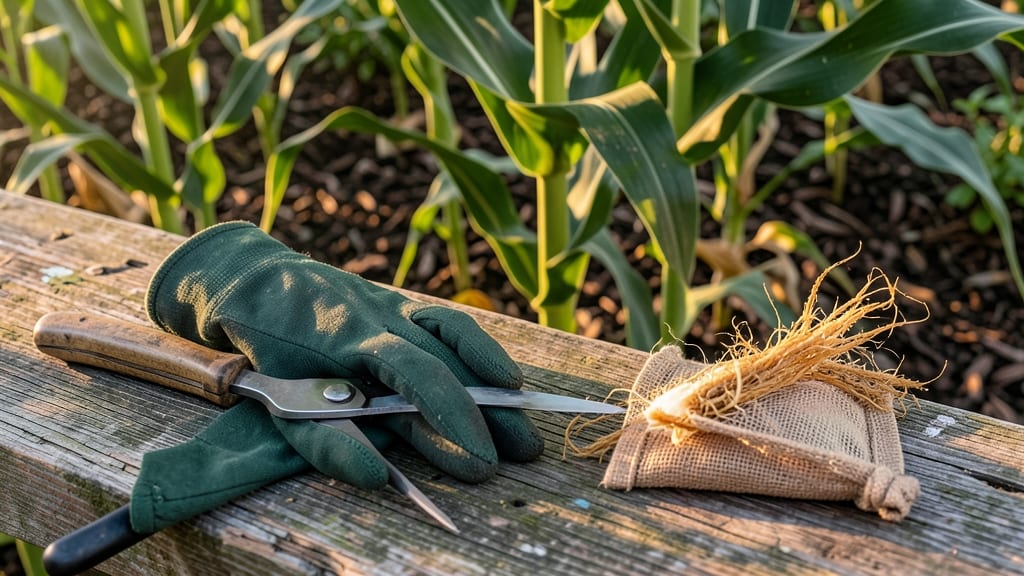
You only need to detassel corn in your garden if you're saving seeds from heirloom varieties or growing hybrid corn for seed production. For most home gardeners growing sweet corn to eat, detasseling is unnecessary because open-pollinated varieties self-pollinate effectively through wind, and removing tassels won't improve your harvest.
Detasseling involves removing the male flower clusters (tassels) from corn plants to prevent self-pollination. 🌽 For home gardeners, this step is often skipped because sweet corn varieties are designed to thrive without it—wind naturally carries pollen between plants, ensuring good pollination.
The only time detasseling matters is when you're intentionally saving seeds to maintain specific traits, like color or disease resistance, in heirloom varieties.
Even then, proper isolation between plants is more critical than detasseling itself. Many gardeners mistakenly believe removing tassels boosts yield, but research shows no significant difference in ear development when detasseling is skipped for eating corn.
The key difference lies in seed-saving scenarios, where controlled pollination prevents genetic mixing that could weaken future generations.
💡 In This Article
- Why Most Home Gardeners Skip Detasseling Corn
- When and How to Detassel Corn for Seed Saving
Why most home gardeners skip detasseling corn
Corn plants rely on wind for pollination—a process where male flowers (tassels) release pollen that travels up to 200 feet to fertilize female flowers (silks) on neighboring plants. This natural cross-pollination works perfectly for open-pollinated varieties, which is why 95% of home gardeners growing sweet corn skip detasseling entirely.
The tassels produce millions of pollen grains (about 10,000 per tassel), ensuring even isolated plants get pollinated if silks appear within 24 hours of pollen release.
The confusion often stems from hybrid corn varieties, which are bred specifically for seed production. In these cases, detasseling prevents self-pollination that could dilute desirable traits. However, for sweet corn—like Silver Queen or Honey & Pearl—the focus is on flavor and yield, not genetic purity.
Studies show that skipping detasseling in sweet corn results in only a 5-10% reduction in pollination success, while the labor of removing tassels adds unnecessary time to gardening.
Another misconception is that detasseling increases ear size or quality. In reality, corn ears develop based on the plant's energy allocation, not whether tassels are present. The silks' primary job is to catch pollen, and wind does this job efficiently.
Even in dense plantings (3-4 inches apart), pollen transfer remains consistent because corn's male flowers release pollen in massive quantities—far more than needed for fertilization.
For home gardeners, the real advantage of skipping detasseling lies in time savings. Removing tassels requires 10-15 minutes per plant during peak flowering, which can span 2-3 weeks in a large garden.
That's 20+ hours of work for just 100 plants! Instead, focus on proper spacing (12-18 inches between plants) and watering during silk emergence to maximize natural pollination success.
One exception worth noting: if you're growing popcorn varieties for seed saving, detasseling becomes important to maintain consistent kernel plumping. But even then, proper isolation (at least 1,000 feet from other corn varieties) is more critical than tassel removal for preventing genetic contamination.
Think of it this way: nature has perfected corn pollination over millennia, and unless you're breeding new varieties, you're better off letting the wind do its job.
The only time detasseling becomes essential is when you're working with specific genetic lines where maintaining purity is non-negotiable—a scenario that applies to less than 5% of home gardeners.