
Picking
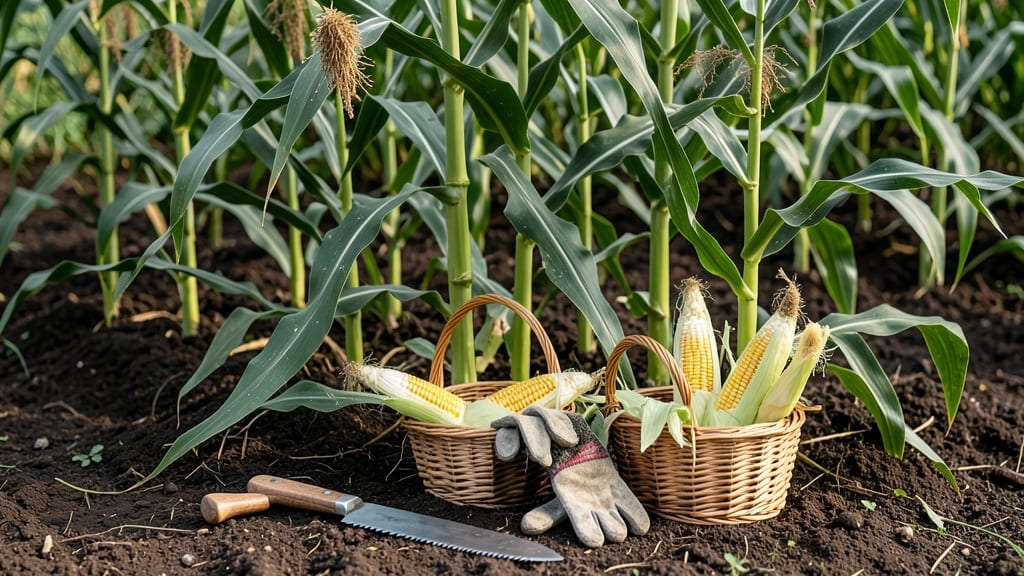
To pick corn from your garden at the perfect moment means catching it in the milky stage—when kernels ooze liquid like fresh milk and silks turn golden-brown.
Nothing beats the taste of fresh corn straight from your garden—if you know the exact moment to harvest it. Picking too early means tough kernels, while waiting too long turns sweetness into starchy disappointment.
Most gardeners miss the window because they focus on one clue—silk color or kernel size—when the truth is in the combination of both. Below, I’ll walk you through the step-by-step test for peak ripeness, plus how to handle uneven ripening across your plants.
You’ll also discover how to store your harvest to keep that garden-fresh flavor for days, so you never waste a single ear. Let’s get started.

How to tell when corn is ready by silk color and kernel stage
Harvesting corn at the perfect moment transforms your garden bounty into sweet, juicy perfection. The key lies in two simple but critical visual cues: the silk color and the kernel stage. When silks turn from vibrant green to tan or brown, that’s your first signal.
But don’t stop there—you’ll also need to check the kernel maturity for that ideal milky stage that guarantees peak sweetness.
I’ve learned the hard way that waiting too long turns kernels starchy and tough, while picking too early means underdeveloped flavor. The silk drying process and kernel firmness test work together to give you that precise window.
Let’s break down exactly what to look for and how to troubleshoot inconsistent ripening across your corn patch.
The silk color shift is your first clue, but it’s not foolproof. Some varieties like sweet corn may dry faster than others. That’s why I always double-check with the kernel maturity test.
Gently squeeze an ear—if it feels plump and firm, that’s a good sign. But the real test? Cutting into a kernel to see that milky liquid at the center.
Here’s where many gardeners go wrong: they rely solely on silk color. While brown silks usually mean maturity, some ears might still need time. That’s why I recommend checking 3-5 days after silks turn brown.
This gives you a buffer for inconsistent ripening, especially in large patches where ears mature at different rates.
If your corn silks stay green and moist longer than expected, it could signal underwatering or cool temperatures. In my garden, I’ve found that consistent morning watering and mulching helps speed up the drying process. For sweet corn varieties, this is especially critical—they’re more sensitive to temperature fluctuations.
Don’t overlook the husk test either. When corn is ready, the husk should pull back easily from the ear. If it resists, the ear likely needs more time.
I’ve also noticed that early-morning harvests yield the sweetest corn because the sugars haven’t had time to convert to starch in the heat of the day.
For super sweet varieties, like those labeled sugar-enhanced, the window for harvest is even narrower. These types may go from perfect to starchy in just 24-48 hours.
That’s why I check my sweet corn daily once the silks start drying. A quick squeeze and a peek at the kernel liquid tell me everything I need to know.
What if your corn ears ripen unevenly? This happens more often than you’d think, especially in hot climates or with late-season planting. My solution? Harvest the earliest ripening plants first and mark the remaining ones with stakes.
This way, I can focus on the lagging ears and give them a few extra days to catch up.
One final tip: if you’re unsure, harvest a few ears and test them. The milky stage is your golden ticket to sweetness. If the kernels are still watery or translucent, give them another day or two.
But if they’re hard and white, you’ve waited too long. That’s the difference between garden-fresh perfection and store-bought disappointment.
With these visual cues and a little patience, you’ll never miss the perfect moment to harvest your corn again. The next time you’re standing in your garden with a knife in hand, just remember: brown silks + milky kernels = harvest time! 🌽
Step-by-step kernel maturity test for perfect sweetness
To guarantee peak sweetness, you can’t rely on silk color alone—you need to test the kernels themselves. The milky stage is your golden ticket, but many gardeners miss subtle clues that signal perfect ripeness.
I’ve learned the hard way that waiting just one extra day can turn sweet kernels into starchy disappointment.
Start by selecting 3-5 ears from different plants, as ripening can vary. The kernel maturity test is simple but requires attention to detail. You’ll need a sharp knife, a small bowl, and a little patience.
This method ensures you harvest at the ideal sweetness window, when sugars peak and starches haven’t taken over.
⚠️ Visual Element: Step-by-Step Kernel Maturity Test
Timing is everything—harvest in the morning when temperatures are cooler. This preserves sweetness longer and prevents the kernels from converting sugars into starch too quickly. If your corn ripens unevenly (a common issue with hot weather or poor pollination), test multiple ears daily.
Pro tip: Keep a harvest journal to track when your specific variety reaches peak ripeness. Factors like soil fertility, watering consistency, and daytime temperatures all influence timing. For example, my sugar-enhanced varieties like 'Silver Queen' ripen 2-3 days earlier than standard types.
Remember, underripe corn tastes bland and starchy, while overripe corn becomes tough and mealy. The milky stage is your sweet spot—don’t miss it! With this method, you’ll enjoy garden-fresh sweetness every time you bite into an ear. 🌽