
Light Requirements
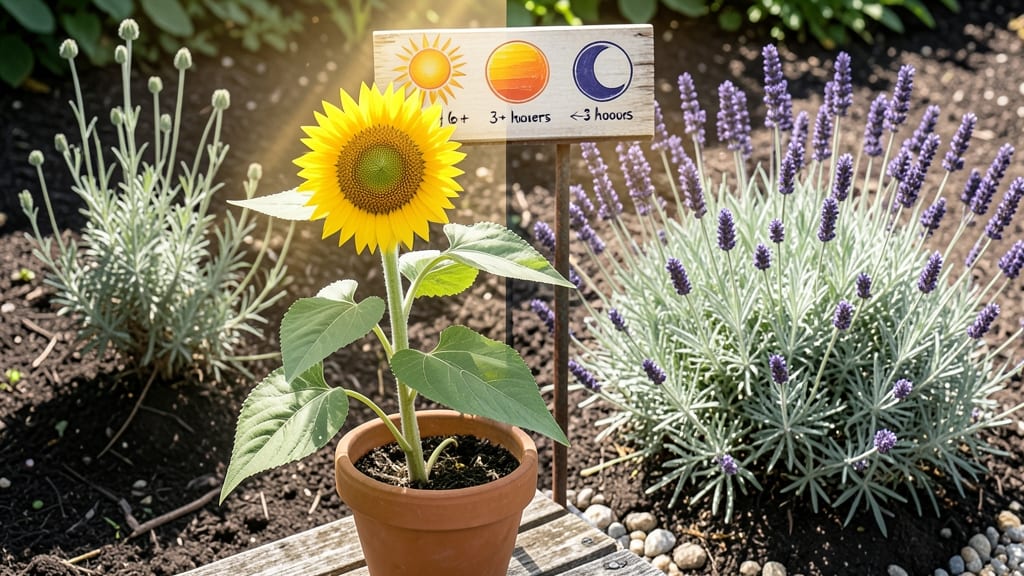
Gardens don't always need full sun—many plants thrive in partial shade, especially in hot climates or shaded areas, where 3-6 hours of sunlight daily is often sufficient for healthy growth without stress.
Partial shade isn't just about cutting back sunlight—it's about creating the right balance for your plants' needs. 🌿 Many gardeners assume full sun is mandatory, but the truth is that too much direct light can actually stress plants in hot climates, causing leaf scorch or stunted growth.
The key is understanding your specific microclimate: a north-facing garden gets less intense light than a south-facing one, and even small obstructions like trees or buildings can create ideal partial shade conditions.
What's fascinating is how different plants interpret "partial shade." Some, like hostas and ferns, actually prefer dappled light with just 3-4 hours of sun, while others like impatiens can handle up to 6 hours.
The secret lies in observing your garden's natural light patterns throughout the day—morning sun behaves differently than afternoon sun, and this distinction can mean the difference between thriving plants and struggling ones.
💡 In This Article
- How Sunlight Affects Plant Growth and Survival
- Best Plants for Low-Light Garden Spaces
How sunlight affects plant growth and survival
Sunlight is the primary energy source for photosynthesis, but too much direct light can actually harm plants—especially in hot climates. The process begins in chloroplasts, where chlorophyll absorbs light to convert carbon dioxide and water into glucose and oxygen.
However, when plants receive more than 6-8 hours of intense sunlight daily, the excess energy can generate reactive oxygen species that damage cell membranes, leading to what we see as leaf scorch or yellowing.
This is why many shade-tolerant plants have evolved thinner leaves with higher chlorophyll concentrations to efficiently capture lower light levels.
The intensity of sunlight matters just as much as duration. For example, morning sunlight (especially in temperate zones) is less harsh than afternoon sun because the angle is lower and UV radiation is less intense.
Plants like hostas and astilbes thrive in these conditions because their leaves are adapted to moderate light—too much direct exposure causes oxidative stress. Conversely, sun-loving plants like tomatoes or marigolds develop thicker, waxy leaf surfaces to reflect excess heat and prevent water loss through transpiration.
Root development also responds dramatically to light exposure. Shade-tolerant plants often grow more extensive root systems to access moisture and nutrients in deeper soil layers, while sun-loving species develop shallower but more fibrous roots to quickly absorb water from surface evaporation.
This is why you'll see ferns spreading aggressively in shaded garden beds—their roots are perfectly adapted to low-light conditions where competition for resources is minimal.
Temperature plays a hidden role in shade tolerance. In hot climates, even partial shade can reduce soil temperatures by 10-15°F, creating a cooler microclimate that protects roots and slows water evaporation.
This is why many tropical plants (like calatheas or peace lilies) prefer indirect light—they're adapted to understory conditions where sunlight is filtered through canopies. The trade-off? These plants often grow slower in full sun because their metabolic processes are optimized for lower light intensity.
What most gardeners overlook is how light quality changes with shade. Full sun contains all wavelengths, while partial shade filters out some blue and red light—critical wavelengths for photosynthesis. Shade-tolerant plants have evolved to use these remaining wavelengths more efficiently, which is why they often appear darker green.
This adaptation explains why a fern might look healthier in a shady corner than a sunflower would in the same spot.
Consider this practical example: In my own USDA Zone 7b garden, impatiens planted in 3-4 hours of morning sun with afternoon shade produced twice as many blooms as those in full sun during summer heatwaves.
The difference? The afternoon shade prevented leaf temperatures from exceeding 90°F, while full-sun plants reached 105°F on hot days, causing irreversible damage. This demonstrates how precise light management can transform plant performance.