
Advice
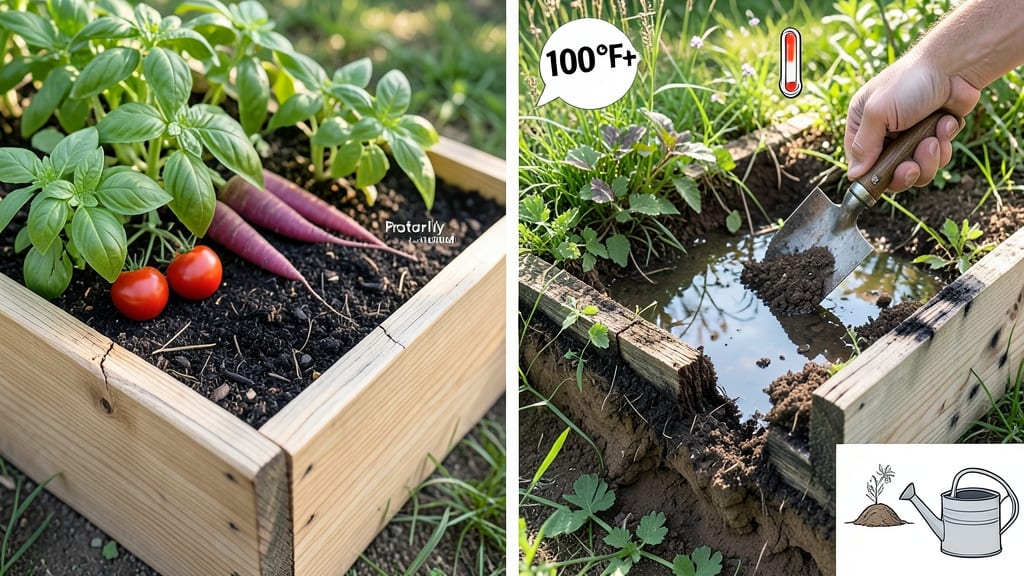
The disadvantages of raised bed gardening include higher initial costs for materials, faster soil drying due to poor moisture retention, and increased weed spread risks from surrounding areas. You may also face limited root space and accessibility challenges for those with mobility issues.
Raised beds require more upfront investment than in-ground planting—wooden frames, quality soil mixes, and amendments can add up quickly, especially for larger setups. 💛 The elevated design also accelerates soil drying since it lacks the natural moisture retention of ground soil, forcing you to water more frequently or invest in irrigation systems.
Plus, if your garden borders grass or weeds, those invasive plants can easily creep into your raised beds through gaps or windborne seeds.
Another consideration is root space—deep-rooted plants like tomatoes or corn may struggle in standard raised beds unless you create taller, deeper frames. For gardeners with mobility limitations, bending to tend raised beds can also become challenging over time, especially if they're placed at ground level rather than on raised platforms.
💡 In This Article
- Why Raised Beds Can Drain Too Quickly and Dry Out Soil
- Cost and Accessibility Challenges in Raised Bed Gardening
Why raised beds can drain too quickly and dry out soil
Raised beds lose moisture at a faster rate because they lack the natural water-holding capacity of in-ground soil. The soil composition in raised beds typically contains more organic matter like compost and peat moss, which breaks down quickly—losing up to 20-30% of its water-holding capacity within 6-12 months.
Without the insulating effect of surrounding earth, the soil heats up faster in sunlight, causing evaporation rates to climb by 30-50% compared to ground-level plots. This is why raised beds often feel dry to the touch even when watered recently.
The aeration benefits of raised beds—what makes them great for root growth—also accelerate moisture loss. Loose, well-drained soil allows air to circulate freely, but this same structure lets water escape through the sides and top.
A 4x8-foot raised bed can lose 1-2 gallons of water per hour on a sunny day without mulch, forcing gardeners to water 2-3 times daily during peak summer months. The lack of capillary action (where groundwater slowly rises to replenish soil moisture) means raised beds rely entirely on surface watering.
Organic matter depletion worsens this issue over time. Fresh compost and peat moss provide initial moisture retention, but as they decompose, they leave behind lighter, less dense soil that holds water poorly.
Without regular amendments like aged compost or coconut coir, the soil structure degrades, resembling sandy loam—which holds only 10-20% of its weight in water compared to clay soil’s 40-50% capacity.
This is why many gardeners notice their raised beds becoming drier year after year unless they actively replenish organic content.
Mulching becomes non-negotiable in raised beds to combat drying. A 3-inch layer of straw or wood chips can reduce evaporation by 50% or more, while also suppressing weeds.
Without mulch, the top inch of soil can dry out within 30-60 minutes on hot days, creating a crust that blocks water penetration. Drip irrigation systems are another game-changer, delivering water directly to plant roots at a controlled rate—something surface watering simply can’t match in raised beds.
Heat retention plays a surprising role too. Dark-colored wood frames absorb and radiate heat, raising soil temperatures by 5-10°F compared to ground soil. This extra heat speeds up microbial activity, which consumes moisture as organisms break down organic matter.
The result? Even more frequent watering needs. For example, basil in a raised bed may wilt by midday unless watered at dawn, while the same plant in ground soil might last until afternoon.
Consider this: A 1-cubic-foot block of raised bed soil can lose 1 pound of water per day in full sun without protection. That’s why many experienced gardeners treat raised beds like desert oases—requiring careful water management to keep plants thriving.
The good news? With proper mulching and irrigation, you can mitigate these issues and enjoy all the benefits of raised bed gardening without the constant watering battle. 💧