
Watering
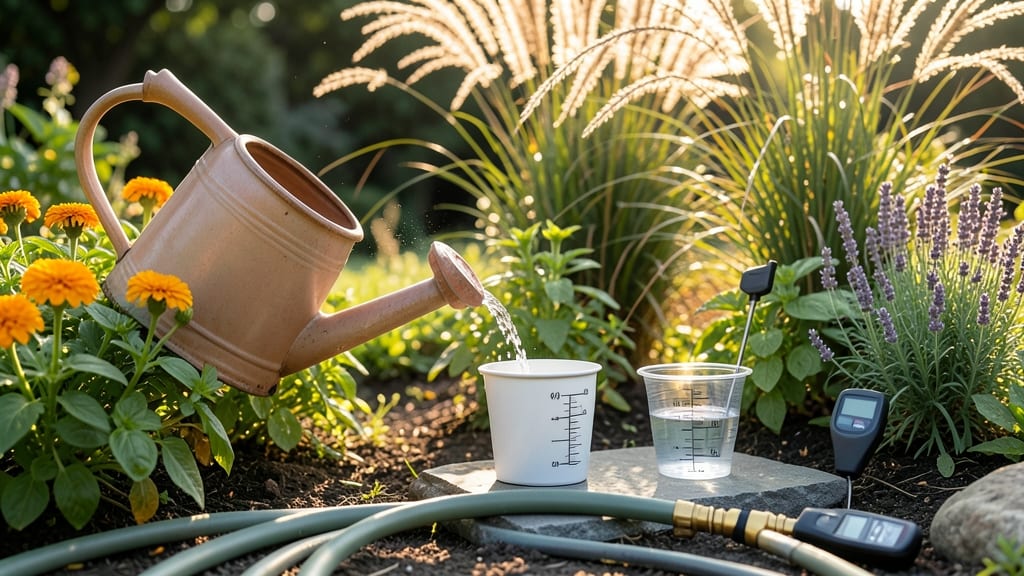
How much water does a garden need per day? The answer is about 1 to 2 inches per week to keep plants thriving—but that number shifts faster than you might expect based on heat, soil type, and what you’re growing.
Overwatering or underwatering your garden can undo months of effort, yet most gardeners guess their plants' needs instead of measuring them. Discover the exact daily water requirements for your plants, backed by soil science and real-world growing conditions, so you never waste a drop (or lose a leaf).
From leafy greens that wilt in dry soil to drought-tolerant herbs that hate soggy roots, every plant has its own rhythm.
This guide breaks down the science behind watering, helps you read your soil like a pro, and shows you how to adjust for rain, wind, and even your local microclimate.
Whether you're a beginner struggling with wilted seedlings or a seasoned gardener looking to cut water waste, you'll learn how to water smarter—not harder—so your garden stays lush, healthy, and productive all season long.
Science-backed daily water requirements by plant type (with exact measurements)
Watering your garden isn't about following a one-size-fits-all rule—each plant type has unique hydration needs based on its root depth and leaf surface area. Leafy greens like lettuce need shallow, frequent watering, while deep-rooted vegetables like carrots require deep, infrequent soaking.
Understanding these differences prevents root rot or wilting while conserving water.
Research from the University of California Cooperative Extension shows that evapotranspiration (ET) rates vary wildly—succulents lose just 0.1 inches/day in heat, while thirsty tomatoes can evaporate 0.4 inches/day in peak summer.
Climate, soil type, and plant maturity further tweak these numbers. Let’s break down the exact daily targets for your garden’s most common residents.
| Plant Type | Daily Water Need (inches) | Soil Moisture Target | Root Depth | Climate Adjustment |
|---|---|---|---|---|
| Leafy Greens (Lettuce, Spinach) | 0.25–0.5 | Top 1–2 inches moist | Shallow (6–12 inches) | +0.1 in hot/dry |
| Herbs (Basil, Cilantro) | 0.3–0.6 | Top 2–3 inches moist | Moderate (12–18 inches) | -0.1 in humidity |
| Fruiting Plants (Tomatoes, Peppers) | 0.4–0.8 | Top 3–4 inches moist | Deep (18–24 inches) | +0.3 in extreme heat |
| Succulents/Cacti (Aloe, Jade) | 0.05–0.1 | Dry between waterings | Very shallow (2–6 inches) | -0.05 in winter |
| Trees/Shrubs (Apple, Rose) | 0.5–1.5 | Top 6–12 inches moist | Very deep (24+ inches) | +0.5 in drought |
For leafy greens like lettuce or spinach, aim for 0.25–0.5 inches daily—they have shallow roots and wilt fast when dry. Use a sprinkler or drip system to keep the top 1–2 inches of soil moist without oversaturating.
In hot climates, boost this by 0.1 inches to compensate for rapid evaporation. Mulch with straw to lock in moisture and reduce frequency.
Herbs like basil and cilantro need slightly more—0.3–0.6 inches daily—because their moderate roots demand deeper hydration. Water at the base (not leaves) to prevent fungal diseases like powdery mildew. A soaker hose delivers water directly to roots, cutting waste by 30%. Adjust downward in humid climates where soil stays damp longer.
Fruiting plants like tomatoes and peppers are the thirstiest, requiring 0.4–0.8 inches daily during peak summer. Their deep roots (18–24 inches) need consistent moisture to prevent blossom-end rot. Use a moisture meter to check soil at 3-inch depths—if it’s dry, water deeply until moisture reaches 6 inches down.
In droughts, increase by 0.3 inches and water early morning to minimize evaporation.
Succulents and cacti are the outliers—they thrive on 0.05–0.1 inches weekly, not daily. Their thick leaves store water, so overwatering kills them faster than underwatering. Let soil dry completely between waterings and reduce to monthly in winter. Use well-draining soil (like cactus mix) to prevent
How to calculate your garden’s unique water needs (step-by-step guide)
Every garden has a unique watering equation based on soil type, local climate, and plant maturity.
Unlike generic "water every other day" advice, your tomatoes might need twice as much as your lavender—and your clay soil could hold moisture for weeks while sandy soil drains in hours. Let’s break down how to calculate your garden’s personalized water needs so you water smartly, not randomly.
Start by understanding your garden’s three core watering factors: soil composition, weather patterns, and plant type. For example, a 1-inch watering in clay soil might last 5 days in humid shade, while the same amount in sandy soil could evaporate in 24 hours under 90°F sun.
Ignoring these variables leads to wasted water or stressed plants. The key? Measure, don’t guess.
💧 3-Step Checklist to Calculate Your Garden’s Water Needs
-
Step 1: Test Your Soil’s Moisture Retention
Dig a 6-inch hole and fill it with water. Time how long it takes to drain: - Sandy soil: Drains in 1-2 hours → Water daily in summer - Loamy soil: Drains in 4-6 hours → Water every 2-3 days - Clay soil: Takes 24+ hours → Water every 5-7 days -
Step 2: Adjust for Weather Conditions
Use this temperature-humidity rule: - 70°F + 50% humidity: 1 inch/week - 90°F + 30% humidity: 1.5 inches/week - Wind >10 mph: Add 20% more water (evaporation increases) Pro tip: Check your local evapotranspiration (ET) rate—most extension offices provide free data. -
Step 3: Match Watering to Plant Type
Group plants by water needs and water zones accordingly: - Drought-tolerant (Succulents, Lavender): 0.5 inch/week - Moderate (Tomatoes, Peppers): 1-1.5 inches/week - Heavy drinkers (Leafy Greens, Cucumbers): 2 inches/week New transplants need 2x more water for the first 2 weeks to establish roots.
💡 Tool Tip: Use a tensiometer ($20) or the finger test (stick your finger 2 inches deep—if dry, water) for precision.
Now, let’s put it all together with a real-world example. Suppose you have clay soil in Zone 7 with tomatoes and roses. Your calculation:
- Clay soil holds moisture for 5-7 days.
- July temps hit 85°F with 40% humidity → 1.25 inches/week.
- Tomatoes need 1.5 inches/week; roses need 1 inch/week. Solution: Water tomatoes every 3 days (deep soak) and roses every 5 days. Adjust if rain falls.
Overwatering is just as harmful as underwatering—yellow leaves, root rot, and wasted water are red flags. Always water deeply (6 inches down) to encourage deep root growth, and mulch with 2-3 inches of straw to retain moisture.
For container gardens, check soil moisture daily—they dry out 3x faster than in-ground plants.
Remember, your garden’s water needs aren’t static. Seasonal shifts (like spring rains or winter dormancy) demand adjustments. Keep a watering journal for 30 days to track what works—you’ll spot patterns faster than any app.
With this method, you’ll save water, boost yields, and keep your plants thriving without the guesswork.
Start small: Pick one plant zone this week, test your soil, and adjust your watering schedule. Before you know it, your garden will be efficiently hydrated—no more soggy soil or wilting leaves. Happy growing! 🌱