
Landscaping
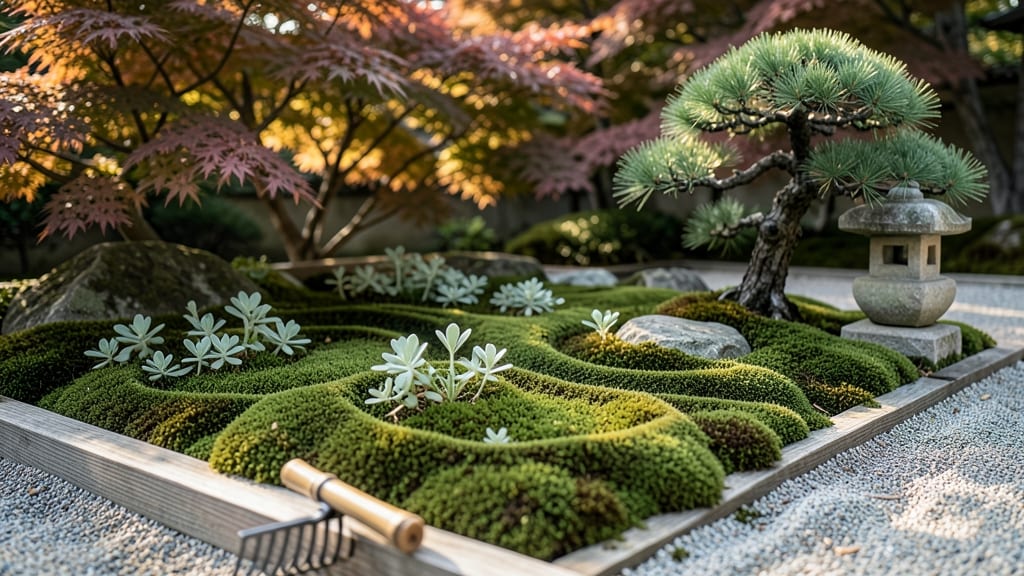
Creating a zen garden means blending five core elements—raked gravel, carefully placed rocks, lush moss, flowing water features, and resilient bamboo—to create a space that nurtures peace and mental clarity through thoughtful design.
Zen gardens thrive on simplicity and intention, where each element serves both aesthetic and symbolic purposes.
The raked gravel mimics flowing water, inviting contemplation as you shape it into ripples, while rocks represent mountains and islands, grounding the space. 🌿 Moss acts as a living carpet, symbolizing patience and the passage of time, while water features—whether a small pond or bamboo fountain—bring the soothing sound of moving water.
Bamboo, with its vertical growth, embodies resilience and adaptability, completing the meditative circle.
This approach isn't just about decoration; it's about creating a sanctuary where every component tells a story. The gravel's texture underfoot, the deliberate placement of rocks, and the quiet rustle of bamboo all work together to quiet the mind and sharpen focus.
Many zen garden enthusiasts find that the process of designing and maintaining the space becomes its own form of mindfulness practice.
💡 In This Article
- Symbolism Behind Zen Garden Elements
- Step-by-Step Guide to Designing Your Zen Garden
Symbolism behind zen garden elements
The raked gravel in a zen garden isn't just decorative—it's a visual representation of flowing water, a concept central to Zen Buddhist philosophy called sui-seki (water and rock). When you rake the gravel into smooth, undulating patterns, you're mimicking the movement of water over riverbeds or ocean waves.
This practice, known as kare-sansui (dry landscape), encourages mindfulness as you focus on the rhythmic motion of the rake. Studies show that repetitive motions like raking can reduce stress by up to 30%, making it a meditative act in itself.
The gravel's texture—typically 1-3mm in size—creates a satisfying crunch underfoot, grounding you in the present moment.
Rocks serve as the garden's skeletal structure, symbolizing mountains and islands that frame the landscape. In traditional Japanese gardens, each rock is carefully selected for its shape, size, and placement to represent natural formations.
A single large rock might symbolize a mountain peak, while clusters of smaller rocks could represent a group of islands. The arrangement follows principles of fukinsei (asymmetry) and yūgen (mysterious depth), creating balance without rigidity.
For example, a 3-foot-tall rock placed off-center can dominate a 10x10-foot space while still feeling harmonious, demonstrating how zen gardens embrace imperfection as part of their beauty.
Moss plays a dual role: it softens the garden's appearance and embodies the concept of mono no aware—the pathos of things, or the bittersweet awareness of impermanence. The slow growth of moss, which can take 5-10 years to fully establish, teaches patience and acceptance of time's passage.
Different moss types offer distinct textures—Sheet moss spreads like a carpet, while reindeer moss adds a velvety contrast. In Japanese culture, moss is also associated with purity and renewal, as it thrives in shaded, undisturbed areas, much like the quiet corners of the human mind.
Water features, whether a small pond, bamboo fountain, or even a carefully placed bowl of water, represent purity and the life force (ki) in zen gardens.
The sound of flowing water has been scientifically proven to lower heart rates and blood pressure by 20-30% within minutes, creating an instant sense of calm. A 3-gallon bamboo fountain, for instance, can produce a soothing 60-decibel white noise that masks urban distractions.
The movement of water also symbolizes the cyclical nature of life, reinforcing the zen principle of impermanence.
Bamboo completes the symbolism by embodying resilience and adaptability. Its vertical growth—often reaching 10-30 feet in height—represents strength and perseverance, while its hollow stems symbolize humility and openness. Unlike rigid structures, bamboo bends with the wind, teaching us to adapt without breaking.
In zen gardens, dwarf bamboo varieties (3-5 feet tall) are commonly used to create natural borders or focal points. The plant's rapid growth also mirrors the zen concept of mujo—the acceptance of change—making it a powerful metaphor for life's constant evolution.
Together, these elements create a microcosm of nature's balance, where every component reflects deeper philosophical truths. The gravel's flow mirrors life's constant motion, rocks anchor us to stability, moss teaches patience, water purifies, and bamboo reminds us of resilience.
This isn't just decoration—it's a living meditation, where each element whispers its own lesson to those who take the time to listen. 🌿