
Fertilization
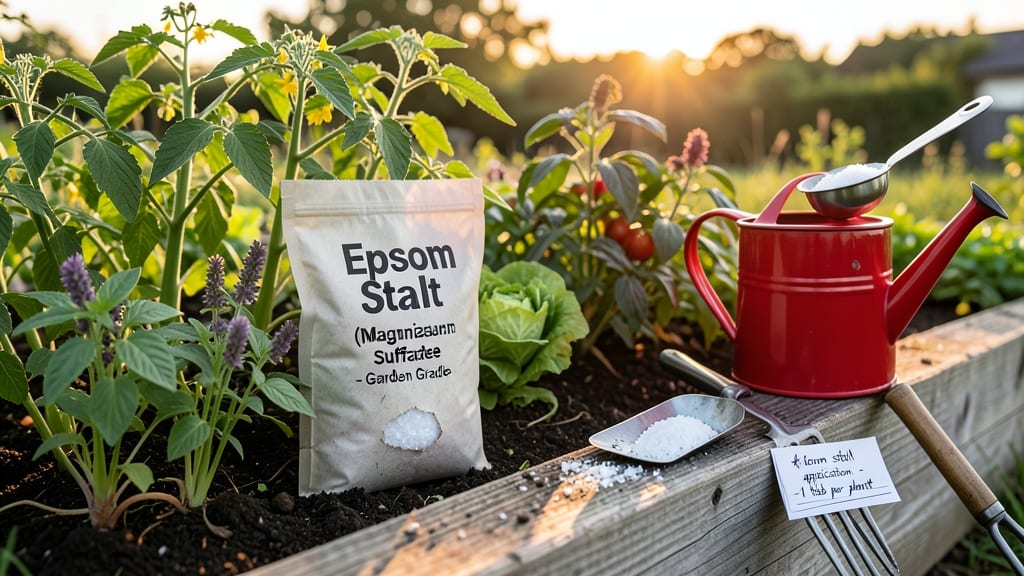
Epsom salt for vegetable gardens supplies essential magnesium and sulfur that boost root development, improve chlorophyll production, and prevent common nutrient deficiencies like yellowing leaves or slow growth. Use it carefully—mix 1 tablespoon per gallon of water and apply every 4-6 weeks during the growing season.
Epsom salt isn't a magic fertilizer, but its magnesium content helps plants absorb phosphorus more efficiently, which is crucial for energy transfer and flower/fruit production. 🌱 Many gardeners swear by it for leafy greens and tomatoes, where magnesium deficiency often shows as yellow patches between veins.
The key is moderation—too much can actually harm your plants by disrupting soil chemistry, so always follow the recommended dosage.
For best results, apply it during active growth phases (spring and summer) rather than late in the season. You can either dissolve it in water for a foliar spray or work it directly into the soil.
I've found that combining it with compost creates a more balanced nutrient profile for my vegetable beds.
💡 In This Article
- How Epsom Salt Works in Plant Nutrition
- Best Practices for Applying Epsom Salt to Vegetable Gardens
How Epsom salt works in plant nutrition
Epsom salt delivers magnesium sulfate to plants in a form they can absorb quickly. Magnesium is the central atom in chlorophyll—the green pigment responsible for photosynthesis—so when plants lack it, they struggle to convert sunlight into energy.
You'll often see this deficiency first as yellow patches between leaf veins (called interveinal chlorosis) while the veins stay green. This happens because magnesium is mobile in the plant, so symptoms appear first in older leaves where it gets "stolen" to support new growth.
The sulfur component also plays a critical role by supporting enzyme function and protein synthesis. While most soils contain sulfur, it often becomes locked up in unavailable forms. Epsom salt provides sulfur in a soluble form that plants can use immediately.
For example, sulfur deficiency in brassicas (like cabbage or broccoli) shows as yellowing of entire leaves rather than just between veins—this helps you distinguish between magnesium and sulfur needs. The combination of these two nutrients makes Epsom salt particularly effective for leafy greens and fruiting plants.
What sets Epsom salt apart from other magnesium sources like dolomitic lime is its immediate availability. Lime takes months to break down and adjust soil pH, while Epsom salt dissolves instantly in water, making its nutrients accessible within hours.
This quick uptake is why gardeners often see visible improvements in just a few days after application. However, unlike complete fertilizers, Epsom salt doesn't provide nitrogen or phosphorus—it's a supplement rather than a replacement for balanced nutrition.
Here's what happens at the cellular level: Magnesium helps stabilize the plant's ribosomes (the protein factories) and activates enzymes involved in energy production. Without enough magnesium, these processes slow down, leading to stunted growth and poor fruit development.
The sulfur works alongside by helping form amino acids and vitamins. Together, they create a synergistic effect that explains why plants often show dramatic recovery after just one application, especially during active growth phases when demand is highest.
For visual learners, think of magnesium as the "glue" that holds chlorophyll molecules together in the chloroplasts. When this glue weakens, the chlorophyll breaks down faster under sunlight, causing that classic yellowing pattern.
The sulfur component acts like a supporting cast, ensuring the plant can build the proteins needed to maintain healthy cell structure. This dual-action makes Epsom salt particularly valuable for vegetable gardens where both leaf health and fruit production are priorities.
One common misconception is that Epsom salt will fix all plant problems. In reality, it targets specific magnesium and sulfur deficiencies. For example, if your plants show signs of nitrogen deficiency (like overall pale yellowing rather than interveinal patterns), Epsom salt won't help—you'd need a nitrogen-rich fertilizer instead.
The key is observing your plants' symptoms carefully and using Epsom salt as a targeted supplement rather than a cure-all.
For those curious about the chemistry, Epsom salt's chemical formula (MgSO₄·7H₂O) explains its effectiveness. The magnesium ion (Mg²⁺) is readily available for uptake, while the sulfate ion (SO₄²⁻) provides sulfur in a form plants can immediately utilize.
This makes it particularly useful in soils with high calcium or potassium levels, which can sometimes compete with magnesium uptake. 🌿