
Flowers
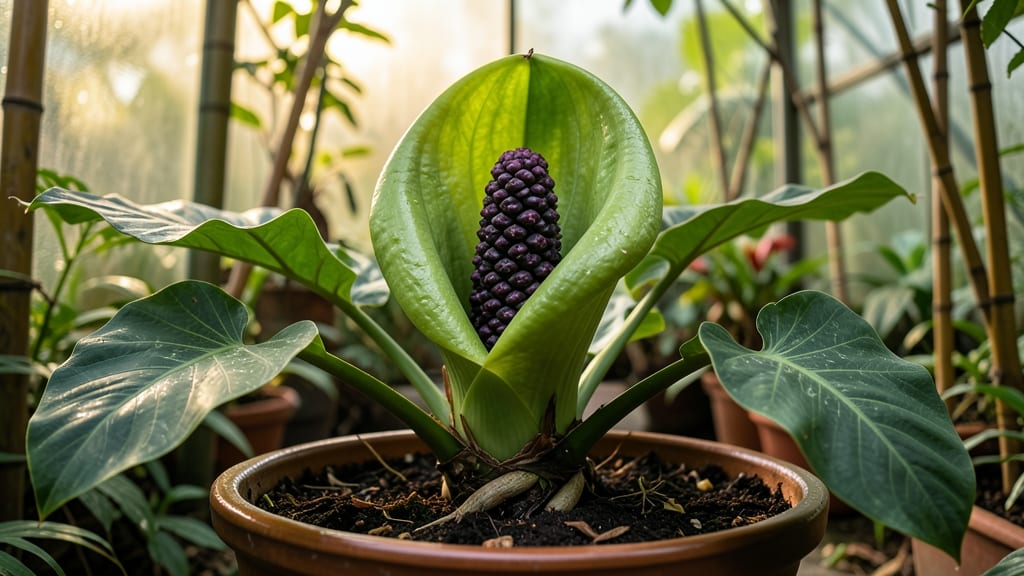
Visitors to botanic gardens may witness the corpse flower's dramatic blooming—an event that occurs unpredictably every 7-10 years, driven by the plant's maturity, temperature shifts, and precise humidity conditions. The flower's pungent, rotting-flesh scent specifically lures pollinators like carrion flies.
This rare spectacle isn't just about timing—it's a carefully orchestrated biological performance. 🌿 The corpse flower (Amorphophallus titanum) stores energy in its corm (a bulb-like structure) for years before blooming, requiring specific temperature ranges (typically 70-75°F) and humidity levels to trigger the process.
Botanic gardens often maintain detailed records of their specimens' growth cycles, using soil sensors and climate controls to create ideal conditions. What makes these events so thrilling is their unpredictability; even with careful monitoring, the exact bloom date can shift by weeks.
Once in bloom, the flower's scent—often compared to rotting meat—can be overwhelming, so gardens typically provide visitors with face masks and schedule viewing times during cooler hours when the aroma is less intense.
The entire bloom lasts just 24-48 hours, making each appearance a fleeting but unforgettable experience for plant enthusiasts.
💡 In This Article
- Scientific Conditions That Trigger Corpse Flower Blooms
- How Botanic Gardens Maximize Corpse Flower Viewing Opportunities
Scientific conditions that trigger corpse flower blooms
The corpse flower's bloom cycle begins with a complex interplay of biological and environmental factors. At its core, the plant stores energy in its massive corm—a bulb-like structure that can weigh up to 150 pounds—for years before reaching the energy threshold needed to bloom.
This energy reserve is critical because the bloom itself is metabolically expensive, requiring temperatures at the corm's base to reach 70-75°F for extended periods. Without this precise temperature, the plant remains dormant, even if all other conditions seem ideal.
Hormonal signals play a pivotal role in triggering the bloom. Once the corm reaches maturity (typically after 5-10 years of growth), it begins producing ethylene gas—a plant hormone that regulates flowering. This gas acts as a chemical messenger, signaling the corm to initiate the bloom process.
Interestingly, the corpse flower's response to ethylene is highly sensitive; even minor fluctuations in ethylene concentration can delay or accelerate the bloom by weeks. 🌱 Rainfall patterns also influence bloom timing, as consistent moisture helps maintain the corm's metabolic activity without causing stress.
Botanic gardens leverage this science by creating controlled environments. For example, the New York Botanical Garden uses soil sensors to monitor corm temperature and moisture in real-time, adjusting greenhouse conditions to mimic the plant's natural triggers.
The key is balancing humidity (typically 60-70%) with temperature stability—too much humidity can lead to fungal growth, while too little causes the corm to dehydrate.
This precision is why some gardens have successfully induced blooms outside their natural 7-10 year cycles, though the process remains an art as much as a science.
What most people don't realize is how the plant's scent production is tied to its bloom cycle. The infamous rotting-flesh aroma isn't just a byproduct—it's a deliberate evolutionary strategy.
The corpse flower releases volatile organic compounds (VOCs) like dimethyl disulfide and dimethyl trisulfide, which are identical to those found in decaying meat.
These compounds attract carrion flies, its primary pollinators, but they also require specific temperature conditions to volatilize effectively. 🔥 Cooler temperatures (65°F or below) can suppress the scent, which is why gardens often time viewings for early morning or late evening when the aroma is less intense.
The entire bloom sequence is a finely tuned biological clock. The flower's spathe (the leaf-like structure) unfurls over 24-48 hours, reaching heights of up to 6-8 feet, while the spadix (the central spike) heats up to 85-90°F—a temperature that further amplifies the scent.
This heat is generated by the plant itself, a process called thermogenesis, which requires significant energy. Once the bloom concludes, the plant enters a recovery phase, replenishing its corm's energy reserves for the next cycle.
Understanding these mechanisms helps explain why bloom cycles can vary so dramatically. A garden in Florida might see a bloom every 5 years due to warmer climates, while a specimen in a cooler region could take 12 years to flower.
The unpredictability isn't random—it's a reflection of the delicate balance between the plant's internal signals and its external environment. 💫