
Picking
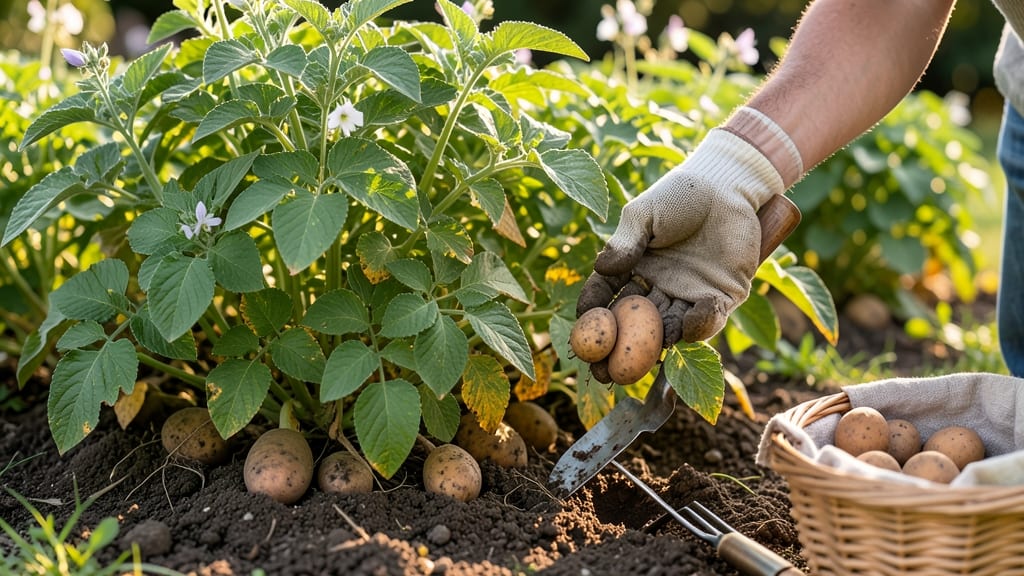
To pick potatoes from the garden at the perfect moment means creamy, flavorful tubers instead of tough or sprouted ones — and the key is knowing when to pull them.
Picture this: you’ve spent weeks nurturing your 🥔 plants, only to dig up potatoes that are either too small or already turning green. The difference between a great harvest and a wasted one often comes down to timing — and the right cues can save you from guesswork.
Whether you’re after baby potatoes for salads or full-sized spuds for roasting, the right moment depends on skin texture, foliage changes, and even soil conditions. Miss it, and you risk losing both yield and quality.
In this guide, I’ll walk you through the skin slip test, size-based triggers, and regional tips to ensure you harvest at peak flavor — no more digging too early or leaving them in the ground too long.

How to use the skin slip test for perfect potato harvest timing
Harvesting potatoes at the right moment transforms your garden into a treasure trove of creamy, flavorful tubers. The skin slip test is my go-to method for determining when potatoes are perfectly ripe—no guesswork involved.
This simple technique saves you from digging too early (and getting underdeveloped, mealy potatoes) or too late (and ending up with woody, tough spuds).
Here's the secret: when a potato's skin slips easily from its flesh, it's ready to harvest. This happens because the tuber's skin thickens and separates naturally as it matures. I've used this method for years, and it consistently delivers potatoes with the best texture and storage life.
The test works for both new potatoes and mature varieties, making it incredibly versatile.
- Gently dig up 1-2 potatoes from the plant using a garden fork or trowel. Choose ones that feel firm but not too small.
- Hold the potato firmly with one hand and try to peel away the skin with your thumbnail on the other hand. Apply light pressure only—no need to force it.
- If the skin slips easily (like a glove coming off) and the flesh underneath is creamy white or yellow, your potatoes are ready to harvest. If the skin resists or tears, wait 1-2 weeks and test again.
- For new potatoes, the skin will slip slightly earlier than for mature potatoes. New potatoes typically pass the test when they're about 1-2 inches in diameter.
- If the skin is thin, translucent, or tears easily, the potatoes need more time in the ground. If the skin is thick and rough but still slips, they're perfect for long-term storage.
Timing is everything when it comes to the skin slip test. For most potato varieties, you'll see this change 70-120 days after planting, depending on your climate and the specific variety. In warmer regions, potatoes may mature faster—sometimes as early as 60 days for new potato varieties.
In cooler climates, you might need to wait until late summer for mature potatoes to reach the perfect slip stage.
What the skin slip test tells you goes beyond just harvest timing. A potato that passes this test will have superior flavor and texture. The skin's natural thickening process means the tuber has developed optimal starch content, which translates to that creamy, buttery mouthfeel we all love.
Plus, potatoes harvested at this stage store better because their skins are thick enough to prevent bruising but still flexible enough to handle gentle handling.
Don't make the mistake of relying solely on foliage color to determine harvest time. While yellowing leaves can signal maturity, they don't always indicate the perfect skin slip stage. I've seen plants with completely dead foliage that still produced potatoes with tough skins—not ideal for eating or storage.
That's why I always combine the skin slip test with a quick foliage check: look for 50-75% yellowing before digging extensively.
The skin slip test also helps you avoid green potatoes, which contain solanine—a compound that can cause stomach upset if consumed in large quantities. Green skin develops when potatoes are exposed to light after harvest.
By using the skin slip test, you'll harvest when the skins are naturally thick and opaque, reducing the risk of greening during storage. Store your harvested potatoes in a cool, dark place (around 40-50°F) to maintain their quality.
Pro tip: Test potatoes from different parts of your garden. Soil conditions can vary even within a small plot, leading to uneven maturity. What slips easily in one spot might still be firm in another.
This is especially important if you're growing multiple varieties with different maturity dates. By testing in several locations, you'll ensure you're harvesting at the absolute peak for each potato type.
Once you've confirmed your potatoes are ready using the skin slip test, harvest them carefully to avoid damage. Use a garden fork to gently loosen the soil around the plants, then lift them out by the stems.
Avoid dropping potatoes from a height—this can cause bruising that leads to rot during storage. Let them cure in the sun for a few hours before storing to toughen their skins slightly, which improves storage life.
Remember, the skin slip test isn't just about getting edible potatoes—it's about getting exceptional potatoes. The ones you harvest at this precise moment will have better flavor, better texture, and better storage potential than those picked too early or too late.
Once you master this technique, you'll never second-guess your harvest timing again. Happy digging!
3 Size-based triggers to harvest potatoes at peak flavor
Potatoes don’t follow a one-size-fits-all harvest schedule—your tuber size determines when to dig for the best flavor and texture. Smaller new potatoes can be harvested early for tender bites, while larger mature potatoes need more time to develop their signature buttery taste.
The key is knowing these size-based triggers to avoid tough, woody tubers or underdeveloped spuds.
Timing matters because potatoes continue growing until the plant dies back. Harvest too early, and you’ll get small, starchy potatoes; wait too long, and they’ll become woody and dry.
The solution? Learn these three size-based cues to pull potatoes at their flavor peak, whether you’re cooking up creamy mashed potatoes or roasting crispy spuds.
- 🥔 Baby Potatoes (1–2 inches): Harvest when tubers are golf-ball sized (ideal for salads and roasting). These grow 70–90 days after planting.
- 🍽️ Medium Potatoes (2–3 inches): Perfect for boiling or mashing, these reach peak flavor at 90–100 days. Skin should be thick but still smooth.
- 🥔 Mature Potatoes (3+ inches): Dig when tubers are baseball-sized or larger (best for storage). Wait until 100–120 days for full flavor.
For new potatoes, I recommend harvesting when they’re 1–2 inches in diameter—this is the sweet spot for tender, waxy spuds. Use a fork to gently loosen soil around the plant’s base, then shake off excess dirt.
These are perfect for quick-cooking dishes like salads or stir-fries, where their delicate texture shines.
If you’re growing potatoes for long-term storage, aim for 3-inch or larger tubers. These mature potatoes develop thicker skins and deeper flavor, making them ideal for baking or storing in a cool, dark place.
The trick? Stop watering 2–3 weeks before harvest to toughen the skin and prevent bruising.
Overgrown potatoes (larger than 4 inches) often become woody and dry, losing their creamy texture. To avoid this, monitor your plants and dig a few tubers as test samples at the 90-day mark. If they’re still small, give them another 2–3 weeks before harvesting the rest.
Pro tip: Harvest on a dry, sunny day to let tubers cure in the soil for a few hours. This hardens their skin, reducing bruising and improving storage life. Whether you’re after tiny gourmet new potatoes or hearty storage spuds, size is your best guide!