
Landscaping
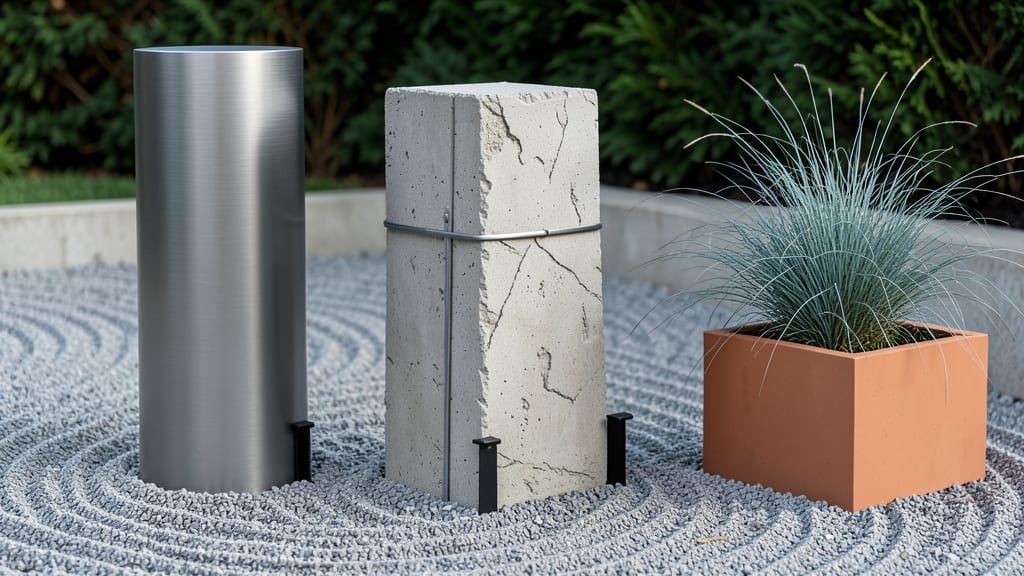
Concrete pillars for garden projects offer unmatched durability for supporting trellises, pergolas, and climbing plants while enhancing your outdoor space's aesthetic. Their resistance to rot, pests, and weathering makes them far more reliable than wood or metal options.
These sturdy structures are my go-to for garden projects because they handle everything from heavy vines like wisteria to years of seasonal weather exposure without cracking or warping. 🔥 Unlike wood that rots or metal that rusts, concrete maintains its strength through freeze-thaw cycles and UV exposure.
For DIYers, the real game-changer is how customizable they are—you can pour them into decorative molds, embed stones for texture, or even create geometric patterns that elevate your garden's design while keeping the structural integrity intact.
The secret to their longevity lies in the mix: a 3:1 sand-to-cement ratio with waterproofing additives creates a blend that's both strong and flexible.
I always recommend adding fiber mesh or rebar for extra reinforcement, especially if you're supporting large plants that will put consistent weight on the pillars over time. The best part?
You can start with simple plastic tubes as forms or get creative with wooden molds for more intricate designs—just remember to let them cure properly before attaching anything heavy.
💡 In This Article
- Why Concrete Pillars Outlast Wood and Metal in Gardens
- DIY Concrete Garden Pillar Designs and Mix Ratios
Why concrete pillars outlast wood and metal in gardens
Concrete pillars resist decay because their composition—primarily Portland cement, aggregates like gravel, and water—creates a non-porous, chemically stable material. Unlike wood, which absorbs moisture and becomes a magnet for termites and fungi, concrete's dense structure repels water and pests.
Even in freezing temperatures, concrete maintains its integrity because it doesn't expand or contract like metal (which rusts) or wood (which warps). This makes them ideal for regions with extreme seasonal shifts, where wood might crack or metal corrode within 5-10 years.
The real durability advantage comes from reinforcement. Adding fiber mesh or rebar to the concrete mix increases tensile strength by up to 30-50%, preventing cracks from heavy loads like wisteria vines or grape arbors.
For example, a 4-inch diameter pillar reinforced with #3 rebar can support 200+ pounds of plant weight without bending. Without reinforcement, concrete alone can still crack under stress, but with proper reinforcement, it becomes nearly indestructible for garden structures.
UV resistance is another game-changer. Wood pillars fade and weaken under sunlight, while metal oxidizes and loses structural integrity. Concrete, however, contains iron oxide pigments that naturally resist UV degradation, maintaining their color and strength for decades.
This is why many historic gardens use concrete pillars—they don’t need repainting or sealing like wood, and they won’t rust like metal. For instance, a concrete pillar in a full-sun exposure garden will last 25+ years without significant wear, compared to 5-10 years for untreated wood.
Pest resistance is a major selling point. Wood attracts termites, beetles, and fungi, while metal can corrode from moisture or salt exposure. Concrete, however, is inorganic and non-nutritive, meaning pests ignore it entirely. Even rodents avoid chewing through concrete because it’s too dense.
This makes concrete pillars a low-maintenance choice for gardeners who want to avoid chemical treatments or frequent repairs. For example, a wooden pergola pillar might need replacement every 7-10 years, while a concrete one stays intact for 30+ years.
Consider the environmental factors too. Concrete’s alkaline pH (12-13) makes it naturally resistant to mold, mildew, and bacterial growth, unlike wood, which requires sealing or staining. Even in humid climates, concrete pillars won’t rot or splinter like wood.
For metal pillars, corrosion from rain or salt air is a constant threat, but concrete remains unaffected. This durability translates to cost savings over time—no need to replace or repair pillars for decades.
For heavy-duty applications like supporting large trellises or grapevines, concrete’s compressive strength (3,000-4,000 psi) ensures stability. A 6-inch diameter pillar can handle the weight of mature vines without sagging, whereas wood or thin metal might bow under the same load.
This makes concrete the smart choice for long-term garden investments.