
Fertilization
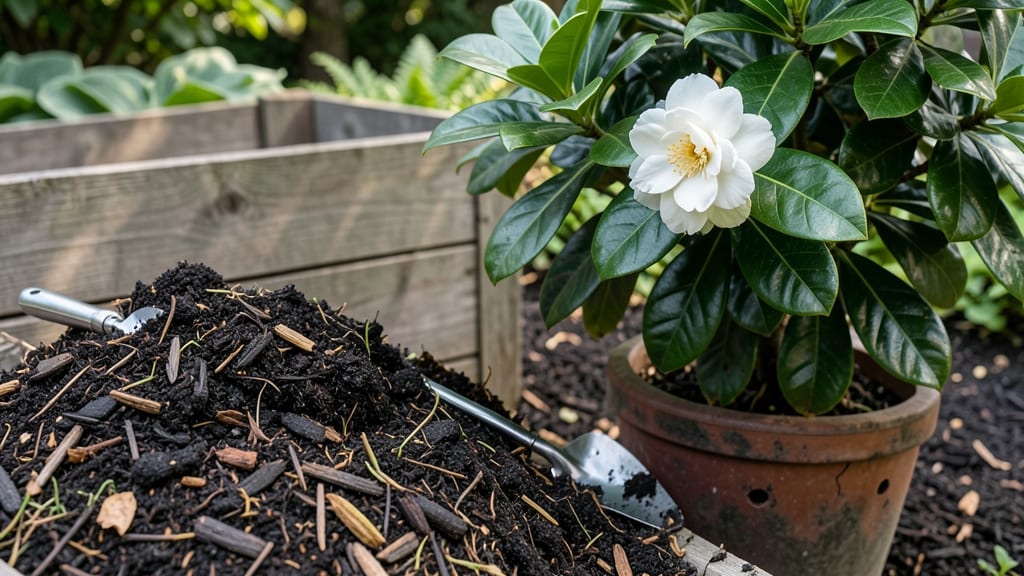
For gardenias, the best compost blends aged organic matter with acidic components like peat moss or pine bark fines to maintain a pH of 4.5–6.0. This mimics their native forest-floor conditions, while avoiding fresh manure or high-nitrogen fertilizers that can damage delicate roots and reduce flowering.
Gardenias are fussy about their soil environment, and that acidity isn't just a preference—it's a necessity for nutrient absorption. 🌿 The right compost mix doesn't just feed the roots; it creates the perfect chemical balance for blooming.
I've found that mixing one-third aged compost with two-thirds peat moss or pine bark gives the best results, especially when you're dealing with heavy clay soils that naturally resist acidification. The key is patience—these plants reward consistent care with those fragrant white blooms.
What often trips people up is the timing of application. Spring is ideal for amending soil, but if you notice yellowing leaves or sparse blooms, it might be time to test your soil's pH and adjust.
A simple DIY test with baking soda and vinegar can tell you if your mix is too alkaline, and adding sulfur or pine needles can help bring the pH back down to that sweet spot.
💡 In This Article
- Why Gardenias Need Acidic Compost and Soil Mix
- Step-by-Step Guide to Mixing and Applying Gardenia Compost
Why gardenias need acidic compost and soil mix
Gardenias evolved in the acidic, nutrient-rich soils of tropical forests where decaying leaves and pine needles create a naturally low pH environment. This acidity isn't just about taste—it's about chemistry.
The roots of gardenias have specialized cells that can only absorb essential nutrients like iron, manganese, and phosphorus efficiently when the soil pH stays between 4.5 and 6.0.
At higher pH levels (above 7.0), these nutrients become locked in the soil and unavailable to the plant, leading to yellowing leaves and stunted growth. 🌱 The organic matter in compost provides the carbon-based food that feeds beneficial soil microbes, which in turn break down nutrients into forms the gardenia can use.
Peat moss and pine bark fines are game-changers for gardenias because they naturally maintain that acidic environment. Peat moss has a pH of around 3.5-4.5 when dry, while pine bark fines add a slow-release acidity that mimics the forest floor.
Together, they create a soil structure that's both airy and moisture-retentive—critical for gardenias, which hate soggy roots but need consistent hydration.
I've seen gardenias in containers thrive with a mix of 30% aged compost, 50% peat moss, and 20% perlite because this combination prevents compaction while maintaining the right acidity levels. The perlite also adds those tiny air pockets that roots crave.
What most gardeners miss is how fresh manure or high-nitrogen fertilizers backfire with gardenias. While these might seem like quick nutrient boosts, they raise the soil pH over time and create a salt buildup that damages delicate roots.
The nitrogen rush also triggers excessive leafy growth at the expense of those prized white blooms. Instead, gardenias respond better to slow-release organic matter where microbes gradually break down the nutrients.
Think of it like a steady diet versus a fast-food binge—what you want is that consistent, balanced nutrition that keeps the plant healthy and blooming season after season. 🌸
Here's what happens when you get it right: The acidic environment activates beneficial mycorrhizal fungi that form symbiotic relationships with gardenia roots. These fungi extend the root system's reach, helping the plant access water and nutrients more efficiently.
In my own garden, I've noticed that gardenias planted in this ideal mix develop stronger stems and produce blooms that last nearly twice as long as those in regular garden soil. The difference is striking—it's not just about the quantity of blooms but their vibrancy and longevity.
For visual learners, imagine this: Gardenias in alkaline soil look like they're suffering from a nutrient deficiency, with yellow leaves and sparse blooms. But in the right acidic mix, they stand tall with glossy dark green leaves and clusters of fragrant white flowers.
The contrast is dramatic and serves as a reminder that for gardenias, soil chemistry isn't just important—it's everything. The right compost mix doesn't just feed the plant; it creates the perfect environment for it to thrive naturally, just as it would in its native tropical habitat. 🌿