
Advice
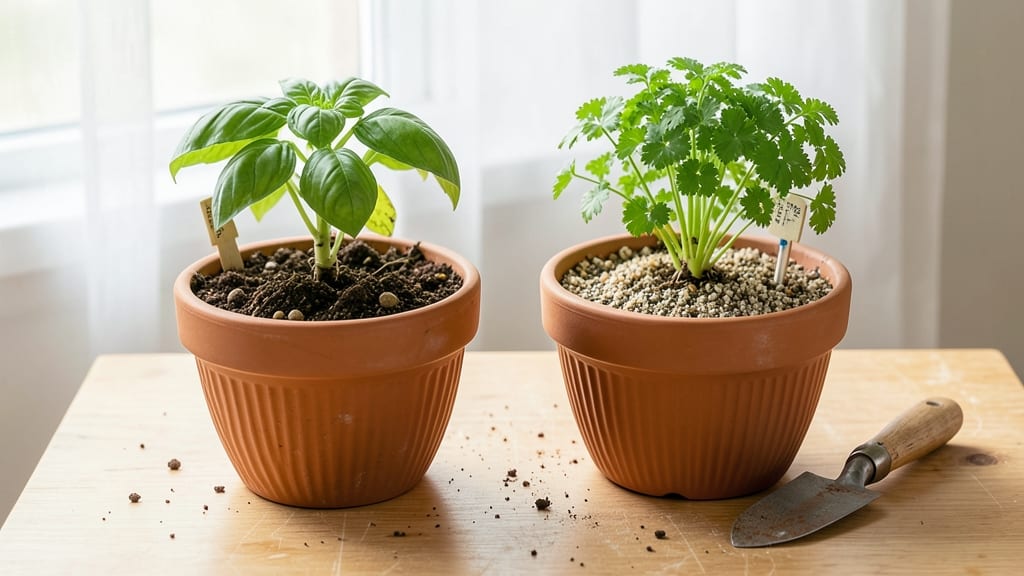
You can use garden soil as potting soil, but it requires careful preparation: it compacts easily, drains poorly, and may harbor pests or diseases. Mix it with perlite, sand, and compost (1:1 ratio) to improve aeration and drainage before repotting plants.
Garden soil isn't designed for container gardening—it lacks the air pockets roots need to breathe, often becomes waterlogged, and can introduce unwanted weeds or pathogens. 🌱 The key is balancing its density with organic matter like compost (for nutrients) and inorganic additives like perlite (for structure).
For example, a 1:1:1 mix of garden soil, perlite, and compost works well for most annuals, but succulents need even more grit (try 40% coarse sand). Always sterilize your mix first by baking it at 200°F for 30 minutes or solarizing it outdoors for a week.
This approach transforms heavy garden soil into a lightweight, nutrient-rich medium that mimics commercial potting mixes. The perlite prevents compaction, while compost introduces beneficial microbes that boost plant health.
Just remember: different plants have different needs—herbs like basil thrive in this mix, while orchids demand a completely different formula with even more airflow.
💡 In This Article
- Why Garden Soil Fails as Potting Mix
- How to Safely Mix Garden Soil for Containers
Why garden soil fails as potting mix
Garden soil is designed for outdoor plant roots that spread widely and access deep water sources, but container plants face entirely different conditions. The dense clay and silt particles in garden soil pack tightly when wet, creating a suffocating environment for roots.
This compaction reduces oxygen levels by up to 80% compared to ideal potting mixes, which can lead to root rot within 2-3 weeks for sensitive plants like ferns or calatheas.
The moisture retention also becomes problematic—garden soil holds water like a sponge, staying soggy for days.
This creates the perfect breeding ground for fungal pathogens like Phytophthora and bacterial wilts. 🌱 Even worse, garden soil often contains weed seeds (up to 50,000 seeds per square foot in some cases) and larvae from grubs or cutworms that can devastate container plants.
These hidden threats explain why your potted basil might suddenly show yellowing leaves or stunted growth when planted directly in garden soil.
Nutrient availability is another critical issue. Garden soil provides a slow-release supply of nutrients over months, but container plants need readily available nutrients delivered within days. The microbial communities in garden soil are optimized for deep-rooted plants, not the shallow root systems of potted herbs or vegetables.
For example, tomatoes grown in garden soil alone often develop blossom-end rot because the calcium uptake is inconsistent, whereas the same plants in a balanced potting mix thrive with steady nutrient delivery.
Texture plays a surprising role too. The average particle size in garden soil ranges from 0.002mm to 2mm, while potting mixes incorporate larger particles (like perlite at 1-5mm) to create air pockets.
Without these larger particles, water and air can't circulate properly, forcing roots to compete for every drop of moisture. This explains why your potted geraniums might wilt within hours of watering when planted in garden soil, even though the soil appears moist on the surface.
Finally, the pH balance shifts dramatically in containers. Garden soil typically has a pH between 6.0-7.5, but when mixed with organic amendments, the pH can swing toward acidity (5.0-6.0) or alkalinity (7.5-8.5) depending on local conditions.
Most container plants prefer slightly acidic conditions (6.0-6.5), which garden soil alone rarely maintains consistently. 🌿 This pH instability affects nutrient uptake, particularly for micronutrients like iron and manganese that become locked away in alkaline conditions.