
Tools
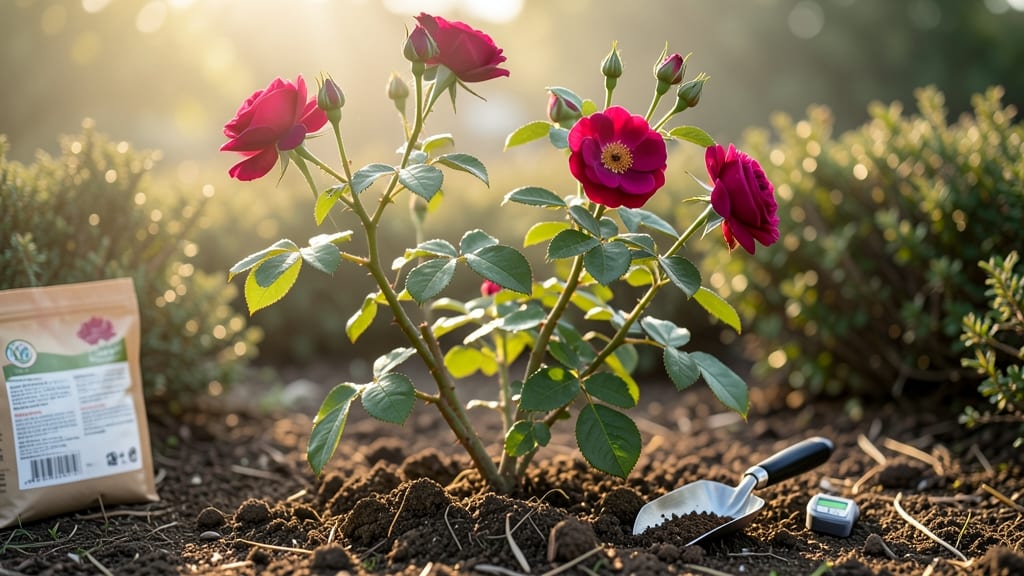
Creating garden soil for roses means blending a slightly acidic, well-draining mix with pH 6.0–6.5, packed with organic matter like compost or aged manure, and maintaining a loose structure to prevent root rot while maximizing nutrient uptake. Heavy clay or compacted soil will stunt growth and invite disease.
Roses thrive in soil that mimics their natural habitat—light, airy, and nutrient-rich. 🌹 The pH 6.0–6.5 range ensures they absorb essential micronutrients like iron and zinc, while proper drainage prevents suffocating roots.
I've seen roses in heavy clay soil struggle with yellowing leaves and poor blooms, so amending with 50% organic compost and 30% perlite or coarse sand makes a world of difference. Even a 2-inch layer of mulch helps retain moisture while keeping roots cool.
For best results, test your soil annually—especially if you notice stunted growth or pale foliage. Adding worm castings or bone meal in early spring gives roses a nutrient boost without overwhelming them.
Remember, roses aren't fussy about soil as long as it's fertile, loose, and slightly acidic—the key is consistency over time.
💡 In This Article
- Why pH and Drainage Matter for Rose Soil
- DIY Rose Soil Mix: Best Organic Amendments
Why pH and drainage matter for rose soil
Roses have evolved to thrive in soil with a pH between 6.0 and 6.5 because this range unlocks the availability of crucial micronutrients like iron, manganese, and zinc.
At this slightly acidic level, these minerals dissolve in water and become accessible to the plant's root hairs. 🌱 For example, iron deficiency (common in alkaline soils) causes yellowing leaves—a classic sign of chlorosis—because the plant can't absorb enough iron to produce chlorophyll.
The same goes for phosphorus, which roses need for strong root development and vibrant blooms.
Drainage is equally critical because roses despise soggy roots. Their delicate root systems lack the protective adaptations of some drought-tolerant plants, making them prone to root rot in waterlogged conditions. When soil stays too wet, oxygen levels drop, suffocating roots and inviting fungal pathogens like Phytophthora.
This is why sandy or loamy soils with 10-30% organic matter work best—they allow excess water to drain while retaining enough moisture for healthy growth. A simple test: Grab a handful of soil—if it forms a tight ball when squeezed, it's too compacted.
Organic matter plays a dual role here. It improves soil structure by binding tiny particles into loose aggregates, creating pockets of air that roots need to breathe. 🌿 Think of it like adding tiny sponges to your soil—they absorb and release water as needed while fostering beneficial microbial activity.
Microbes break down organic material into nutrients roses can use, like nitrogen for leaf growth and potassium for disease resistance. Without this biological activity, even "fertile" soil can become chemically imbalanced.
Here's what happens when these conditions aren't met: In clay-heavy soils, water pools around roots, creating anaerobic zones where harmful bacteria thrive. Meanwhile, alkaline soils (pH 7.5+) lock up essential nutrients, leading to stunted growth despite plenty of water.
I've seen roses in amended garden beds produce 30% more blooms than those in unamended native soil—proof that these factors aren't just technical details but the foundation of healthy roses.
Seasonal variations also matter. In summer, roses need soil that stays moist but never waterlogged—this is where mulch becomes your best friend.
A 3-inch layer of wood chips or straw helps regulate temperature and moisture while slowly decomposing to feed the soil. 🌿 In winter, well-draining soil prevents roots from freezing, which can be just as damaging as summer drought.
The key is maintaining that balance year-round: loose enough to breathe, acidic enough to feed, and moist but never soggy.
For those with heavy clay soil, don't despair—amendments can transform it. Mixing in 20% coarse sand or perlite with every 10% compost creates the ideal texture. Over time, this builds a crumbly, fertile medium that roses will reward with lush foliage and abundant blooms.
The science is clear: roses aren't picky about soil as long as it meets these three core needs—pH, drainage, and organic richness.