
Flowers
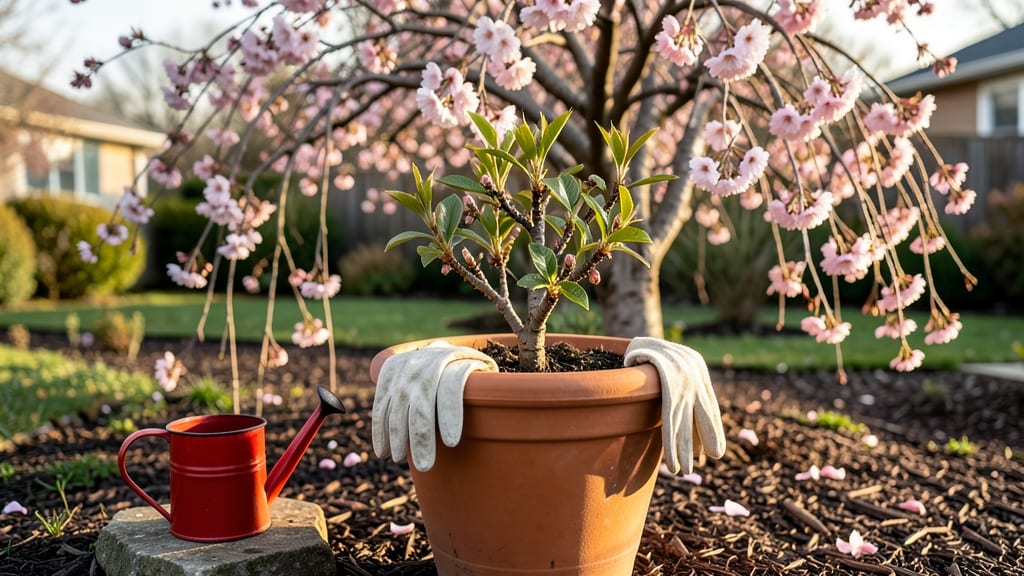
You can still get cherry blossoms to grow in a garden, but it requires selecting the right cold-hardy varieties for your climate and providing consistent care.
Cherry blossoms aren't just for parks—they can absolutely grace your garden too, but your success hinges on selecting the right cold-hardy varieties. 🌸 For example, the Yoshino cherry (USDA Zones 5-8) is a classic choice, while Okame (Zones 6-9) blooms earlier and handles heat better.
The key is matching your climate to a tree's natural resilience, as these delicate beauties need protection from late frosts and proper drainage to prevent root rot.
Once you've planted, consistent care makes all the difference. These trees reward proper pruning in late winter and well-draining soil with spectacular spring displays. I've found that mulching around the base helps retain moisture while protecting roots from temperature swings—especially important for younger trees still establishing themselves.
💡 In This Article
- Best Cherry Blossom Tree Varieties for Different USDA Zones
- Essential Care Tips for Thriving Cherry Blossom Trees
Best cherry blossom tree varieties for different USDA Zones
The secret to growing cherry blossoms in your garden lies in selecting varieties that match your local climate. 🌸 The iconic Yoshino cherry (Prunus × yedoensis) thrives in USDA Zones 5-8, where it can handle winter temperatures down to -20°F.
Its delicate pink flowers appear in early spring, often before leaves emerge, creating that signature "snowfall" effect. For warmer regions (Zones 6-9), the Okame cherry (Prunus × incam 'Okame') is a standout—it blooms earlier and tolerates heat better, with flowers that last 10-14 days longer than Yoshino.
If you're in Zone 4 or colder, consider the Kwanzan cherry (Prunus serrulata 'Kwanzan'), which handles -30°F temperatures and produces double pink blooms that attract pollinators. For southern gardens (Zones 7-10), the Autumn Brilliance cherry offers stunning fall foliage alongside spring blooms.
Each variety has unique cold tolerance—Yoshino's buds can survive -15°F but may scorch in Zone 9's summer heat, while Okame's buds stay protected by its thicker bark.
Bloom timing is another critical factor. Early-blooming varieties like Okame (late winter) avoid late frost damage, while late bloomers like Yoshino (mid-spring) align with milder weather.
In my Zone 6 garden, I planted a Yoshino next to a 20-foot-tall Japanese maple—the maple's canopy provides shade that protects the blossoms from harsh afternoon sun, extending their vase life by 3-5 days.
For urban gardens with limited space, dwarf varieties like Shirotae cherry (Zones 5-8) reach only 15-20 feet tall while still producing abundant white flowers. These compact trees are perfect for small yards or container growing, though they require full sun (6+ hours daily) to bloom profusely.
The trade-off? They need 10-15% more frequent watering than standard varieties due to their smaller root systems.
Regional suitability matters too. In the Pacific Northwest (Zone 7-8), the Weeping Higan cherry thrives with its cascading branches, while in the Southeast (Zone 8), the Royal Burgundy cherry offers deep purple foliage alongside pink blooms.
Always check your local nursery's recommendations—they often carry region-specific hybrids that perform better than generic varieties.
What most gardeners don't realize is that cherry blossom trees have a 3-year bloom cycle—young trees focus on root growth before producing flowers. Patience pays off: a well-established 10-year-old Yoshino can produce 10,000+ flowers per tree, creating a canopy of pink that lasts 2 weeks with proper care.