
Tools
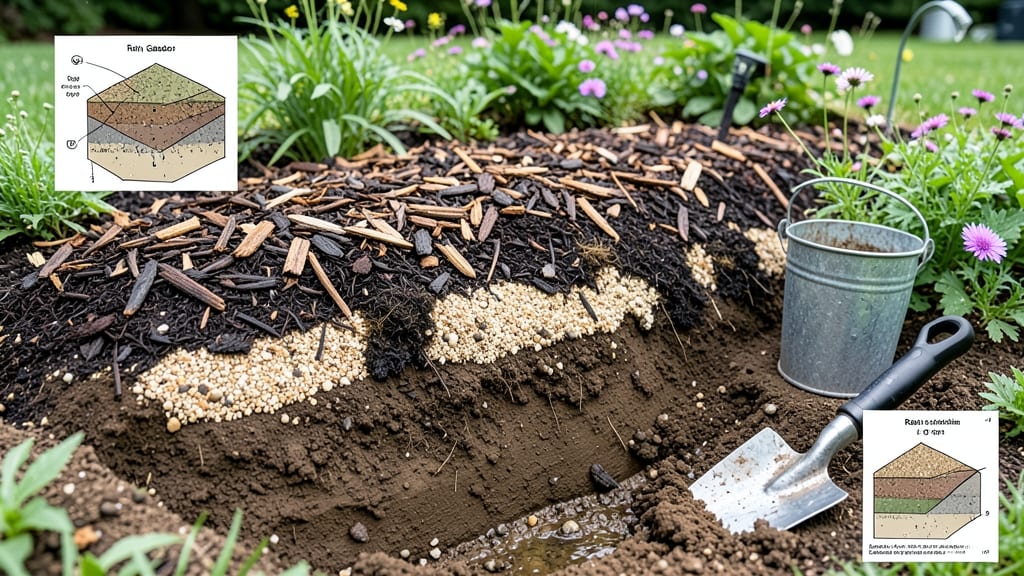
A rain garden soil mix should combine 60% native topsoil, 30% organic compost, and 10% sand or coarse gravel to balance drainage and moisture retention for plants like coneflowers and sedges. Adjust proportions based on your native soil's texture and water absorption.
A rain garden thrives on soil that mimics natural wetlands—this blend mimics those conditions perfectly. 🌱 The native topsoil provides essential minerals, while organic compost boosts microbial activity that roots need to thrive.
The sand or gravel layer creates crucial air pockets, preventing waterlogging while keeping moisture available during dry spells. I've found that testing your soil's drainage rate (pouring water and measuring how quickly it drains) helps fine-tune the mix before planting.
For clay-heavy soils, you might increase the sand proportion to 15% to improve drainage, while sandy soils benefit from extra compost (35%) to retain water. The key is creating a sponge-like structure that holds moisture without suffocating roots—a balance that makes all the difference for moisture-loving perennials.
💡 In This Article
- How Soil Composition Affects Rain Garden Plant Health
- Layering Techniques for Optimal Drainage in Wetland Plants
How soil composition affects rain garden plant health
The 60-30-10 ratio works because it creates an ideal balance between porosity and nutrient density. Native topsoil provides the mineral foundation plants need, while organic compost introduces beneficial microbes that break down nutrients into forms roots can absorb.
Think of it like a sponge: the compost acts as the absorbent layer, holding water and nutrients, while the sand or gravel creates air pockets that prevent suffocation. This structure mimics natural wetland soils, where plants like swamp milkweed thrive because their roots can access both moisture and oxygen simultaneously.
Clay-heavy soils present a unique challenge because their tiny particles pack tightly, leaving little room for air or water movement. When you add 15% sand to such soils, you're essentially creating tiny channels that allow water to drain while still retaining enough moisture for plants.
On the flip side, sandy soils drain too quickly, so increasing the compost to 35% helps retain water longer. The organic matter also improves soil structure over time, reducing compaction and making it easier for roots to penetrate.
For example, a rain garden planted with joe-pye weed in sandy soil will benefit from this extra compost because its deep roots need consistent moisture.
Microbial activity is where the magic happens. Organic compost introduces beneficial bacteria and fungi that form symbiotic relationships with plant roots. These microbes help break down complex organic matter into simpler nutrients, while also producing compounds that stimulate root growth.
In a healthy rain garden soil mix, you might find 10-20% more microbial activity compared to native soil alone. This biological boost is why plants like blue flag iris grow so vigorously—they're not just getting water and nutrients, but a thriving ecosystem that supports their root systems.
Texture plays a crucial role too. The ideal rain garden mix should feel like a moist, crumbly loam when squeezed—similar to a well-aged compost pile. If it feels gritty, you need more compost; if it sticks together like clay, you need more sand.
The 10% gravel component is particularly important for deep-rooted plants, as it creates larger voids that allow water to percolate downward while preventing surface runoff.
This layered approach ensures that even during heavy rains, water moves through the soil efficiently without pooling at the surface, which can lead to root rot.
Consider this comparison: a mix with 20% sand will drain water about 30% faster than one with 10% sand, but it may also dry out more quickly between rains. That's why adjusting the ratio based on your local climate and plant types is essential.
For instance, in drier regions, you might lean toward 35% compost to retain more moisture, while in wetter areas, 15% sand helps prevent waterlogging. The goal is to create a soil environment where plants can access the right amount of water and nutrients without stress.
One often-overlooked factor is the role of organic matter in buffering pH levels. Compost typically has a neutral to slightly acidic pH (around 6.0-7.5), which helps stabilize the soil environment. Many rain garden plants, like cattails and pickeralweed, prefer slightly acidic to neutral conditions.
By incorporating compost, you're not just adding nutrients—you're creating a more stable growing medium that supports a wider range of beneficial microbes and plants. This balance is what turns a good rain garden into a thriving one.