
How To
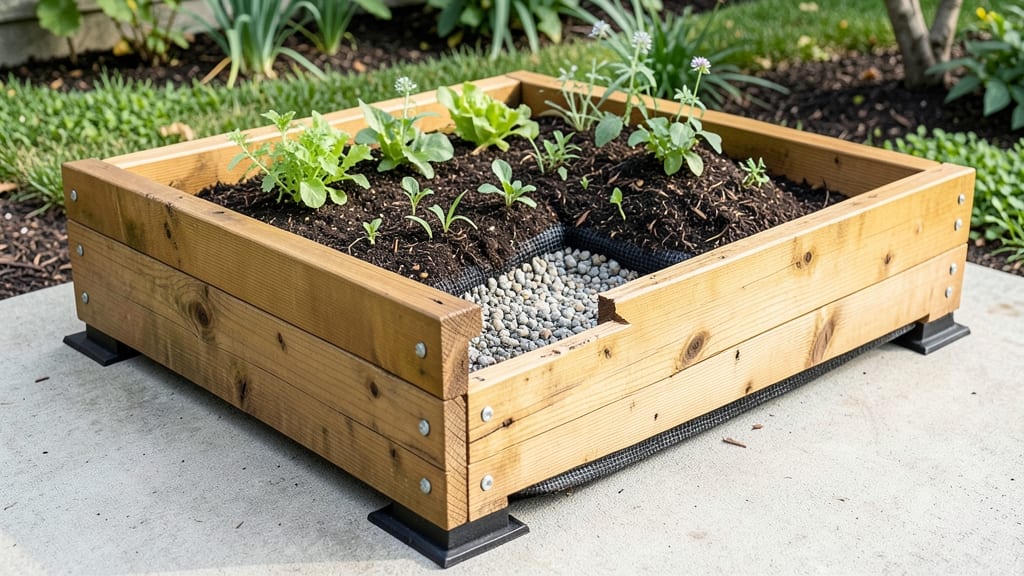
Yes, you can put a raised garden bed on concrete, but ensure proper support by using a sturdy base like landscape fabric, pavers, or wooden frames to prevent cracking or instability from weight and moisture shifts. Avoid direct contact with the slab if possible.
Concrete slabs are rigid but can crack under uneven pressure, especially when soil moisture fluctuates or plant roots exert upward force. 🌱 Without proper separation, the weight of soil and plants may cause long-term damage to your patio or driveway.
I've found that adding a gravel layer (at least 2-3 inches) or interlocking pavers distributes weight more evenly, while wooden frames create a floating system that absorbs movement. The key is preventing direct soil contact with the concrete—this simple adjustment can extend your garden's lifespan by years.
For extra stability, consider using composite lumber instead of untreated wood, as it resists rot from moisture trapped between the bed and slab. Metal beds with built-in drainage holes are another great option, though they require regular rust checks.
Always check your concrete's condition first—look for hairline cracks or uneven surfaces that could worsen over time.
💡 In This Article
- Weight and Structural Risks of Raised Beds on Concrete
- Best Support Solutions for Concrete-Based Raised Garden Beds
Weight and structural risks of raised beds on concrete
Concrete slabs may seem sturdy, but they're vulnerable to stress from moisture shifts and uneven pressure. A typical 4'x8' raised bed filled with soil weighs 1,200-1,500 lbs when saturated—enough to cause micro-cracks in standard concrete over time. The real danger comes from root pressure and seasonal soil expansion.
When roots grow into concrete joints or moisture evaporates unevenly, it creates upward forces that can push against the slab's surface, leading to spalling (surface flaking) or even structural separation.
The concrete's porosity makes it especially susceptible to moisture damage. When soil moisture seeps through cracks or gaps, it can cause freeze-thaw cycles in colder climates, where water expands by 9% when freezing.
This repetitive stress weakens the concrete over 3-5 years, particularly if the slab was poured directly on soil without a vapor barrier. 🌧️ Even in warm climates, prolonged moisture exposure can lead to alkaline leaching, which degrades organic materials like untreated wood frames placed directly on concrete.
Uneven weight distribution is another critical factor. Concrete has a compressive strength of 3,000-4,000 psi, but it's weak in tension—meaning it can't handle upward forces well. When a raised bed's edges press downward while the center remains stationary, it creates a bending moment that stresses the slab's edges.
This is why you often see cracks radiating from corners in poorly supported concrete garden beds. The solution lies in breaking this direct contact point between soil and concrete.
Long-term risks include foundation movement if the concrete isn't properly reinforced. Even a small 1/8-inch gap between the bed and slab can become a 1-inch crack over time due to soil settling. This isn't just about aesthetics—it creates pathways for weeds, pests, and moisture to infiltrate.
The worst-case scenario? A heaved slab that becomes unusable, requiring costly repairs or replacement. This is why professional landscapers recommend never placing soil directly against concrete without proper separation layers.
Consider this real-world example: A 2'x6' cedar raised bed filled with moist potting mix exerts approximately 200 lbs of downward pressure per square foot on the concrete below. Without intervention, this pressure concentrates at the bed's corners, creating stress points that can lead to hairline cracks within 1-2 years.
The solution? Creating a buffer zone that absorbs these forces through materials like gravel or pavers.
What most people overlook is how plant growth patterns contribute to structural stress. Deep-rooted plants like tomatoes or corn can exert up to 50 lbs of upward force per plant as they grow.
When these forces combine with seasonal soil expansion (which can increase volume by 20% during wet periods), the cumulative effect on concrete becomes significant over time. This is why even "lightweight" raised beds require proper support systems.