
Container Gardens
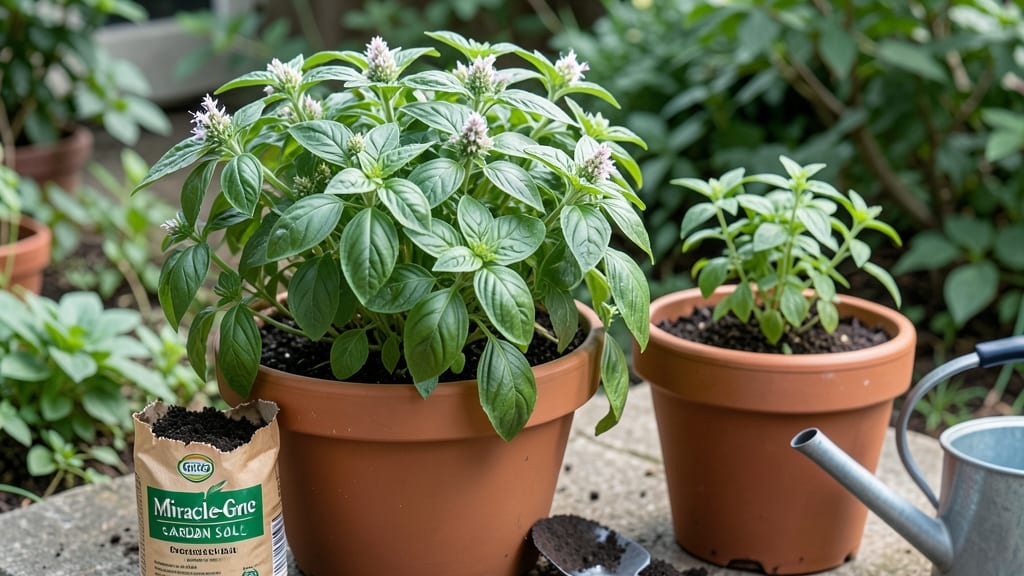
Miracle-Gro Garden Soil can be used in pots when properly amended, since its dense composition can suffocate roots without adjustments. Mix it half-and-half with perlite or compost to create the airy texture container plants need for healthy growth.
This soil works best in-ground where roots can spread freely, but container gardening demands lighter mixes that prevent waterlogging. 🌱 The key is balancing moisture retention with airflow—too much clay-based soil leads to compacted roots that struggle to absorb nutrients.
I've found that adding coarse sand (like horticultural grade) or orchid bark also helps when working with limited space, especially for plants like succulents that hate soggy conditions.
For heavy feeders like tomatoes or peppers, I recommend boosting the mix with worm castings (10% by volume) to replenish organic matter lost during blending. The goal is mimicking how nature would layer soil—loose topsoil with porous amendments beneath.
Always pre-moisten your amended mix before planting to eliminate air pockets that could stress young roots.
💡 In This Article
- Why Miracle-Gro Garden Soil Needs Adjustments for Containers
- Best Ways to Modify Miracle-Gro Soil for Potted Plants
Why Miracle-gro garden soil needs adjustments for containers
Miracle-Gro Garden Soil is formulated for in-ground planting where roots can spread freely in natural soil layers. Its composition contains about 30-40% organic matter mixed with clay-based minerals that create a dense structure perfect for garden beds.
However, this density becomes problematic in pots because it restricts oxygen flow to roots—a critical issue since container plants rely entirely on the limited soil volume for nutrients and water. 🌱 Without proper aeration, roots suffocate, leading to stunted growth or disease.
The science lies in soil porosity: garden soil typically has a porosity of 40-50%, meaning only half the volume contains air and water pathways. In contrast, ideal potting mixes achieve 60-70% porosity through added amendments like perlite or compost.
This higher porosity prevents waterlogging while maintaining moisture availability. For example, a 5-gallon pot filled with unamended Miracle-Gro soil can trap excess water at the bottom, creating anaerobic zones where harmful bacteria thrive and roots rot.
Moisture retention is another key factor. Garden soil holds water like a sponge, keeping roots damp for extended periods—great for ground planting but deadly in containers where excess water has nowhere to drain.
Container plants need soil that releases water quickly after saturation, a trait achieved by blending in 20-30% perlite or vermiculite. These materials create tiny air pockets that improve drainage while still retaining enough moisture for root uptake. Without amendments, even drought-tolerant plants like lavender struggle in dense soil.
The risk of overwatering is magnified in pots because containers heat up faster than garden beds, accelerating moisture loss from the surface while the dense soil below stays saturated. This creates a moisture gradient that stresses roots at both extremes—too wet at the bottom, too dry at the top.
For instance, a 10-inch pot of unamended Miracle-Gro soil can take 3-4 days to dry out after watering, compared to 1-2 days in a properly amended mix.
Root health also suffers because dense soil compresses over time, reducing pore space by up to 25% within months. This compaction cuts oxygen flow to roots by 40-50%, forcing them to expend energy breaking through compacted layers instead of absorbing nutrients.
Plants like tomatoes or peppers, which are heavy feeders, show early signs of nutrient deficiency in unamended soil because their roots can't efficiently access the soil's limited organic matter.
Consider the texture: garden soil feels heavy and clumps when moist, while ideal potting mixes crumble easily between fingers. This difference isn't just about feel—it's about function. The granular structure of amended soil allows roots to explore more surface area, accessing nutrients more efficiently.
For example, adding 1 part compost to 2 parts Miracle-Gro soil creates a looser texture that mimics forest floor soil, where roots thrive in a naturally aerated environment.
What most gardeners don't realize is how quickly problems escalate. Within 4-6 weeks, unamended container soil can develop a hardpan layer at the bottom, where roots become matted and unable to penetrate. This is why even experienced growers recommend amending—it's not just about immediate drainage but long-term root health.
The goal is creating a soil environment where roots can grow outward and downward freely, just as they would in nature. ✨