
Tools
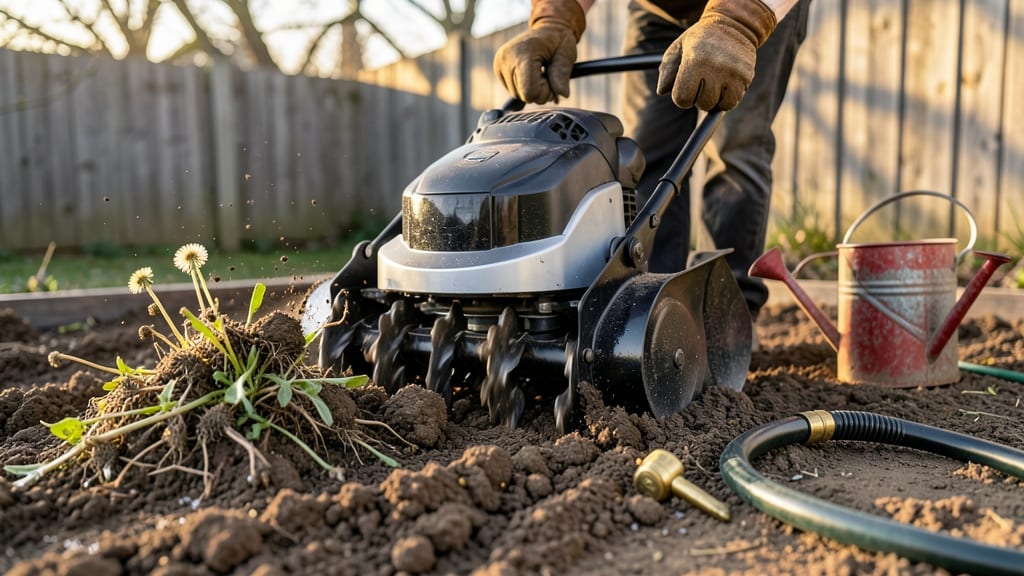
The best garden rotary tillers combine powerful engine performance, adjustable depth settings, and durable tines for efficient soil prep, reducing compaction while minimizing fuel consumption for long-term use.
The most effective rotary tillers balance these features to tackle different garden sizes and soil types. A powerful engine (typically 6-8 horsepower) ensures deep penetration without straining, while adjustable depth settings let you customize tilling from 4-8 inches depending on your needs.
Durable tines made from hardened steel last longer and handle rocky soil better, saving you money over time. 🔥 For example, a tiller with a 20-inch tilling width covers ground faster than narrower models, making it ideal for larger plots.
Fuel efficiency matters too—models with low-emission engines reduce maintenance while delivering consistent performance. I’ve found that electric models work well for small gardens, but gas-powered tillers handle heavy-duty tasks better. The key is matching the tiller’s specs to your garden’s size and soil conditions.
💡 In This Article
- Key Features to Compare in Rotary Tillers
- Top 5 Rotary Tillers for Different Garden Sizes
Key features to compare in rotary tillers
Engine power, measured in horsepower (HP), directly impacts how efficiently a rotary tiller breaks up soil. A 6-8 HP engine is ideal for most backyard gardens—this range provides enough torque to cut through compacted soil while maintaining fuel efficiency.
For example, a 7 HP engine can till 4-6 inches deep in clay soil, whereas a 4 HP model struggles with hardpan layers. The key mechanism here is the engine's ability to deliver consistent power without overheating, which is why air-cooled engines are preferred for durability.
Tilling width determines how much ground you cover per pass, and this feature directly affects your workflow. A 20-inch tilling width is perfect for medium-sized gardens, reducing the time spent maneuvering compared to narrower 12-inch models.
Wider tillers also distribute the engine's power more evenly, preventing uneven soil disruption. However, wider models require more strength to push, so lightweight designs with ergonomic handles are critical for reducing user fatigue during long sessions.
Depth adjustment is another game-changer for soil health. Most high-quality tillers offer 3-5 depth settings, allowing you to aerate the top 2 inches for planting or dig deeper (6-8 inches) to break up compacted subsoil.
This versatility is especially valuable for gardens with layered soil profiles, where topsoil and subsoil have different textures. For instance, tilling too deep in sandy soil can disrupt root systems, while shallow passes in clay may not loosen it enough for optimal drainage.
Durability hinges on the tines' material and design. High-carbon steel tines resist bending and rust, lasting 5-10 years with regular maintenance, while cheaper models may warp after 1-2 seasons. The tines' angle also matters—45-degree forward-curved tines lift soil more efficiently, reducing the need for multiple passes.
This design minimizes soil compaction, a common issue with aggressive tilling that can smother plant roots and disrupt soil structure over time.
Fuel type influences performance and convenience. Gas-powered tillers deliver more power for heavy-duty tasks, but electric models (corded or battery-powered) are quieter and emission-free, making them ideal for small urban gardens.
Battery-powered tillers, like those with 40V systems, offer 30-60 minutes of runtime per charge, enough for most small plots. The trade-off? Electric models typically lack the torque for tough clay or rocky soil, where gas engines excel.
Consider these key factors when choosing:
- Engine power: 6-8 HP for most gardens; 9+ HP for large or rocky plots
- Tilling width: 12-20 inches for efficiency; wider models save time but require more effort to maneuver
- Depth settings: 3+ levels for versatility in soil types
- Tine material: High-carbon steel for longevity and performance
- Fuel type: Gas for heavy use, electric for convenience and low maintenance