
Vegetables
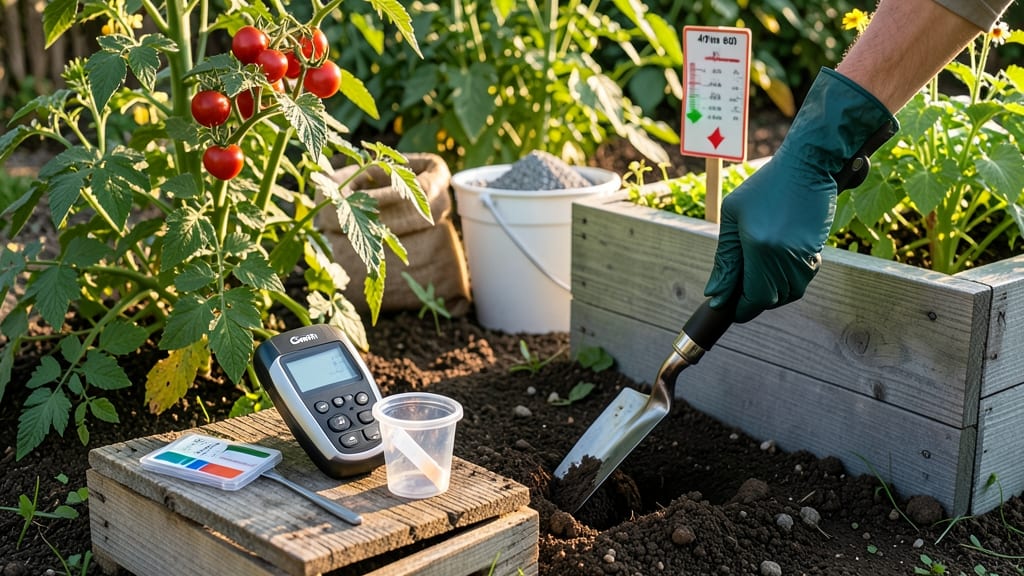
The best pH for a vegetable garden ranges between 6.0 and 7.0, though specific crops like blueberries (4.5-5.5) or carrots (6.0-7.0) thrive at slightly different levels. Testing soil pH and amending with lime or sulfur ensures optimal nutrient uptake for healthy growth.
Soil pH directly impacts which nutrients your vegetables can absorb—think of it as the lock and key system for plant health. 🌱 A pH outside the ideal range can cause deficiencies like yellowing leaves (low iron) or stunted growth (phosphorus lockout), even if you're fertilizing regularly.
For example, tomatoes need a slightly acidic environment (6.0-6.8) to prevent blossom-end rot, while spinach prefers a neutral to slightly alkaline soil (7.0-7.5) for optimal iron uptake. Most home gardeners find that testing their soil every 2-3 years reveals gradual shifts caused by rainfall, compost breakdown, or previous amendments.
Adjusting pH isn't just about throwing lime or sulfur on the ground—timing matters.
For instance, if you're planting blueberries next spring, you'll need to lower your current pH to 4.5-5.5 now, not when the plants arrive. 💫 The process takes months, so plan amendments 3-6 months before planting acid-loving crops.
I've learned that organic options like peat moss or pine needles work slowly but improve soil structure over time, while pelletized sulfur delivers faster results for quick fixes.
💡 In This Article
- How Soil pH Affects Nutrient Availability for Vegetables
- Adjusting Garden Soil pH: Step-by-Step Fixes for Different Crops
How soil pH affects nutrient availability for vegetables
Soil pH determines which nutrients become available to plant roots by altering their chemical form. For example, nitrogen—essential for leafy greens like lettuce—exists primarily as nitrate (NO₃⁻) in slightly acidic to neutral soils (pH 6.0-7.0).
But if your soil pH drops below 5.5, nitrogen converts to ammonium (NH₄⁺), which plants can't absorb efficiently. 🌱 This explains why tomatoes grown in overly acidic soil often develop yellow leaves despite receiving plenty of fertilizer.
The same principle applies to phosphorus: at pH 6.0-7.0, it's highly soluble, but below 5.5, it binds tightly to soil particles, creating a "lockout" that stunts root development.
Micronutrient availability follows a similar pattern. Iron, crucial for chlorophyll production, becomes insoluble in alkaline soils (pH above 7.0), causing yellowing between leaf veins—a classic sign of iron chlorosis in spinach or Swiss chard.
Conversely, manganese and zinc become less available in acidic soils (below 5.5), leading to brown spots or stunted growth in crops like potatoes.
The root zone chemistry creates a delicate balance: too acidic or alkaline, and your plants can't access the building blocks they need, even if the nutrients are present in the soil.
Crop-specific pH needs tie directly to their natural growing conditions. Blueberries, for instance, evolved in acidic forest floors (pH 4.5-5.5) where they compete with pine trees for nutrients.
Their roots rely on specialized mycorrhizal fungi that thrive only in acidic conditions. 💫 If you plant blueberries in neutral soil, the roots can't establish properly, and the plant becomes stressed.
On the other hand, carrots prefer slightly acidic to neutral soil (pH 6.0-7.0) because their edible roots need loose, well-aerated conditions where nutrients like potassium and calcium are readily available. The pH affects not just leaf health but also root development and storage organ quality.
What most gardeners don't realize is that pH also influences soil biology. Beneficial microbes, like those in compost or mycorrhizal networks, have optimal pH ranges too. Earthworms, for example, thrive in soils between pH 6.0 and 7.5, helping aerate the soil and break down organic matter.
If your soil pH is off, these helpers become less active, reducing nutrient cycling and plant growth. 🌿 This is why even "perfect" fertilizer applications fail when soil pH is ignored—the plants can't access the nutrients, and the soil ecosystem breaks down.
Testing soil pH reveals these hidden issues. A simple DIY kit or lab analysis shows whether your garden is too acidic (low pH) or alkaline (high pH), guiding amendments like lime (to raise pH) or sulfur (to lower it).
For instance, if your test shows pH 8.0, adding elemental sulfur at a rate of 1-2 pounds per 100 square feet will gradually lower it by 1-2 points over 2-3 months. The key is patience—rushing amendments can disrupt the soil ecosystem further, so gradual changes work best.
Consider this real-world example: I once had a tomato garden with perfect fertilizer but stunted plants. Testing showed pH 8.2—too alkaline. After adding sulfur and waiting 6 months, the pH dropped to 6.5, and the tomatoes thrived.
The lesson? Soil pH isn't just about numbers—it's about creating the right environment for both plants and soil life to work together. 💫