
How To
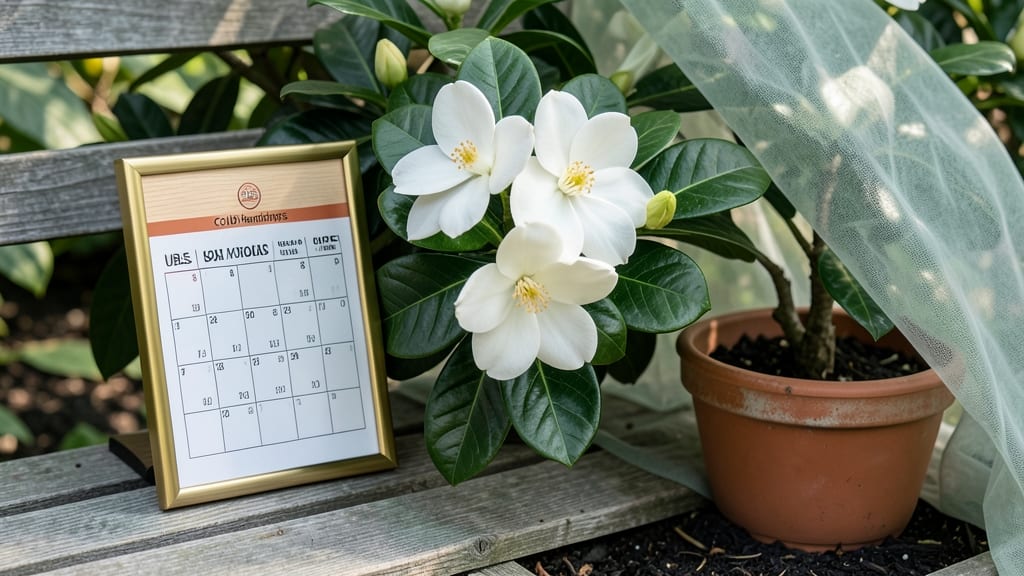
Understanding the cold tolerance of August Beauty Gardenias reveals they can handle temperatures down to 28°F (-2°C) but risk leaf damage below 32°F (0°C). Use frost cloth, mulch, or move potted plants indoors before cold snaps to protect them. Always prune any frost-damaged foliage in spring after the last frost.
August Beauty Gardenias are tropical plants at heart, so their cold tolerance has clear limits. 🌱 When temperatures dip below 28°F (-2°C), their delicate leaves start to blacken at the edges—a sign of irreversible cell damage.
Unlike hardier gardenia varieties that might survive brief freezes, August Beauties need proactive protection. The roots are surprisingly resilient, but the foliage is where most damage occurs. I’ve seen gardeners wrap potted plants in bubble wrap and bury them in straw for extra insulation during unexpected cold snaps.
Even a light frost can stress the plant, so monitoring your local weather forecast is key.
For those in Zone 8 or colder, the best defense is a combination of mulching (3-4 inches of straw or wood chips) and frost cloth draped loosely over the plant.
If you’re growing in pots, moving them to a garage or covered porch can make all the difference. 💫 The secret is acting before the temperature drops—once frost hits, the damage is done.
And remember, while the plant might look sad after a freeze, it often bounces back with proper spring pruning and care.
💡 In This Article
- How August Beauty Gardenias React to Freezing Temperatures
- Step-by-Step Cold Protection Guide for August Beauty Gardenias
How August Beauty Gardenias react to freezing temperatures
August Beauty Gardenias respond to cold stress through a complex physiological process that begins when temperatures drop below 32°F (0°C). The plant’s leaves contain delicate cells filled with water, which expands as it freezes—a phenomenon called ice crystal formation.
These crystals rupture cell membranes, causing the characteristic blackened edges and wilting that gardeners notice after frost. At 28°F (-2°C), this damage becomes irreversible for most foliage, though the roots remain protected by their deeper soil insulation.
The plant’s natural defense is a form of dormancy-like response, where growth slows dramatically to conserve energy. Unlike hardier gardenia varieties (such as G. jasminoides, which can tolerate 20°F (-6°C) with proper care), August Beauties lack the same level of cold-hardiness due to their tropical origins.
Their thick, glossy leaves—while stunning—are also their Achilles’ heel, as they lack the waxy coating that helps other plants resist moisture loss and frost damage. 🌡️ For comparison, a 24-hour exposure to 28°F (-2°C) might only cause minor leaf spotting, while prolonged exposure below 30°F (-1°C) can kill entire branches.
What most people don’t realize is that the damage isn’t just superficial. When leaf cells die, the plant loses its ability to photosynthesize efficiently, weakening its overall health.
The roots, however, can survive much colder temperatures—sometimes down to 20°F (-6°C)—because they’re insulated by soil and less exposed to rapid temperature swings. This is why gardeners often see a plant appear dead after frost, only for new growth to emerge from the base once warmer weather returns.
The key is protecting the foliage while allowing the roots to endure the cold.
Another critical factor is wind chill. Even if the air temperature hovers around 30°F (-1°C), a brisk wind can make it feel like 20°F (-6°C) to the plant, accelerating damage. This is why gardeners in exposed locations should prioritize windbreaks or additional frost protection.
The plant’s natural oils, which give its flowers their signature fragrance, also become less effective at protecting cell membranes in cold conditions, making August Beauties particularly vulnerable compared to other flowering shrubs.
To visualize the damage, imagine a gardenia leaf under a microscope during a freeze: the water inside the cells begins to crystallize, pushing against the cell walls like an expanding balloon.
At 28°F (-2°C), these crystals grow large enough to puncture the cell membranes, leading to the blackened, mushy texture you’ll see after frost. The plant’s flowers, already sensitive, are the first to suffer—often dropping entirely before the leaves show signs of damage.
This is why early frost warnings should trigger immediate action, especially for potted plants that can’t rely on soil insulation.
For those wondering how this compares to other gardenia varieties, consider G. augusta (a close relative) can handle slightly cooler temps, but August Beauties are bred for their dramatic blooms rather than cold resilience.
Their large, waxy flowers are beautiful but metabolically expensive to produce, leaving the plant with fewer resources to devote to cold survival. This is why they’re typically grown in USDA Zones 9-11—any colder, and you’ll need to take aggressive protective measures. 💫