
Pests
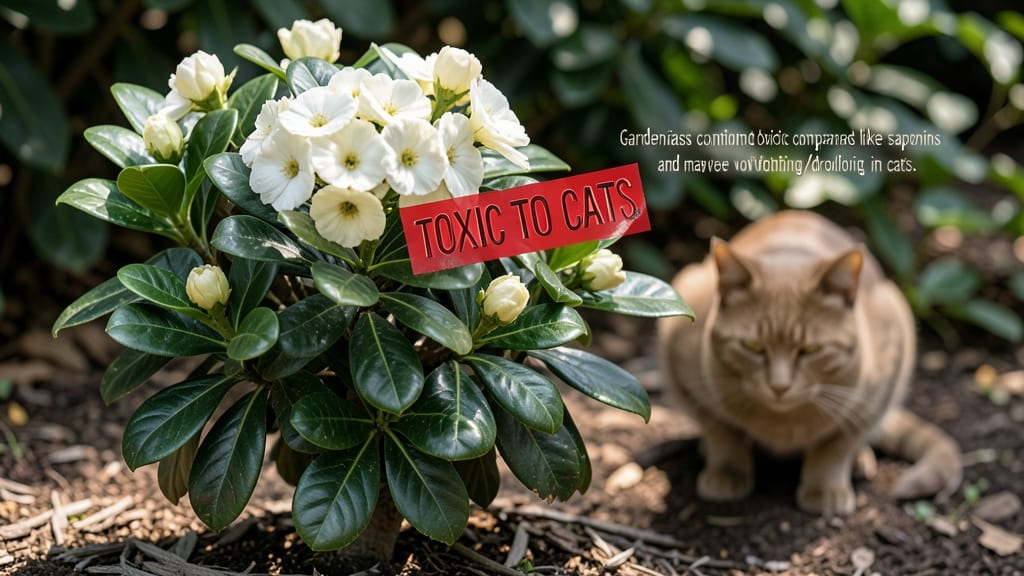
Gardenias are poisonous to cats because their flowers and leaves contain harmful glycosides and saponins that trigger vomiting, drooling, and lethargy when ingested. Exposure to these compounds requires immediate veterinary attention to prevent serious complications.
These toxic compounds disrupt a cat's digestive system, often starting with oral irritation that leads to excessive drooling and nausea. 🐱 The severity depends on how much your cat consumes—even small amounts of leaves or petals can cause noticeable symptoms within hours.
Unlike some plants that affect only the gastrointestinal tract, gardenia toxicity can also impact the nervous system, making early intervention critical.
If you're concerned about your cat's safety, consider replacing gardenias with non-toxic alternatives like spider plants or Boston ferns, which are both pet-friendly and visually appealing. Many nurseries now offer pre-labeled cat-safe options, so you can still enjoy a beautiful garden without the risks.
💡 In This Article
- Toxic Compounds in Gardenias and Their Effects on Cats
- Pet-Safe Garden Alternatives with Similar Beauty
Toxic compounds in gardenias and their effects on cats
Gardenias contain two primary toxic compounds: glycosides (like gardenin) and saponins, both of which disrupt a cat's delicate digestive system. Glycosides break down into cyanogenic compounds when ingested, releasing cyanide—a potent toxin that interferes with oxygen transport in cells.
Saponins, meanwhile, create soapy, irritating lather in the mouth and digestive tract, triggering immediate discomfort. 🐾 These compounds are most concentrated in the leaves and flowers, where cats are most likely to chew or nibble due to their sweet fragrance.
The severity of symptoms depends on dosage—even one or two leaves can cause noticeable effects, while larger amounts may lead to systemic toxicity. Cats are particularly vulnerable because their smaller size means lower tolerance for toxins.
Symptoms typically progress in stages: first, oral irritation (excessive drooling, pawing at the mouth) within 30-60 minutes, followed by gastrointestinal upset (vomiting, diarrhea) and, in severe cases, neurological signs like tremors or weakness.
The sweet scent of gardenias often attracts curious cats, making accidental ingestion more likely than with bitter-tasting plants.
What makes gardenia toxicity dangerous is its dual-action effect: the glycosides attack the respiratory system while saponins cause dehydration through vomiting and diarrhea. Without treatment, this combination can lead to electrolyte imbalances and even organ failure in extreme cases.
Unlike some plant toxins that cause immediate, dramatic reactions, gardenia poisoning often escalates gradually, which is why many pet owners underestimate its danger until symptoms become severe. 🚨
Cats' natural curiosity and grooming habits—like licking their paws after brushing against plants—further increase exposure risks. The waxy texture of gardenia leaves can also irritate a cat's throat, compounding the discomfort.
If you suspect your cat has ingested gardenia, do not induce vomiting unless directed by a vet; instead, rinse their mouth with water and seek emergency care immediately, as activated charcoal may be needed to bind the toxins before absorption.
Interestingly, gardenias affect other pets differently: dogs may show similar symptoms but usually tolerate slightly higher doses due to their larger size. Birds, however, are far more sensitive, as their respiratory systems are directly impacted by airborne saponins from crushed leaves.
This highlights why gardenias should be completely avoided in multi-pet households, where accidental exposure can have varying—but equally serious—consequences.
To put it into perspective, the LD50 (lethal dose) for gardenia glycosides in cats is estimated to be around 0.5-1 gram per kilogram of body weight—meaning a 10-pound cat could be at risk from consuming just 5-10 gardenia leaves.
This low threshold underscores why even small amounts warrant concern, and why pet owners should treat gardenias with the same caution as lilies or oleander, both of which are well-known cat toxins. 🐈⬛