
Fertilization
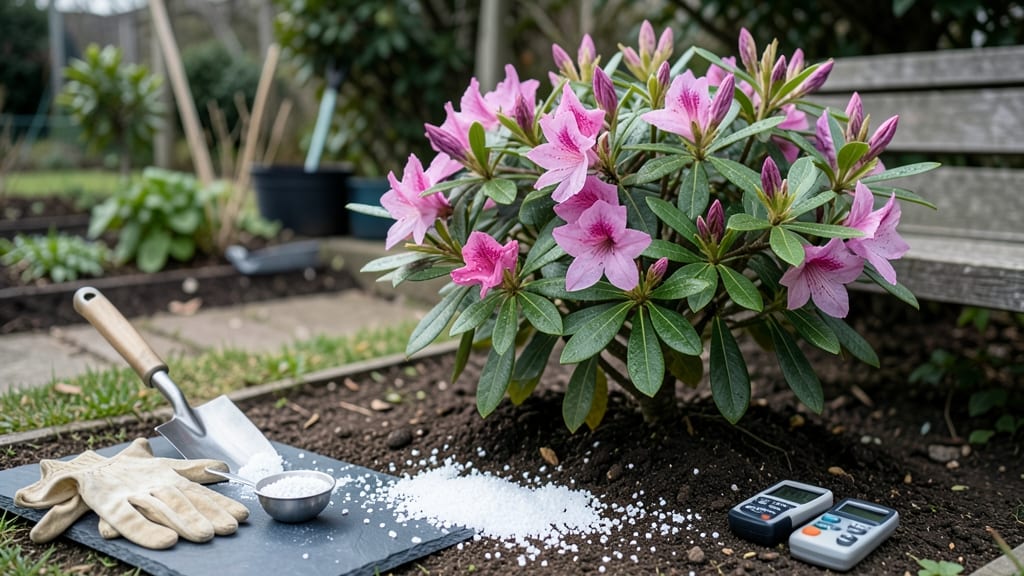
Using aluminum sulfate in gardening is an effective way to lower soil pH for acid-loving plants like blueberries, azaleas, and rhododendrons. Apply 1-5 pounds per 100 square feet annually, testing soil first to prevent over-acidification or aluminum toxicity.
Aluminum sulfate works by dissolving in water to release hydrogen ions, which gradually acidify the soil.
This chemical reaction helps break down alkaline minerals while also making phosphorus more available to plants. 🌱 For best results, I recommend applying it in early spring or fall when soil moisture levels are stable, allowing the amendment to integrate evenly without washing away.
Always pair it with a soil test to determine your exact pH needs—some plants, like blueberries, need pH levels as low as 4.5, while others like azaleas prefer around 5.5.
One common mistake is overapplying, which can lead to aluminum buildup in the soil. Signs of overuse include yellowing leaves or stunted growth—if you notice these, flush the soil with water to dilute the concentration. For containers, reduce the dosage by half since they drain differently than in-ground soil.
💡 In This Article
- How Aluminum Sulfate Adjusts Soil Chemistry
- Safe Application Rates and Best Practices for Acid-Loving Plants
How aluminum sulfate adjusts soil chemistry
Aluminum sulfate works through a straightforward but powerful chemical reaction called hydrolysis. When dissolved in water, it dissociates into aluminum ions (Al³⁺) and sulfate ions (SO₄²⁻), but the real pH-lowering magic happens with the aluminum ions reacting with water molecules.
This reaction releases hydrogen ions (H⁺), which flood the soil solution and gradually push the pH downward—think of it like a slow-release acid rain for your garden. 🔥 The process is most effective in moist soil because water facilitates the dissociation and movement of these ions through the root zone.
The chemical formula Al₂(SO₄)₃·18H₂O shows it contains 17% aluminum by weight, which is why just 1 pound per 100 square feet can significantly impact soil chemistry. For every 1 teaspoon of aluminum sulfate you apply, you're essentially adding about 0.05 moles of hydrogen ions to the soil system.
This isn't just about lowering pH—it also helps mobilize phosphorus, which becomes locked in alkaline soils. The aluminum ions displace calcium and magnesium from soil particles, freeing up phosphorus for plant roots to absorb more efficiently.
However, this process has a critical threshold. While aluminum is essential in trace amounts (helping with root development), excessive levels become toxic to plants. The soil's natural buffering capacity—its ability to resist pH changes—varies by composition.
Sandy soils may show pH changes within weeks, while clay soils can take months due to their higher cation exchange capacity.
That's why soil testing is non-negotiable: a pH 7.5 soil might need 3-4 pounds per 100 sq ft, while pH 6.5 soil may only require 1-2 pounds to reach the ideal range for acid-loving plants.
One visual clue of proper application is the soil's reaction after watering. Correctly amended soil will show slightly darker, more acidic-looking moisture patterns when compared to untreated areas. The sulfate component also contributes to sulfur nutrition, which is crucial for chlorophyll production.
But here's the catch: aluminum ions can bind with phosphorus in excess, creating another form of nutrient lockout if you're not monitoring soil chemistry carefully. 💫 This is why professional soil tests measure both pH and aluminum saturation levels.
The timing of application matters too. In spring applications, the aluminum ions have several months to integrate before the growing season peaks. Fall applications work well in regions with mild winters, as the cold months allow for gradual soil incorporation.
The key is avoiding applications during drought conditions, as dry soil prevents the chemical from dissolving properly and can lead to localized high concentrations that damage roots.
For container gardening, the dynamics shift dramatically. A 5-gallon pot might only need 1/4 to 1/2 teaspoon of aluminum sulfate, but you'll need to monitor pH every 2-3 months because containers drain quickly and lose acidifying effects faster.
The rule of thumb is to apply half the recommended rate for in-ground soil when working with containers, then retest after watering thoroughly.