
Watering
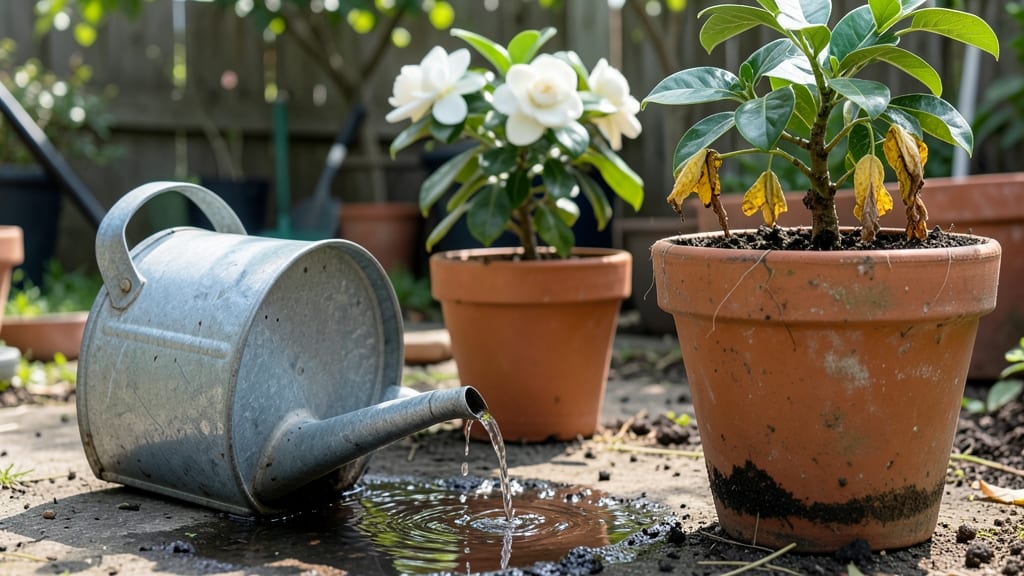
Yellow leaves on an overwatered gardenia signal root stress, often paired with drooping stems and mushy soil. Test moisture by squeezing soil—if it stays clumped, cut back watering and improve drainage immediately to revive the plant.
When your gardenia develops yellow leaves from an overwatered gardenia, it’s usually a sign of root suffocation. 🌿 The excess moisture blocks oxygen, preventing roots from absorbing nutrients efficiently. This creates a domino effect—leaves turn yellow, stems droop, and the soil may even develop that classic mushy texture.
The good news? Gardenias are resilient once you address the root of the problem (literally). I’ve seen plants bounce back within weeks when given proper drainage and a more consistent watering routine.
Here’s what I’ve learned through trial and error: never let gardenias sit in soggy soil for more than a few days. A quick soil squeeze test is your best friend—if the dirt stays clumped in your hand, it’s time to adjust.
For immediate results, I recommend repotting with a well-draining mix and elevating the pot slightly to encourage airflow at the base. This simple change can make all the difference for a plant that’s been struggling.
💡 In This Article
- How to Diagnose Overwatering in Gardenias
- Step-by-Step Fixes for Reviving a Waterlogged Gardenia
How to diagnose overwatering in gardenias
Yellowing leaves in gardenias are your plant’s SOS signal, triggered by a chain reaction of root stress. When soil stays too wet, oxygen levels plummet in the root zone, forcing roots to suffocate.
This deprivation forces the plant to prioritize survival over leaf function, causing chlorophyll to break down and leaves to turn yellow—a process called chlorosis. The roots also struggle to absorb essential nutrients like nitrogen and potassium, which are critical for healthy foliage. 🌱 What’s worse?
Waterlogged conditions create the perfect breeding ground for harmful fungi like Phytophthora, which further weakens the plant’s defenses.
Here’s how to spot the problem beyond just yellow leaves: check for drooping stems (a sign of wilting from poor nutrient uptake) and mushy, foul-smelling soil (a red flag for root rot). The classic "squeeze test" works wonders—grab a handful of soil from the pot.
If it stays clumped like wet sandcastle material, that’s your confirmation. For extra precision, use a moisture meter (aim for readings below 40% for gardenias). Another telltale sign? New growth appears stunted or deformed, while older leaves yellow first—a classic symptom of nutrient starvation caused by compromised roots.
Don’t overlook soil pH either—gardenias thrive in acidic conditions (5.0-6.5), but waterlogging can disrupt this balance. When soil stays saturated, it leaches away beneficial acids while promoting alkaline buildup, making nutrients even harder for roots to access.
You’ll often see yellowing paired with brown, crispy leaf edges in these cases. The good news? Adjusting your watering habits can reverse this damage faster than you’d expect. I’ve seen gardenias recover completely within 4-6 weeks when given proper care and drainage.
For a deeper diagnosis, examine the leaf texture—overwatered gardenias often develop soft, spongy leaves that feel almost hollow when pressed. Compare this to healthy leaves, which should be firm with a slight springiness. Another test: gently tug on yellow leaves. If they detach easily, the plant is in serious distress.
This happens because overwatering weakens the leaf attachment points as the plant diverts energy to root survival. 💧 The key is acting fast—once leaves turn completely brown and crispy, the damage is often irreversible.
Consider these three quick tests to confirm overwatering:
- Color Test: Yellowing between leaf veins (interveinal chlorosis) is classic for nutrient deficiency from poor drainage
- Texture Test: Press a leaf—if it feels mushy or collapses easily, roots are drowning
- Soil Test: Stick your finger 2 inches deep—if it feels cold and clammy, cut back immediately
What most gardeners miss is that overwatering symptoms can mimic other issues like nutrient deficiencies or pests. The critical difference? With overwatering, you’ll always find the soil problem at the root (literally).
The sooner you address it, the better your gardenia’s chances of recovery. Think of it like CPR for plants—fast action prevents permanent damage.