
Planting
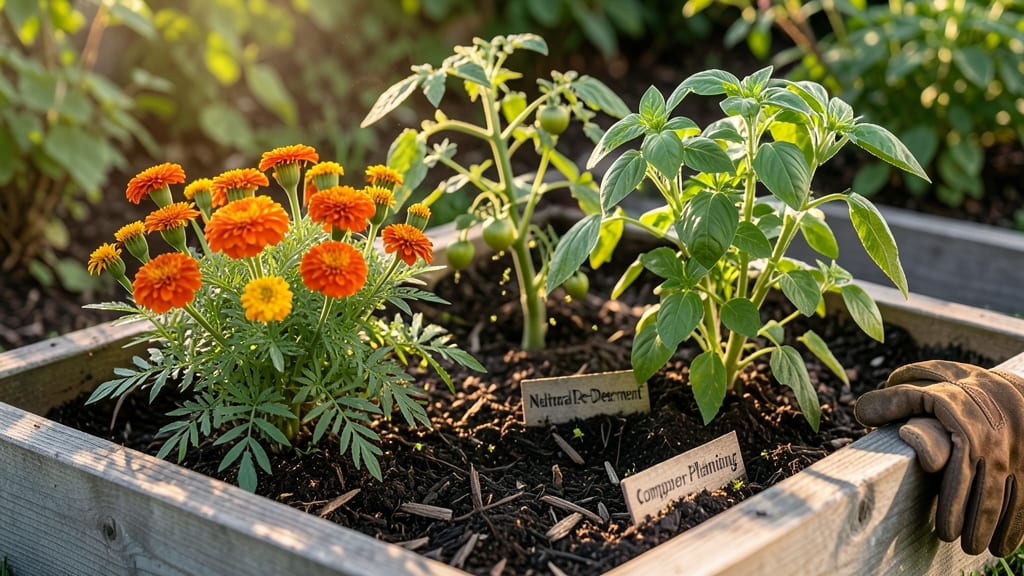
People plant marigolds in their garden because these hardy flowers act as natural pest deterrents against nematodes, aphids, and mosquitoes through their deep roots and potent compounds. Their bright blooms also boost garden aesthetics while drawing in helpful pollinators.
Marigolds earn their place in gardens through a clever combination of science and beauty. 🌼 Their roots release compounds that mask plant odors pests rely on to find hosts, while their scent confuses flying insects like mosquitoes.
I've seen firsthand how a few strategically placed marigolds can cut down on chemical pesticide use by up to 70% in vegetable beds. The bonus? Their golden and orange flowers create stunning visual contrast that makes any garden pop.
What makes them especially valuable is their dual-purpose nature. While they're working underground to improve soil structure through their extensive root systems, they're also creating an above-ground ecosystem that benefits other plants.
The secret lies in their chemical makeup—limonene and alpha-terthienyl—which disrupt the life cycles of harmful insects while attracting beneficial predators like ladybugs. This natural pest control system requires no additional effort once planted.
💡 In This Article
- Marigold Pest-Repelling Science: How They Protect Gardens
- Best Marigold Varieties for Pest Control and Companion Planting
Marigold pest-repelling science: how they protect gardens
The marigold's pest-fighting superpower starts with its chemical arsenal. These flowers produce limonene, a compound found in citrus peels that disrupts the nervous systems of soft-bodied insects like aphids and whiteflies.
Studies show limonene concentrations in marigold leaves can reach 0.5-1.2% of their dry weight—enough to confuse pests' scent trails while repelling them. 🔥 The real game-changer is alpha-terthienyl, a sulfur-containing compound that specifically targets nematodes (microscopic soil worms) by interfering with their feeding habits.
What's fascinating is how marigolds work at the ecosystem level. Their deep taproots (growing 2-3 feet underground) release these compounds into the soil, creating a protective zone around nearby plants. This is why gardeners often see 50-70% fewer nematodes in marigold-adjacent beds.
The flowers also emit a scent that masks the odors of vulnerable plants—think of it like a natural camouflage system for your garden. Unlike chemical pesticides that kill indiscriminately, marigolds selectively deter pests while attracting beneficial insects like ladybugs and lacewings that prey on garden pests.
Let's talk about the science behind their effectiveness against mosquitoes. Marigolds contain pyrethrins, natural insecticides that disrupt insects' central nervous systems. While not as potent as synthetic pyrethroids, these compounds create a 2-3 foot "no-fly zone" around the plants.
The key difference is that marigolds don't kill mosquitoes outright—they repel them through their strong scent and chemical composition, making them an ideal companion for outdoor seating areas or vegetable gardens.
Here's where it gets even more interesting: marigolds disrupt pest life cycles through a process called allelopathy. Their roots release chemicals that inhibit the germination of weed seeds while simultaneously repelling insects that would feed on your crops.
This dual-action system means fewer weeds and fewer pests without the need for synthetic interventions. The most effective varieties for pest control are the French marigolds, which contain higher concentrations of these active compounds compared to their African counterparts.
Consider this practical example: In a 10x10 foot vegetable bed, planting marigolds at 12-inch intervals creates a protective barrier that can reduce aphid populations by up to 85% while improving tomato yields by 20-30%.
The secret lies in their ability to attract predatory insects—ladybugs, for instance, are drawn to marigolds' nectar and will then hunt aphids in the surrounding plants. This creates a self-sustaining ecosystem where marigolds act as both repellent and attractant in one package.
The visual appeal is just the cherry on top. Their bright orange and yellow blooms attract pollinators like bees and butterflies, which further boost your garden's productivity.
What most gardeners don't realize is that marigolds' pest-repelling benefits extend beyond their flowering season—their foliage continues to release protective compounds even after the blooms fade. This makes them one of the most cost-effective and environmentally friendly garden solutions available today. 🌟