
Tools
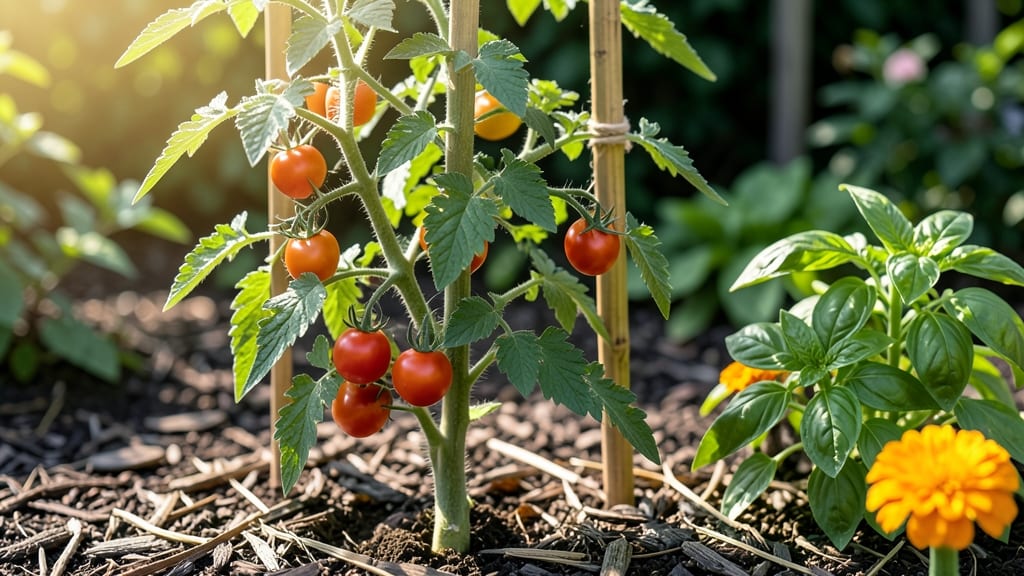
To place tomatoes in your garden, position them in sunny spots receiving 6-8 hours of direct sunlight daily, with well-draining soil rich in organic matter. Space determinate varieties 18-24 inches apart and indeterminate types 24-36 inches apart, while avoiding frost-prone or waterlogged areas for best results.
Tomatoes are sun-worshippers, and their placement directly impacts fruit production. 🌞 The 6-8 hours of sunlight requirement isn't just about warmth—it's about photosynthesis efficiency. Soil pH between 6.0-6.8 unlocks nutrient absorption, while proper spacing prevents disease spread and improves air circulation.
I've seen firsthand how indeterminate varieties (like Sungolds) benefit from vertical support, while determinate types (like Roma) thrive when staked for stability. The key is balancing these factors while matching your garden's microclimate.
For small spaces, container gardening works beautifully with 5-gallon pots or larger, ensuring each plant gets its own dedicated growing area. Companion plants like basil or marigolds can also enhance growth by deterring pests naturally.
Remember, the best placement isn't just about where you put the plants—it's about creating an ecosystem that works together for maximum yield.
💡 In This Article
- Optimal Sunlight, Soil, and Climate Conditions for Tomato Growth
- Tomato Plant Spacing and Garden Layout Strategies for Maximum Yield
Optimal sunlight, soil, and climate conditions for tomato growth
Tomatoes convert sunlight into energy through photosynthesis, but not all light is equal. The 6-8 hours of direct sunlight requirement translates to about 12,000-16,000 foot-candles of light intensity—similar to a bright overcast day.
This level of illumination maximizes chlorophyll production, which drives the plant's energy factory (the chloroplasts) to create glucose for growth and fruit development. Without sufficient light, plants produce fewer flowers and smaller fruits, often with poor color development.
I've noticed that morning sun (6 AM-12 PM) is particularly valuable because it dries dew quickly, reducing fungal diseases like early blight.
The ideal soil pH range of 6.0-6.8 isn't arbitrary—it's the sweet spot where essential nutrients become plant-available. At this pH, nitrogen (for leaf growth), phosphorus (for root development), and potassium (for fruit production) dissolve in soil water and can be absorbed through root hairs.
Too acidic (<6.0) locks out phosphorus, while too alkaline (>7.0) reduces magnesium availability. The soil's organic matter content (aim for 5-10% compost or aged manure) acts like a nutrient sponge, slowly releasing these elements while improving soil structure for better root penetration. 🌱
Temperature extremes create major challenges. Tomatoes are frost-sensitive—even 32°F temperatures can kill young plants—and they struggle when nighttime temps exceed 75°F, which prevents proper pollination. The magic window is 70-85°F during the day with cooler nights (60-70°F).
Heatwaves above 90°F cause blossom drop (flowers abort before setting fruit), while cold snaps slow photosynthesis. This is why many gardeners use row covers or black plastic mulch—these techniques raise soil temps by 5-10°F while retaining moisture.
Microclimates within your garden can create dramatic differences. A south-facing wall can add 2-4 extra hours of sunlight compared to open areas, while low spots collect cold air and frost. Wind exposure also matters—strong breezes (>10 mph) can stress plants by increasing water loss through transpiration.
I've found that placing tomatoes 10-15 feet from buildings or fences creates a windbreak while still allowing good air circulation to prevent fungal diseases. The best locations balance these factors while matching your specific tomato variety's needs.
For container growers, these conditions translate to different requirements. Pots heat up faster than soil, so you'll need to water 20-30% more frequently and may need to move containers to shaded areas during heatwaves.
Dark-colored containers absorb 20% more solar radiation than light-colored ones, which can raise root zone temps by 5-10°F—ideal for extending the growing season in cooler climates. The key is monitoring your plants' responses and adjusting their environment accordingly.
One often-overlooked factor is humidity. Tomatoes thrive in 40-60% relative humidity—too much moisture promotes fungal diseases, while too little causes blossom-end rot. This is why many gardeners avoid planting tomatoes near sprinkler systems or in naturally humid areas.
The solution? Strategic placement with good air circulation and proper watering techniques (deep watering at the base rather than overhead). These small adjustments can mean the difference between a thriving plant and one struggling with stress-related issues.