
Companion Plants
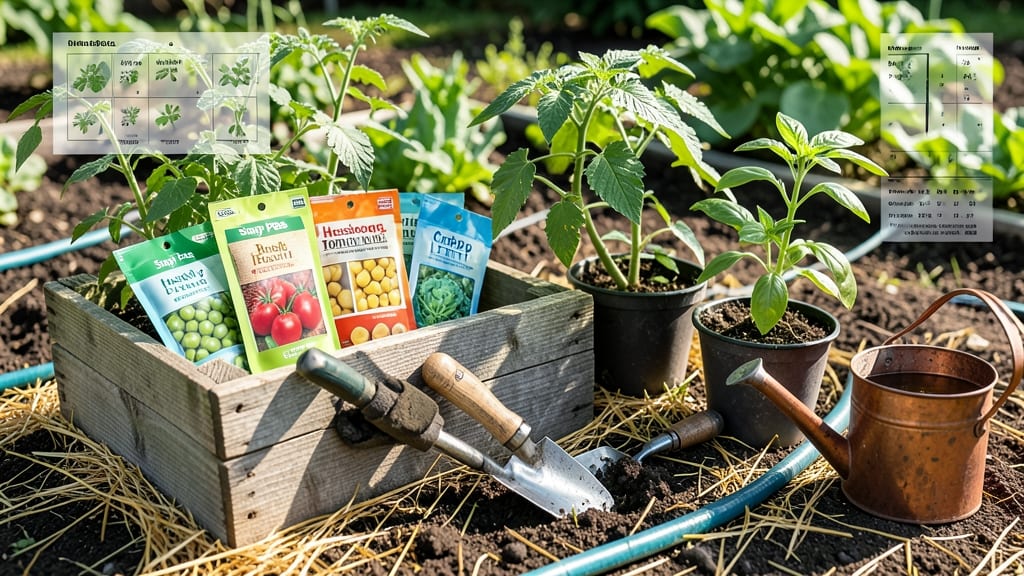
To plant your garden in Illinois, time your cool-season crops like lettuce and carrots 4-6 weeks before the last spring frost (mid-March to early April), while warm-season plants like tomatoes and basil should go in 2-3 weeks after the last frost (mid-May to early June). Your USDA Plant Hardiness Zone (5a-6b) will help fine-tune these dates.
Timing your garden in Illinois isn't just about dates—it's about understanding how your local climate behaves. Northern Illinois (Zone 5a) typically has a later last frost (around April 15), while southern regions (Zone 6b) can start planting earlier (March 20).
I always check the Old Farmer's Almanac for my specific county, as urban areas often warm up faster than rural spots due to the "heat island" effect. 🌱 For example, Chicago's downtown might be ready for tomatoes a week before suburban areas.
Pro tip: Use frost-free date averages as guidelines, not rules. A late frost can still hit in May, so I recommend having row covers ready for those warm-season seedlings like peppers and eggplants.
Many Illinois gardeners also practice succession planting—sowing lettuce every 2 weeks from April through September—to ensure a steady harvest.
💡 In This Article
- Illinois Frost Dates by Region and Plant Hardiness Zones
- Best Planting Schedule for Illinois Vegetables and Flowers
Illinois frost dates by region and plant hardiness zones
Illinois spans USDA Plant Hardiness Zones 5a through 6b, but frost timing varies dramatically between regions. Northern Illinois (Zone 5a) typically sees its last spring frost around April 15, while southern Illinois (Zone 6b) averages March 20.
The transition zone—central Illinois—falls somewhere in between, usually around April 1-10. These dates reflect the 32°F threshold, but light frosts (28°F) can still damage tender seedlings like tomatoes.
What most people don't realize is how microclimates create local variations. Urban areas like Chicago experience the "urban heat island" effect, where pavement and buildings trap heat, causing downtown gardens to warm up 1-2 weeks earlier than surrounding rural areas.
For example, a suburban garden in Chicago might be ready for peppers by May 15, while a farm in northern Illinois could still face frost risks until May 25. 🌆 Elevation also plays a role—higher elevations in southern Illinois may have slightly later frost dates than valley regions.
The Old Farmer's Almanac provides county-specific frost predictions, but I recommend cross-referencing with local weather data. For instance, the National Weather Service's 1981-2010 climate normals show that the average first fall frost in Chicago occurs around October 15, while southern Illinois holds off until October 25.
This means warm-season crops like sweet potatoes need to be planted by early July in the north versus mid-July in the south.
Advanced gardeners use frost-free degree days calculations to fine-tune planting. This method tracks accumulated heat (measured in Fahrenheit days above 32°F) to predict when soil warms enough for germination. For example, spinach seeds typically require 250-300 degree days to sprout, while tomatoes need 1,000-1,200 degree days for full maturity.
Tools like the Planting Zone Calculator from the University of Illinois Extension can help translate these numbers into actionable dates.
Don't forget about hardened varieties—some plants (like kale or Swiss chard) can tolerate light frosts (25°F) and even improve in flavor after exposure. These cold-hardy crops can be planted 4-6 weeks before your average last frost date, giving you an earlier harvest.
Conversely, tender crops like basil or cucumbers must wait until all danger of frost has passed—typically 2-3 weeks after your last average frost date.
For maximum accuracy, I recommend monitoring weekly frost forecasts from your local cooperative extension service. These forecasts often predict low temperatures with 50% probability thresholds, giving you a clearer picture than simple averages.
For example, a 50% chance of frost on May 10 means there's a 1-in-2 risk—worth considering if you're planting heat-loving crops like peppers.