
Planting
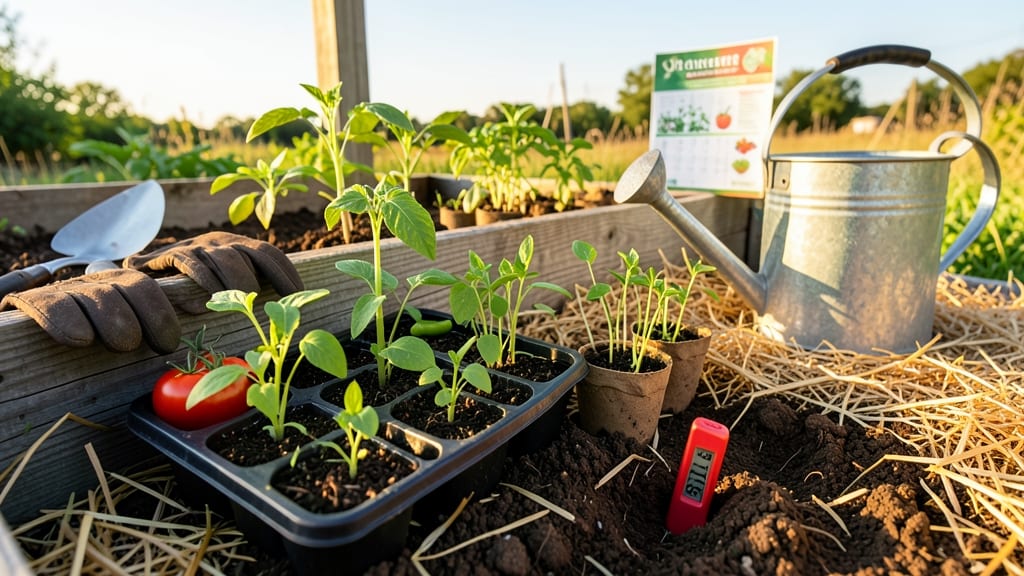
To plant a garden in Oklahoma, time your planting based on crop type: warm-season plants like tomatoes and peppers should go in after the last frost (mid-April to early May), while cool-season crops such as lettuce and spinach thrive in early spring (February-March) or fall (September-October). Verify your USDA zone (typically 6-8) for precise timing and prepare soil 2-4 weeks beforehand.
Oklahoma's diverse climate means planting times vary by region—northern areas (like USDA Zone 7) often wait until late April, while southern zones (like Zone 8) can start earlier.
The key is monitoring frost dates, as even a light freeze can damage tender seedlings. 🌱 I always recommend testing soil pH and adding compost 4-6 weeks before planting to give nutrients time to integrate, especially in Oklahoma's clay-heavy soils.
For warm-season crops, wait until soil temperatures consistently reach 60°F at night.
Cool-season crops like broccoli and carrots benefit from Oklahoma's mild winters, but fall planting requires attention to first frost dates—typically late October in northern regions. Southern Oklahoma gardeners can extend growing seasons by using row covers or cold frames.
Pro tip: start seeds indoors 6-8 weeks before the last frost date for a head start on your garden's productivity.
💡 In This Article
- Oklahoma Frost Dates and Planting Zones by Region
- Soil Preparation and Crop-Specific Planting Schedules
Oklahoma frost dates and planting zones by region
Oklahoma spans USDA hardiness zones 6b-8a, creating significant variation in frost dates. Northern regions like Enid (Zone 7a) typically experience their last spring frost around April 15-20, while southern areas such as Tulsa (Zone 7b) or Oklahoma City (Zone 7a) average April 1-10.
The southernmost parts, like Lawton (Zone 7b), can even see frost-free windows opening as early as March 20 in mild winters. These differences explain why tomatoes planted in late March might bolt in northern Oklahoma but thrive in southern counties.
The first fall frost dates follow the inverse pattern—northern Oklahoma sees frost by October 20-30, while southern areas often hold off until November 10-20.
Microclimates add another layer: urban areas like Oklahoma City experience 2-3°F warmer nights than rural zones due to the urban heat island effect, potentially extending growing seasons by 1-2 weeks. Elevation also matters—areas above 1,000 feet (like Altus) freeze earlier than lower plains regions.
For gardeners, these variations mean cool-season crops like kale or spinach can be planted in February in southern Oklahoma but must wait until March 15 or later in the north.
Warm-season plants like squash and beans should never go in before soil reaches 60°F—a critical threshold that northern Oklahoma often hits 2 weeks later than southern areas. 🌿
First-time gardeners often overlook microclimates—a south-facing slope might be 5°F warmer than a north-facing yard, allowing earlier planting. Similarly, windbreaks (like hedges or fences) can protect tender seedlings from 30 mph Oklahoma winds, which are common even after frost dates pass.
Always scout your specific location for 3-5 years to establish reliable frost patterns.
Oklahoma's drought cycles also influence timing—years with below-average rainfall (like 2011-2012) require planting drought-resistant varieties like Okra or Sweet Potatoes earlier to establish roots before summer heat sets in.
The National Weather Service's climate normals show Oklahoma City averages 30 inches of rain annually, but June-August often sees only 2-3 inches—a critical window for irrigation planning.
Pro tip: Use the Almanac's Frost Calculator (available online) to input your ZIP code and get historical frost dates specific to your location. For high-value crops like peppers, consider using row covers to extend the season by 2-3 weeks in both spring and fall.
The difference between planting at the right time and losing your crop to frost can be hundreds of dollars in a large garden.