
Planting
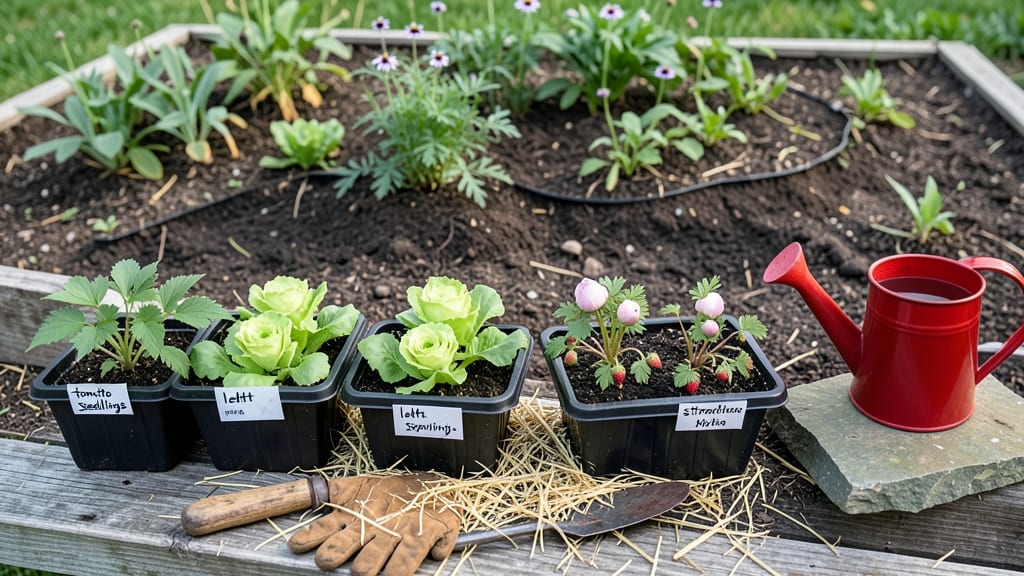
Planting your garden in Michigan at the right time means the difference between a lush harvest and a sad, frost-nipped disappointment.
Michigan’s unpredictable spring weather can turn a gardener’s excitement into frustration—planting too early risks frost damage, while waiting too long shortens your growing season. But with the right timing based on your specific zone, you can maximize yields and enjoy a bountiful harvest from spring greens to fall pumpkins.
Whether you’re in the Upper Peninsula’s Zone 4 or Southern Michigan’s Zone 6, knowing when to start seeds indoors, transplant seedlings, and sow directly in the soil is the key to success. The average last frost date hovers around mid-April, but that can shift weeks depending on the year.
In this guide, I’ll break down the exact planting windows for your region, share tricks to beat late frosts, and help you plan a garden that thrives from late April all the way through October harvests. Let’s get those 🌱 growing!
Michigan planting zones: when to start seeds and transplant vegetables by region
Michigan’s diverse climate means planting times vary dramatically between the Upper Peninsula (Zone 4), Northern Lower Peninsula (Zone 5), and Southern Michigan (Zone 6). Understanding these differences helps you avoid frost damage while maximizing your growing season.
For example, Zone 4 gardeners often wait until late May for warm-season crops, while Zone 6 gardeners can start tomatoes in early May. Let’s break down the ideal planting windows for both seeds and transplants in each region.
First, know your last average frost dates: Zone 4 typically sees its last frost around May 15, Zone 5 around May 1, and Zone 6 by April 25. These dates are critical for determining when to move tender seedlings outdoors.
For cool-season crops like spinach and peas, you can start seeds as early as March in Zone 6, but wait until April in Zones 4-5 to avoid frost damage.
| Region & Zone | Last Frost Date | Cool-Season Crops (Seeds) | Warm-Season Crops (Transplants) | Soil Temp for Seeds |
|---|---|---|---|---|
| Upper Peninsula (Zone 4) | May 15 | March 15 - April 15 (indoors) | May 20 - June 10 | 40-50°F |
| Northern Lower Peninsula (Zone 5) | May 1 | March 1 - April 1 (indoors) | May 1 - May 20 | 45-50°F |
| Southern Michigan (Zone 6) | April 25 | February 28 - March 15 (indoors) | April 15 - May 1 | 50-55°F |
🌱 Note: Adjust dates based on your local microclimate and historical frost records.
For cool-season crops like spinach, kale, and peas, you can start seeds indoors 4-6 weeks before your last frost date. In Zone 6, this means sowing spinach in late February, while Zone 4 gardeners should wait until mid-March.
These crops thrive in cooler temperatures (40-60°F) and can even tolerate light frosts, making them ideal for early spring or fall planting.
Warm-season crops like tomatoes, peppers, and cucumbers require warmer soil temperatures (60-70°F) and should only be transplanted after the last frost. In Zone 4, wait until late May or early June to avoid frost damage, while Zone 6 gardeners can start transplanting in mid-April.
Hardening off seedlings for 7-10 days before transplanting is crucial, especially in Michigan’s unpredictable spring weather.
Soil temperature is just as important as air temperature. Use a soil thermometer to ensure your soil is warm enough for seeds to germinate. For example, tomato seeds need soil temperatures of at least 70°F to sprout, while cucumber seeds germinate best at 65-70°F.
In cooler zones like Zone 4, consider using black plastic mulch or row covers to warm the soil faster and extend your planting window.
If you’re growing fast-maturing crops like radishes or bush beans, you can take advantage of Michigan’s short growing season by planting them early and again in late summer for a fall harvest.
For instance, radishes can be sown in early April in Zone 6 and again in late July for a fall crop. This succession planting strategy maximizes your harvest and ensures you have fresh produce even in Michigan’s cooler months.
Don’t forget about fall planting! Many vegetables, like kale, carrots, and spinach, grow well in cooler fall temperatures.
In Zone 6, you can plant these crops as late as early September, while Zone 4 gardeners should aim for mid-August to allow enough time for harvest before the first frost. Fall-planted crops often taste sweeter after a light frost, making them a favorite for many gardeners.
To stay on track, mark your calendar with your last frost date and plan accordingly. Use a garden journal to record your planting dates and note any adjustments you make based on weather patterns.
Over time, you’ll develop a deeper understanding of your local microclimate and can fine-tune your planting schedule for even greater success. Happy gardening!
🌿
How to adjust planting times for Michigan’s unpredictable weather patterns
Michigan’s unpredictable spring weather can leave even experienced gardeners guessing. One year, you’re planting peas by April 15th, and the next—like in 2020’s April freeze—you’re scrambling to cover tender shoots with blankets.
The key to success lies in flexible planting strategies that account for late frosts, soil temperature fluctuations, and regional microclimates.
Instead of rigidly following a calendar, I rely on three adaptable techniques: row covers to extend early seasons, cold frames for frost-sensitive plants, and succession planting to stagger harvests. These methods let me push boundaries without risking my entire garden.
For example, I’ve successfully grown spinach in March under floating row covers in Zone 6, while my neighbor in Zone 4 waits until late April.
⚠️ Late Frost Risk Assessment
Michigan’s last spring frost can occur as late as May 15th in the UP or April 20th in Southern Michigan. Use MSU Extension’s frost probability maps to calculate safe planting dates. For warm-season crops like tomatoes, wait until soil reaches 60°F—a soil thermometer is your best tool. Remember: 2020’s April freeze caused $1.2 billion in agricultural losses statewide.
To calculate your personalized planting window, I cross-reference three data points: historical frost dates from Michigan State University Extension, my local microclimate (e.g., hills vs. valleys), and the specific heat tolerance of each plant.
For instance, peppers need 85°F soil, while lettuce thrives at 50°F. I start seeds indoors 6-8 weeks before my target outdoor date, using a heat mat to jumpstart germination.
Row covers are my secret weapon for early spring planting. These lightweight fabrics raise soil temperatures by 5-10°F and protect seedlings from light frosts. I use them to plant cabbage and kale in March—crops that can handle 28°F temperatures.
For even more protection, I combine row covers with black plastic mulch, which warms the soil faster than bare earth. This combo lets me plant tomatoes two weeks earlier than my neighbors.
Succession planting ensures continuous harvests by staggering plantings every 2-3 weeks. For example, I sow bush beans every 10 days from June to July to enjoy fresh pods all summer. In fall, I replant spinach and radishes in late August for a September harvest before the first frost.
This technique maximizes my 150 frost-free days in Zone 6, letting me grow crops like kale and carrots well into October.
Cold frames take season extension to the next level. These unheated glass boxes maintain 10-15°F warmer temperatures than outside, allowing me to start warm-season crops in April and overwinter greens until March.
I built mine from reclaimed windows and wood frames, keeping costs low while gaining 4-6 extra weeks of growing time. Just be cautious—overheating in summer can scorch plants, so I always leave vents open.
Finally, I never plant without checking three conditions: soil temperature (50°F minimum for most veggies), moisture levels (1-2 inches of water per week), and weather forecasts for the next 10 days.
When in doubt, I err on the side of caution—a few extra weeks of waiting means healthy plants, not wilted disappointment. With these strategies, I’ve turned Michigan’s unpredictable weather into my garden’s greatest advantage. 🌱