
Picking
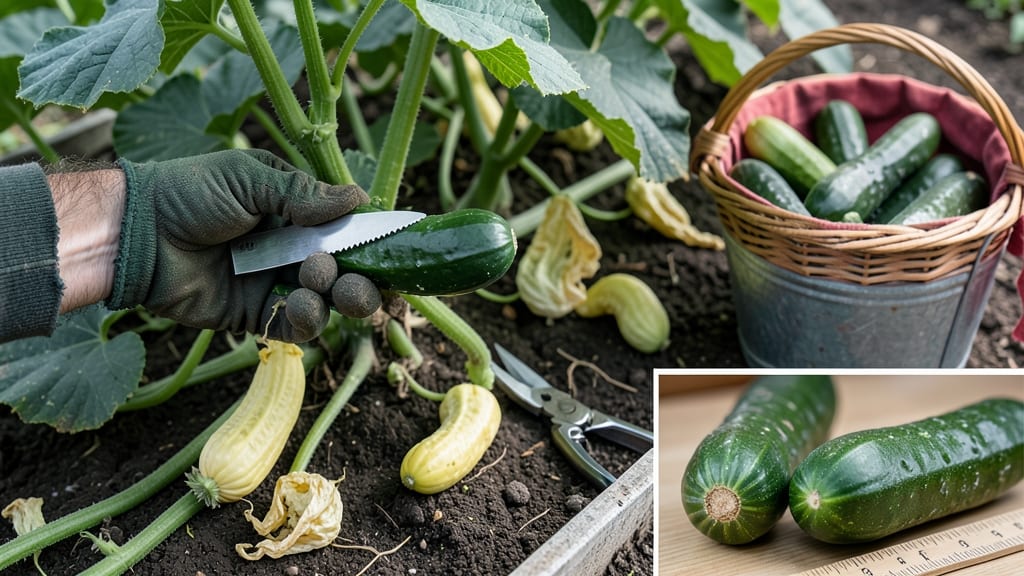
Harvesting cucumbers from your garden at the right time means the difference between crisp, sweet bites and bitter, seedy disappointments.
Picking cucumbers too early means bland bites, but waiting too long turns them bitter—so how do you nail the perfect harvest window? The answer lies in three simple visual cues that most gardeners miss.
Cucumbers 🥒 are ready when they reach 6-8 inches in length, their skin resists a gentle thumbnail press, and the color deepens to a rich, even green. These signs guarantee peak flavor before bitterness creeps in.
In this guide, you’ll learn how to check ripeness like a pro, adjust for your specific cucumber variety, and avoid the common mistakes that lead to wasted harvests.

3 Key visual signs your cucumbers are ready for harvest
Mastering the art of harvesting cucumbers at their peak means paying close attention to three visual cues: size, color, and texture. These simple checks ensure you enjoy crisp, flavorful cucumbers instead of bitter or seedy disappointments.
I’ve learned that ignoring these signs can mean the difference between a fresh salad and a tough, overripe mess.
First, let’s talk about the size threshold that guarantees sweetness. Most gardeners agree that cucumbers should reach 6 to 8 inches in length for slicing varieties. Smaller than that, and you risk a bland, watery texture.
Larger than 8 inches, and bitterness creeps in as seeds mature. For pickling cucumbers, the window narrows to 2 to 4 inches—any bigger, and they become too tough for pickling.
Color is your next clue, and it’s more nuanced than you might think. A deep, uniform green signals readiness for slicing types, while yellowing at the stem end is a classic sign of ripeness.
Some heirloom varieties even develop striped patterns or darker hues as they mature. Pro tip: If the cucumber’s color is pale or patchy, it’s not ready yet—those are signs of uneven growth or stress.
Texture is where many gardeners miss the mark. A ripe cucumber’s skin should yield slightly when you press your thumbnail against it—think of the give of a ripe avocado. If it feels rock-hard, it’s underripe. If it’s too soft or mushy, it’s past its prime.
For extra precision, gently twist the cucumber at the stem. If it snaps cleanly, it’s harvest-ready. If the stem resists, wait a day or two.
| Sign | Description | Action |
|---|---|---|
| Size | 6–8 inches (slicing), 2–4 inches (pickling) | Harvest at lower end for crispness |
| Color | Deep green, uniform; yellowing at stem | Avoid pale or uneven hues |
| Texture | Skin yields slightly; stem snaps easily | Press thumbnail for firmness test |
| Stem | Dries or turns yellow | Harvest before it browns completely |
One mistake I made early on was harvesting based solely on size. I’d pick cucumbers at 7 inches, only to find they tasted bland. That’s when I learned to combine all three cues.
For example, a 7-inch cucumber with deep green skin and a slight give when pressed is perfect. But if it’s still rock-hard, it needs more time—even if it’s the right size.
Environmental factors can also throw off your timing. In hot climates, cucumbers mature faster, so check them every 2–3 days. In cooler weather, they take longer to ripen.
If you’re growing heirloom varieties, always check the seed packet for specific guidelines—some, like ‘Lemon Cucumber’, develop a yellow hue when ripe, while others stay green.
Don’t forget that harvesting frequency affects flavor and yield. Pick cucumbers regularly to encourage more production. If you leave them on the vine too long, the plant shifts energy to seed development, reducing future harvests.
I’ve seen vines collapse under the weight of overripe cucumbers—trust me, it’s not pretty, and it’s avoidable with consistent checks.
For pickling cucumbers, timing is even tighter. These little guys should be harvested when they’re bright green and firm, often before they reach 3 inches. The longer they stay on the vine, the tougher they become.
If you’re canning, aim for 1.5 to 2 inches—this ensures they stay crisp after processing. Pro tip: Use a small knife to make clean cuts, leaving a ¼-inch stem attached to prevent rot.
Finally, trust your senses. If a cucumber looks perfect but tastes off, there might be an issue with your soil or watering. Over-fertilizing with nitrogen can lead to leafy growth but poor fruit quality, while underwatering causes bitter flavors.
Always pair your visual checks with a taste test when possible—it’s the ultimate way to refine your timing.
How cucumber varieties change harvest timing (and why it matters)
Not all cucumbers are created equal—and their harvest windows reflect that. Slicing cucumbers like Marketmore and Straight Eight grow larger and slower, while pickling varieties such as Boston Pickling or National Pickling mature faster and smaller. These differences mean your harvest schedule must adapt based on the type you're growing.
Slicing cucumbers typically reach harvest readiness in 60-70 days, often growing to 8-12 inches long before they're ideal. In contrast, pickling cucumbers are usually ready in 50-60 days and should be harvested at 3-5 inches to avoid bitterness. Ignoring these timelines can lead to overgrown, seedy, or bitter fruits.
| Variety Type | Harvest Size | Days to Maturity | Best For | Harvest Frequency |
|---|---|---|---|---|
| Slicing (e.g., Marketmore) | 8-12 inches | 60-70 days | Salads, snacks | Every 2-3 days |
| Pickling (e.g., Boston Pickling) | 3-5 inches | 50-60 days | Pickles, fermenting | Every 1-2 days |
| Mini/Heirloom (e.g., Lemon) | 4-6 inches | 55-65 days | Gourmet dishes | Every 2 days |
Growth patterns also differ: bush varieties like Bush Champion produce fruits closer to the ground and may need more frequent harvesting to prevent overcrowding. Meanwhile, vining types such as Arkansas Traveler grow taller and can be trained on trellises, allowing you to space out harvests while keeping plants healthy.
Adjusting your harvest schedule based on variety ensures you enjoy peak flavor and texture. For slicing cucumbers, check for deep green skin and firmness at 8-12 inches.
Pickling cucumbers, however, should be harvested at 3-5 inches when their skin is thin and tender. Skipping harvests can stress plants and reduce future yields.
Pro tip: Use a small knife or pruners to harvest, leaving a short stem to prevent disease. For continuous production, pick every 1-3 days depending on the variety. This keeps plants productive and prevents bitterness from setting in.
Understanding these variety-specific cues transforms your garden from hit-or-miss harvests to a consistent, flavorful bounty. Try growing both slicing and pickling types side by side—you’ll notice how timing truly makes the difference in taste and texture! 🌱