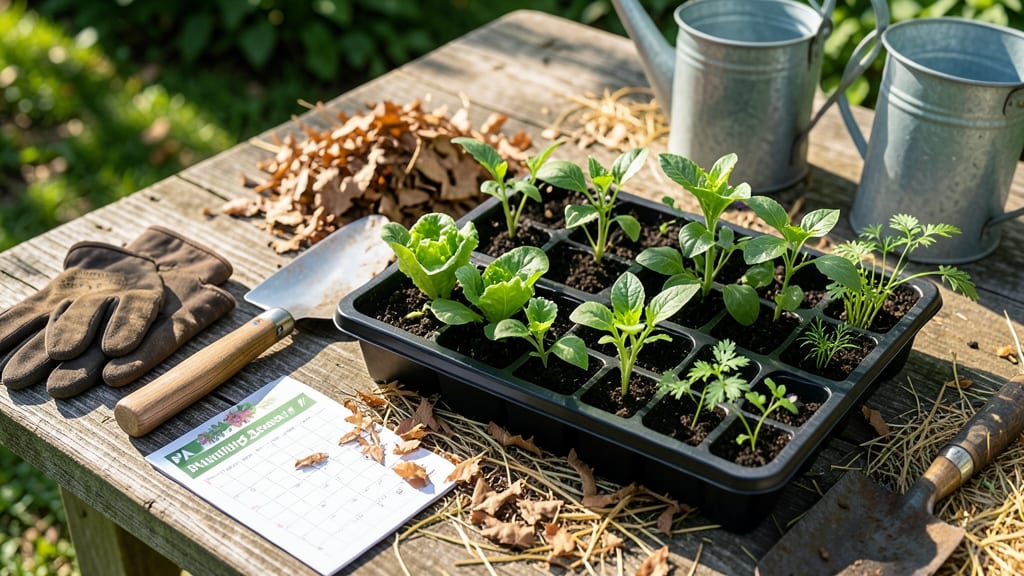
To plant a vegetable garden in Pennsylvania at the right time means knowing your zone’s last frost date — because getting it wrong can leave you with wilted seedlings or stunted harvests.
Pennsylvania’s diverse climate—from the humid Appalachians to the hot valleys of the Susquehanna—means planting your vegetable garden at the wrong time can spell disaster for your harvest.
But timing it right? That’s how you turn a few seeds into a bounty of tomatoes, zucchini, and more.
Whether you’re in Pittsburgh’s Zone 6 or Philadelphia’s Zone 7**, the key is starting cool-season crops like spinach and carrots early and waiting for soil warmth before planting heat-lovers like peppers and cucumbers.
Here’s your zone-by-zone guide to planting for peak yields, plus tips for extending the season with row covers and succession planting so you can enjoy fresh veggies from spring to fall.
🌱
When to Plant Vegetable
Jan
❄️
Feb
❄️
Mar
🌱
Apr
🌱
May
🌱
Jun
🌱
Jul
☀️
Aug
☀️
Sep
🍂
Oct
🍂
Nov
🍂
Dec
❄️
Pennsylvania planting Zones: exact start dates by last frost for 10 key vegetables
Pennsylvania spans USDA Zones 5, 6, and 7, with last frost dates varying by 1-3 weeks across the state. Knowing your exact last frost date is critical—plant too early, and frost will kill tender seedlings; too late, and you’ll miss peak harvests.
For example, Philadelphia (Zone 7a) typically sees its last frost around April 15, while Erie (Zone 6a) waits until May 1. Let’s break down the best planting windows for 10 essential vegetables, including cool-season stars like spinach and warm-season favorites like tomatoes.
Cool-season crops like spinach, carrots, and peas thrive when soil temps are 40-60°F and can handle light frosts. Warm-season crops such as tomatoes, peppers, and cucumbers need soil temps above 60°F and won’t tolerate frost at all.
Below, I’ve mapped out the optimal planting windows for each zone, so you can align your garden with Pennsylvania’s climate quirks—like the Appalachian chill or the Poconos’ delayed spring.
Pro Tip: Use a soil thermometer to confirm warmth before planting warm-season crops. In Zone 5, wait until soil hits 65°F (usually early June) for tomatoes, while Zone 7 gardeners can plant in late April.
| Vegetable |
USDA Zones |
Last Frost (Avg.) |
Planting Window |
Notes |
| Spinach |
5-7 |
Zone 5: May 10
Zone 6: April 15
Zone 7: April 1 |
Direct sow 4-6 weeks before last frost |
Bolts in heat; succession plant |
| Carrots |
5-7 |
Zone 5: May 1
Zone 6: April 15
Zone 7: March 25 |
Direct sow early spring or late summer |
Loose soil prevents forking |
| Peas |
5-7 |
Zone 5: April 20
Zone 6: April 1
Zone 7: March 15 |
Direct sow as soon as soil is workable |
Tolerates light frost; trellis for support |
| Tomatoes |
5-7 |
Zone 5: June 1
Zone 6: May 15
Zone 7: April 20 |
Start indoors 6-8 weeks before last frost |
Needs warm soil (>60°F) |
| Peppers |
5-7 |
Zone 5: June 10
Zone 6: May 20
Zone 7: April 25 |
Start indoors 8-10 weeks before last frost |
Slow to germinate; keep soil warm |
| Cucumbers |
5-7 |
Zone 5: May 20
Zone 6: May 1
Zone 7: April 10 |
Direct sow after soil warms |
Vining; trellis saves space |
| Lettuce |
How to adjust planting times for Pennsylvania’s microclimates (and avoid common mistakes)
Pennsylvania’s microclimates can vary dramatically even within a single county. The Pocono Mountains in Zone 5 might still have frost in June, while Pittsburgh’s river valleys in Zone 6 can hit 90°F by May.
Urban gardeners in Philadelphia’s Zone 7 often face heat islands that push planting windows earlier than rural areas. These differences mean a one-size-fits-all approach fails—your neighbor’s tomato harvest might be thriving while yours wilts.
To succeed, I adjust my planting based on three key factors: elevation, urban heat, and soil warmth. High-altitude areas like the Allegheny Plateau need 4-6 weeks later for warm-season crops, while city gardens can start 2 weeks earlier thanks to concrete absorbing heat.
Even microclimates within yards matter—a north-facing corner stays cooler than a south slope, delaying planting by 10-14 days.
⚠️ callout-warning
3 Critical Mistakes PA Gardeners Make (And How to Fix Them)
- Planting tomatoes too early: Soil under 55°F stunts roots. Wait until May 15-June 1 in Zones 5-6. Use a soil thermometer—if it’s cooler, delay by 2 weeks.
- Ignoring last frost dates: Pittsburgh’s average last frost is April 15, but the Poconos can frost until May 20. Check local Almanac records, not just your ZIP code.
- Overlooking succession planting: One zucchini planting in June won’t feed you all summer. Space new seeds every 2 weeks for continuous harvests.
For urban gardeners, I recommend starting cool-season crops like spinach or kale in early March under row covers. These protect seedlings from late frosts while warming soil faster than exposed beds.
In high-altitude areas, I delay warm-season plants until after Memorial Day—even then, I use black plastic mulch to accelerate soil warming by 10-15°F.
River valleys like the Susquehanna experience earlier springs but also hotter summers. Here, I plant heat-tolerant varieties like ‘Heatmaster’ tomatoes and ‘Malabar’ spinach. I also mulch heavily to retain moisture, since evaporation rates in these zones can be 30% higher than mountain regions.
Pro tip: Use frost-free date calculators like the Penn State Extension tool to input your exact location. For example, State College (Zone 6a) has a May 10 last frost, while Erie (Zone 6b) averages May 5.
That 5-day difference can mean the difference between a thriving basil and a frost-killed crop.
Finally, observe your own microclimate for 2-3 years. Note when daffodils bloom (signals 50°F soil) or when hummingbirds return (usually late April). These natural cues often align better with planting times than generalized zone maps. With these adjustments, even Pennsylvania’s trickiest microclimates become predictable—and productive.
★★★★★4.5(10 reviews)