
Picking
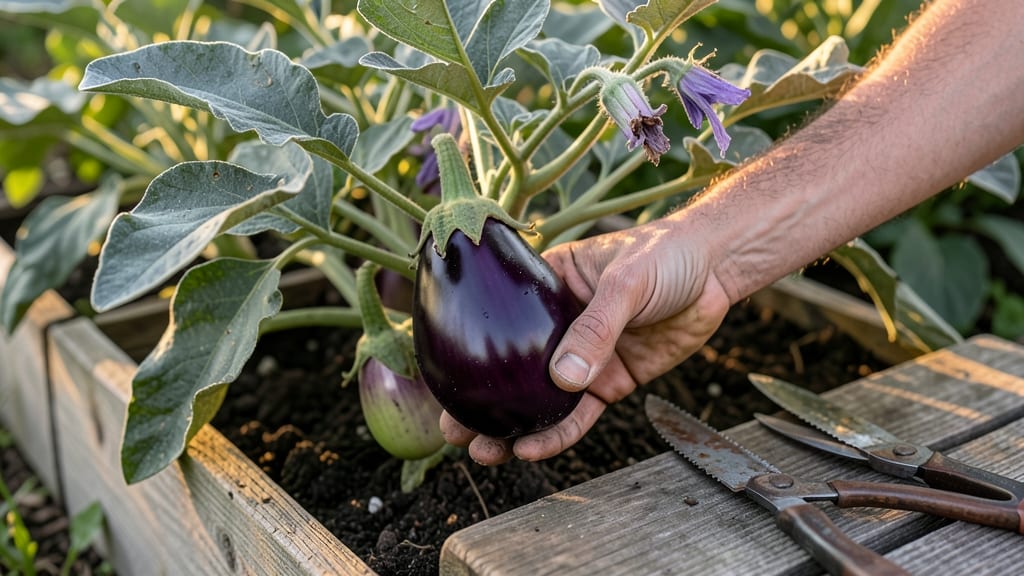
To pick eggplant in your garden at the right time means catching it when the flesh is tender and sweet—not tough or bitter.
Picture this: you’ve nurtured your 🍆 plants all season, and now the moment of truth arrives. One wrong move, and you’re left with overripe fruit that’s past its prime. The good news? There’s a simple way to tell when eggplant is ready—without guessing.
Look for deep, uniform color (no green at the stem), a glossy skin that resists gentle pressure, and a stem that snaps cleanly when twisted. These tactile cues are your shortcut to perfect eggplant every time.
Below, I’ll break down the exact signals to watch for, plus the best time of day to harvest for maximum flavor and texture—so you never waste another harvest again.
3 Tactile tests to determine eggplant ripeness before harvesting
Knowing when to pick eggplant in your garden is all about trusting your senses. Unlike some fruits that soften as they ripen, eggplants stay firm until they're overripe—so you need to rely on color cues, skin texture, and stem separation to judge ripeness.
I’ve harvested hundreds of eggplants over the years, and these three simple tests have never failed me. They’ll help you avoid the disappointment of bitter, seedy or underripe, tough eggplants that ruin dishes.
Eggplants are tricky because they don’t soften like tomatoes or melons. Instead, they reach peak flavor when they’re firm, glossy, and fully colored—but only if you pick them at the right moment. The good news? You don’t need fancy tools.
Just your eyes, fingers, and a little patience will do. Let’s break down the three tactile tests I swear by, so you can harvest eggplants that are ready to shine in your favorite recipes.
- 1 Skin Color Shift: Look for a uniform deep color (purple, black, or variety-specific hue) with no green near the stem. A glossy sheen means it’s ready.
- 2 Firmness Test: Gently press the eggplant—it should resist slight pressure without denting. Soft spots mean it’s overripe; too hard means it’s underripe.
- 3 Stem Separation: Twist the eggplant gently at the stem—it should snap cleanly without tearing the fruit. If it resists, wait a day or two.
Let’s start with the first test: skin color shifts. This is the most obvious sign, but it’s easy to misread if you’re not paying attention. The stem end is where most gardeners go wrong—it often stays green even when the rest of the eggplant is ripe.
I once picked a beautiful purple eggplant only to find a stubborn green patch at the stem. That’s why I always check the entire surface, especially near the calyx (the flower end). A fully colored eggplant with no green hints means it’s ready to harvest.
Next, the firmness test is where many people make mistakes. Some think eggplants should be soft like tomatoes, but that’s a recipe for disappointment. Overripe eggplants become spongy and seedy, while underripe ones are hard and bitter. To test, press your thumb gently into the skin.
It should feel like pressing a ripe avocado—yield slightly but not dent. If it leaves an indentation, it’s past its prime. Pro tip: Check firmness on the thickest part of the eggplant, not the stem end, where the skin can be thinner.
Finally, the stem separation test is my favorite because it combines touch and a little brute force. Hold the eggplant firmly and twist the stem gently between your thumb and forefinger. A ripe eggplant will separate cleanly with minimal resistance.
If you feel the stem tearing the fruit, it’s not ready yet. This test is especially useful for container-grown eggplants, where stems can be trickier to spot. I’ve even used this method to harvest eggplants growing in hanging baskets, where visibility is limited.
One common mistake I see is waiting too long because the eggplant hasn’t reached its expected size. Different varieties mature at different rates—some stay small and sweet, while others grow large and meaty. Always check your seed packet or plant tag for the mature size range.
For example, ‘Fairy Tale’ eggplants stay tiny (2-3 inches long) and are ready early, while ‘Black Beauty’ can grow up to 8 inches before harvest. If you’re unsure, err on the side of earlier harvests—eggplants won’t ripen further once picked.
Another pro tip: Harvest in the morning when temperatures are cooler. Eggplants are more firm and less likely to bruise, making them easier to handle. I always carry a small basket or cloth bag to the garden to avoid dropping them.
And if you’re growing multiple varieties, keep a harvest journal to track which ones ripen fastest. Some, like ‘Ichiban’, are early producers, while others, like ‘Rosa Bianca’, take longer. Knowing these patterns helps you stay ahead of the game.
What if your eggplant fails one or two tests? Don’t panic—it might just need a day or two to mature. I’ve had eggplants that passed the color test but failed the firmness test, and vice versa. The key is to check daily once they start changing color.
And remember, overripe eggplants are still edible—they’re just less flavorful and more seedy. You can still use them in cooked dishes, but they won’t have that tender, velvety texture you crave in fresh recipes.
Once you’ve mastered these three tests, you’ll never second-guess your eggplant harvests again. The satisfaction of picking a perfectly ripe eggplant—glossy, firm, and fully colored—is unmatched. And trust me, your taste buds (and your dinner guests) will thank you.
Now grab your gardening gloves, head outside, and put these tests to work in your own garden!
Best time of day and seasonal factors for eggplant harvesting
Timing your eggplant harvest correctly ensures sweet, tender flesh and avoids the bitter, tough texture that comes from picking too late. The best time of day to harvest is cool morning hours—between 6 AM and 9 AM—when temperatures are mild and the fruit hasn’t absorbed excess heat.
This reduces stress on the plant and preserves flavor. Avoid harvesting in the evening when humidity peaks, as damp conditions can encourage rot or fungal issues at the stem.
Seasonal factors play a huge role in eggplant ripening. In USDA Zones 6-10, most varieties reach peak harvest between mid-July and early September, aligning with the plant’s natural growth cycle after flowering.
However, early-season varieties like 'Fairy Tale' may ripen as early as June in warm climates, while longer-season types like 'Ichiban' can extend harvests into October with proper care. Always check your last frost date—eggplants thrive in 70-85°F soil temperatures and won’t set fruit well in cooler conditions.
| Factor | Optimal Condition | Best Practice |
|---|---|---|
| Time of Day | Cool morning (6-9 AM) | Harvest before sun peaks to preserve flavor |
| Seasonal Window | Mid-July to early September | Adjust for variety and climate (earlier in warm zones) |
| Temperature | 70-85°F soil | Avoid harvesting if temps drop below 60°F |
| Sunlight | Full sun (6+ hours) | Shade cloth may delay ripening in extreme heat |
| Humidity | Low to moderate | Harvest during dry periods to prevent rot |
Sunlight intensity directly impacts eggplant ripening. While eggplants need full sun (6-8+ hours daily), intense afternoon heat above 90°F can cause blossom drop or uneven coloring. If you notice green shoulders on otherwise colored fruit, it’s a sign of heat stress.
In such cases, use light shade cloth (30-50%) during peak hours to protect plants without stunting growth. Morning sun is ideal for photosynthesis, while afternoon shade helps maintain glossy, firm skin—a key indicator of ripeness.
Regional climates dictate your harvest timeline. In hot, dry zones like Arizona or California, eggplants may ripen 2-3 weeks earlier than in humid, coastal areas like Florida or the Pacific Northwest.
For example, 'Black Beauty' typically takes 75-90 days to mature, but in Zone 9+, you might harvest as early as June if planted in late winter.
Conversely, in cooler Zones 5-6, start seeds indoors in March and transplant after the last frost to align with the July-August harvest window.
Watch for seasonal cues like yellowing lower leaves or new flowers appearing—these signal the plant is shifting energy toward fruit production. If your eggplants are slow to ripen, consider hand-pollinating flowers with a soft brush in the morning.
This mimics natural pollinators and can boost fruit set by up to 30% in less-than-ideal conditions. Always harvest regularly (every 2-3 days during peak season) to encourage continuous production.
Pro tip: Keep a harvest journal to track when your specific varieties ripen. Note the first frost date in your area—eggplants are frost-sensitive and won’t survive temperatures below 50°F.
If frost threatens before your plants finish producing, harvest any near-ripe fruit and store it in a cool, dark place (55-60°F) to slow ripening. With the right timing, you’ll enjoy homegrown eggplants from early summer to early fall—just in time for grilling, roasting, or stuffing!