
Picking
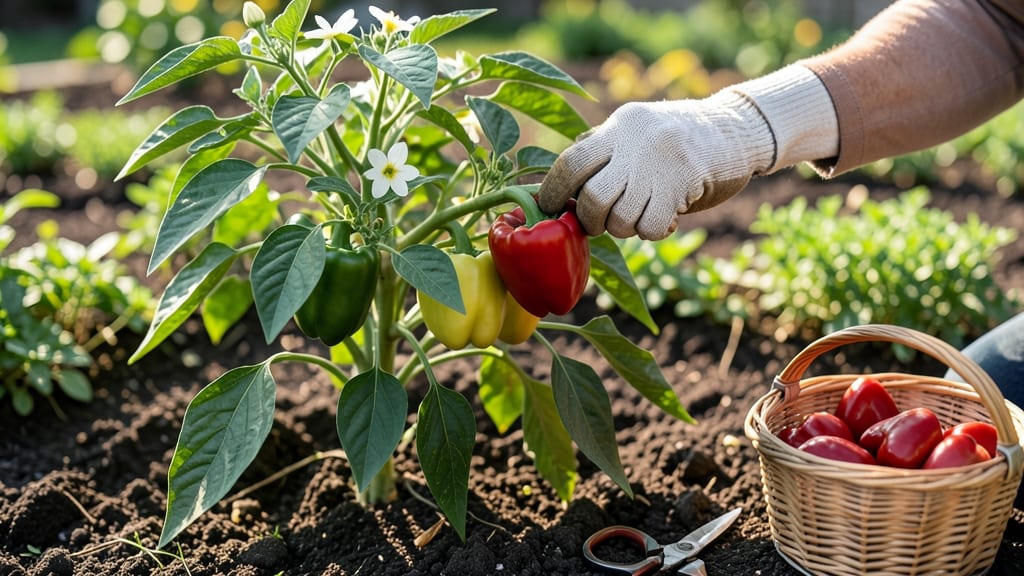
To pick bell peppers from your garden at their sweetest, time it right when they’re 3-5 inches long and fully colored—wait too long, and you’ll end up with bitter, leathery skins.
Picture this: you’ve nurtured your 🌶️ plants all season, and now the moment of truth arrives. One wrong move, and those vibrant green, red, or yellow peppers turn mealy or tough. The difference between a crisp, flavorful bite and a disappointing crunch comes down to knowing the exact cues.
Beyond size, check for a glossy finish and firmness that resists gentle pressure—these are your green flags for peak ripeness. In USDA Zone 6a, that window opens in late summer, but regional shifts can push it earlier or later.
Here’s how to master the art of timing: I’ll walk you through the three visual cues that guarantee perfect flavor, plus how to adjust for your local climate and avoid the most common harvest mistakes.

3 Visual cues to identify perfectly ripe bell peppers
Harvesting bell peppers at the right moment transforms your garden into a flavor factory. Overripe peppers lose sweetness and develop bitter notes, while underripe peppers stay tough and bland. The key lies in three simple visual cues: color consistency, firmness, and size.
Each variety—green, red, yellow, or orange—has its own perfect moment, but these universal signs apply across the board.
Color is your first clue, but it’s not just about hue. Green bell peppers should be deep, uniform green without any yellow or brown patches. For mature red, yellow, or orange peppers, the color must be fully developed—no streaks or pale spots.
The glossy surface is another telltale sign of ripeness, indicating the pepper has reached its sugar peak.
Size matters more than you might think. Peppers under 3 inches are rarely sweet enough, while those between 3-5 inches hit the perfect balance. Measure with your thumb—if the pepper fits snugly from tip to base, it’s ready.
Larger peppers (over 5 inches) often become tough and seedy, sacrificing flavor for size.
Texture is where many gardeners miss the mark. A ripe bell pepper should feel firm but slightly yielding—like a ripe avocado. Press your thumb gently: if it leaves no indentation, the pepper needs more time.
If it feels mushy or wrinkled, it’s past its prime. The stem’s behavior is another secret trick: twist it gently—if it snaps cleanly, the pepper is at its peak.
Don’t overlook the glossy finish—this waxy sheen signals the pepper’s sugars have fully developed. Dull or matte peppers are either underripe or stressed. Check the calyx (the flower end) too: if it’s still green and firm, the pepper’s not ready.
But if it’s browned and slightly shriveled, you’ve waited too long.
Regional growing seasons add another layer. In warmer climates (Zones 8-10), peppers ripen faster—often by mid-summer. In cooler zones (Zones 4-6), aim for late summer to early fall. If frost threatens before peppers ripen, harvest them green—they’ll still cook well, just with less sweetness.
Pro tip: Harvest in the morning when peppers are cool and crisp. Use clean pruners or scissors to avoid damaging the plant. Leave a small stem attached—this helps peppers last longer in storage.
If you’re unsure, pick a few test peppers, slice them open, and taste the seeds: ripe peppers have white seeds surrounded by sweet flesh.
Remember, color isn’t everything. A red pepper can be ripe but bland if grown in poor soil, while a green pepper might be sweeter than a red one if harvested early.
Pay attention to all three cues—color, size, and texture—and your bell peppers will reward you with garden-fresh sweetness every time.
How to test bell pepper ripeness beyond visuals: the squeeze and taste method
Even when your bell peppers look ripe, their true flavor potential hides beneath the surface. A gentle squeeze and taste test can reveal whether they're ready for your kitchen—or still need time to sweeten. These hands-on methods help you avoid bitter overripe peppers or underripe ones that lack flavor depth.
Start by examining the skin firmness. A perfectly ripe bell pepper should yield slightly to gentle pressure but not feel mushy. Press your thumb against the pepper—if it springs back immediately, it's ready.
If it stays indented, it needs more time on the vine. This test works for all colors, from green to red or yellow varieties.
⚠️ WARNING: Overripe Bell Peppers Can Ruin Your Harvest
Next, check the seed development. Cut open a pepper to peek inside—if the seeds are small and white, the pepper is underripe. When seeds turn tan or brown and enlarge slightly, that's your cue to harvest.
This stage ensures peak flavor without the seedy texture that comes later. For cooking purposes, slightly underripe peppers with white seeds work well, but for raw eating, aim for tan seeds.
Finally, the taste test is non-negotiable. Pop a small piece into your mouth—ripe bell peppers should burst with sweetness and a crisp texture. If it tastes bland or slightly bitter, give it another week.
For storage, pick peppers when they're fully colored but not fully firm—they'll ripen further at room temperature. If you're freezing them, harvest at peak firmness to lock in flavor.
Pro tip: Harvest in the morning when peppers are coolest. This ensures they're at their firmest and most flavorful. Use a sharp pair of pruning shears to avoid damaging the plant, and always leave a small stem attached—this helps peppers last longer in storage.
With these methods, you'll never guess when to pick again!
🌶️ For container growers, remember: Peppers in pots ripen slightly faster due to warmer soil temperatures. Check them 2-3 days earlier than garden-grown peppers to avoid overripeness. Happy harvesting!